Lancaster University cards guide mindful eating tech with research-backed design
Lancaster’s MEDEC cards turn mindful eating into a design test, asking apps and wearables to prove they’re evidence-based, not just wellness-flavored.
What Lancaster is trying to change
The easiest thing in mindful-eating tech is a promise. The hard part is proof. Lancaster University’s Mindful Eating Design Critique cards, or MEDEC cards, are built to separate products that borrow the language of mindfulness from products that actually reflect the science behind it.

That matters because mindful eating is not just a softer way of saying “eat better.” In this work, it means paying close attention to food, drink, hunger, fullness, and bodily cues. MEDEC treats that as a design challenge, not just a personal habit challenge, and that shift is what makes the project feel so useful for anyone following the boom in food-tech, coaching tools, and behavior-change apps.
A physical deck built to act like a science filter
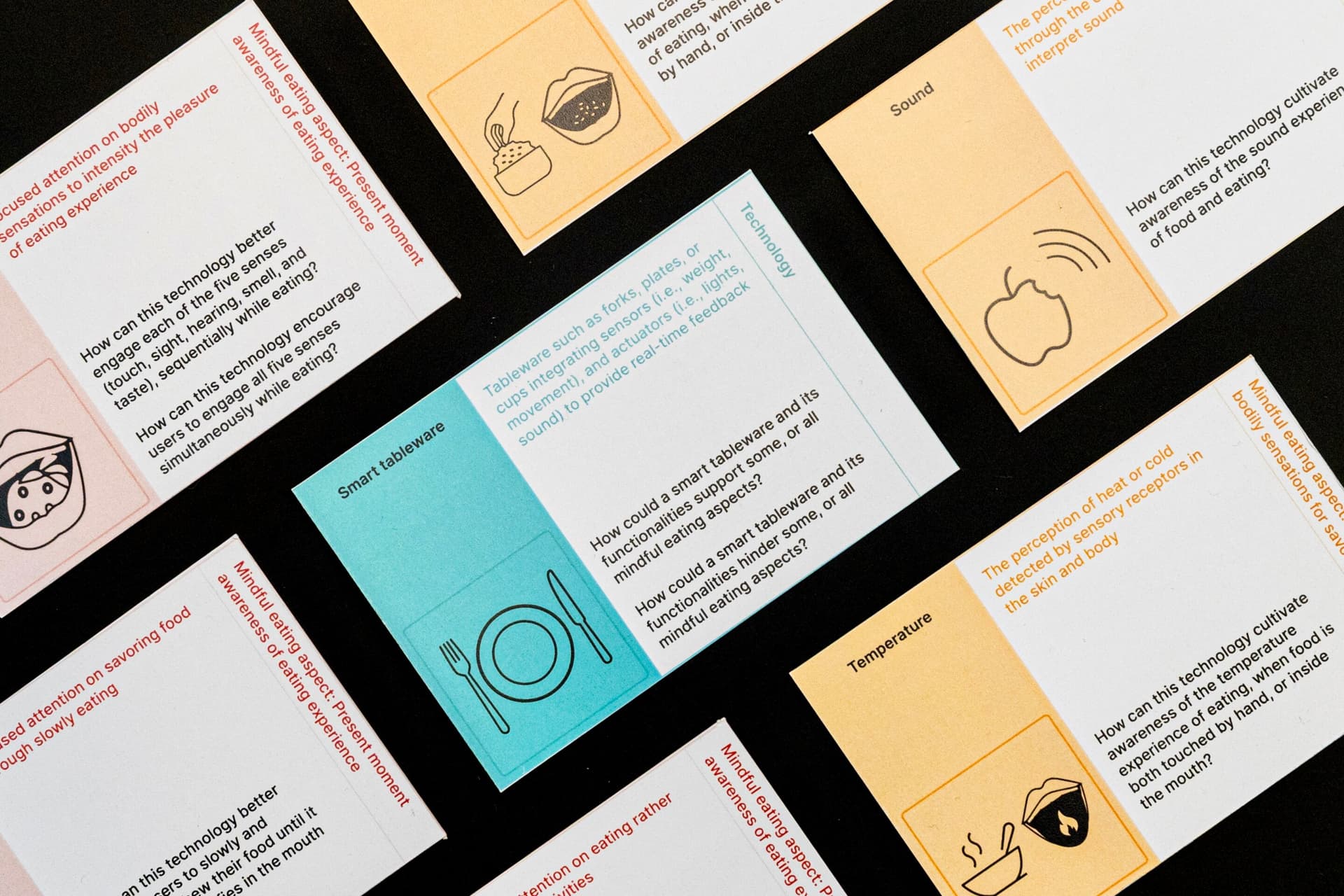
Lancaster University describes MEDEC as a physical tool, a deck of 28 cards grounded in a rigorous analysis of mindful-eating principles, interventions, and measurement scales. The project materials also describe the critique tool as 29 cards improved through practitioners’ feedback, which gives you a sense of how the work evolved: this was not a glossy concept deck dropped into the world, but a tool refined against real use.
That practitioner input matters. A design tool can sound impressive while staying abstract, but MEDEC was evaluated by 36 mindful-eating experts. That is the kind of number that tells you the deck was pressure-tested by people who already understand the field, not just admired from a distance. For a market full of products that claim to support healthier habits, that is a meaningful line between branding and evidence.
What the cards force designers to answer
The real power of MEDEC is in the questions it makes unavoidable. If a product says it supports mindful eating, the cards push designers to show how it handles the mechanics of behavior, not just the mood of mindfulness.
The deck covers mobile apps, wearables, smart tableware, and even robots. That range is important because mindful eating is no longer confined to a meditation cushion or a clinic. It shows up in a phone alert during lunch, a wrist-based reminder, a plate or bowl that changes feedback at the table, or a robot that nudges behavior in a more automated setting.
The cards also map concrete behavior cues: taking small bites, chewing slowly, and noticing sensory and bodily signals. Those are the kinds of specifics that separate a real intervention from a vague wellness label. If a product cannot explain whether it helps a person notice fullness, slow down eating, or pay attention to taste and texture, the design is probably relying more on atmosphere than on method.
Why MB-EAT still matters here
MEDEC is also tied to established mindful-eating practice through the Mindfulness-Based Eating Awareness Training, or MB-EAT, program. That connection anchors the cards in a recognizable evidence-based intervention rather than leaving them floating in general mindfulness language.
That is one of the strongest things about the project. It does not treat “mindful eating” as a trend word that can be attached to any app with a calming color palette. It links product design to a named program with a known role in the field, then asks whether new tools actually reflect that foundation. In other words, the deck is not only asking what a product feels like. It is asking what theory it belongs to.
The practical checklist hidden inside the deck
If you are evaluating a mindful-eating app, wearable, smart device, or AI coach, MEDEC’s logic can be turned into a simple filter. Before trusting the product, ask whether it can answer these questions:
- Does it encourage attention to hunger, fullness, and bodily cues, or does it only count calories and log meals?
- Does it support concrete behaviors like smaller bites and slower chewing, or does it stop at generic reminders to “be mindful”?
- Can it explain the sensory side of eating, such as taste, texture, and pacing, instead of treating eating as a purely numeric problem?
- Is the design grounded in established mindful-eating work like MB-EAT, or is it using mindfulness as a marketing shorthand?
- Does it make sense for the device type, whether that is a mobile app, wearable, smart tableware, or a robot?
- Has the tool been shaped by expert or practitioner feedback, or was it built entirely from a product brainstorm?
- Can the system show how it is aligned with evidence-based health research, not just wellness language?
That checklist is useful because it translates an academic design framework into a consumer question. It helps you spot the difference between a product that nudges attention and one that simply sells the feeling of care.
Why the wider impact is bigger than one deck
Lancaster says the broader aim is to guide technologies for the millions of people affected by problematic eating and unhealthy relationships with food. That framing widens the story beyond app design. It is about how everyday tools shape behavior around one of the most routine, and most emotionally loaded, parts of life.
Professor Corina Sas put the goal plainly: “Our goal was to make sure that future technologies claiming to support mindful eating are truly aligned with evidence-based health research.” That sentence captures the whole project. MEDEC is less about inventing a new trend and more about drawing a line around what counts as credible.
For the mindful-eating world, that is the real story here. The next wave of food-tech will not be judged only by polish, gamification, or soothing language. It will be judged by whether it can answer the hard questions MEDEC asks, and whether it can do so without losing sight of the science.
This article was produced by Prism’s automated news system from verified source data, official records, and press releases, then run through automated quality and moderation checks before publishing. The system is built and supervised by the people who set the standards it runs under. Read our full AI policy.
Did this article answer your question?