Mindful Poetry Gathering Blends Breathwork, Grief, and Guided Meditation
A poetry-led grief circle used box breathing, guided meditation, and a writing prompt to turn mindfulness into a shared practice.
Why this gathering felt different
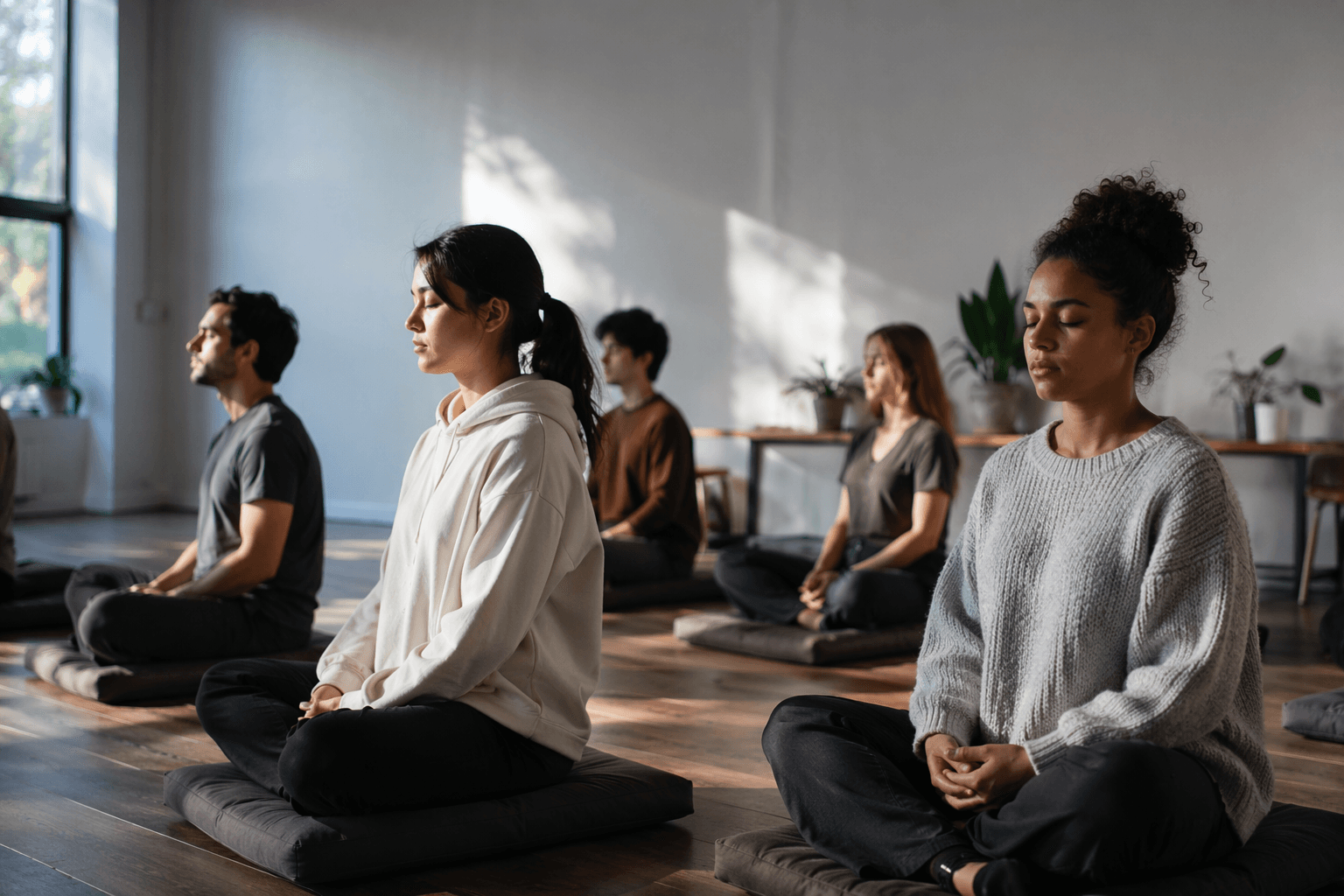
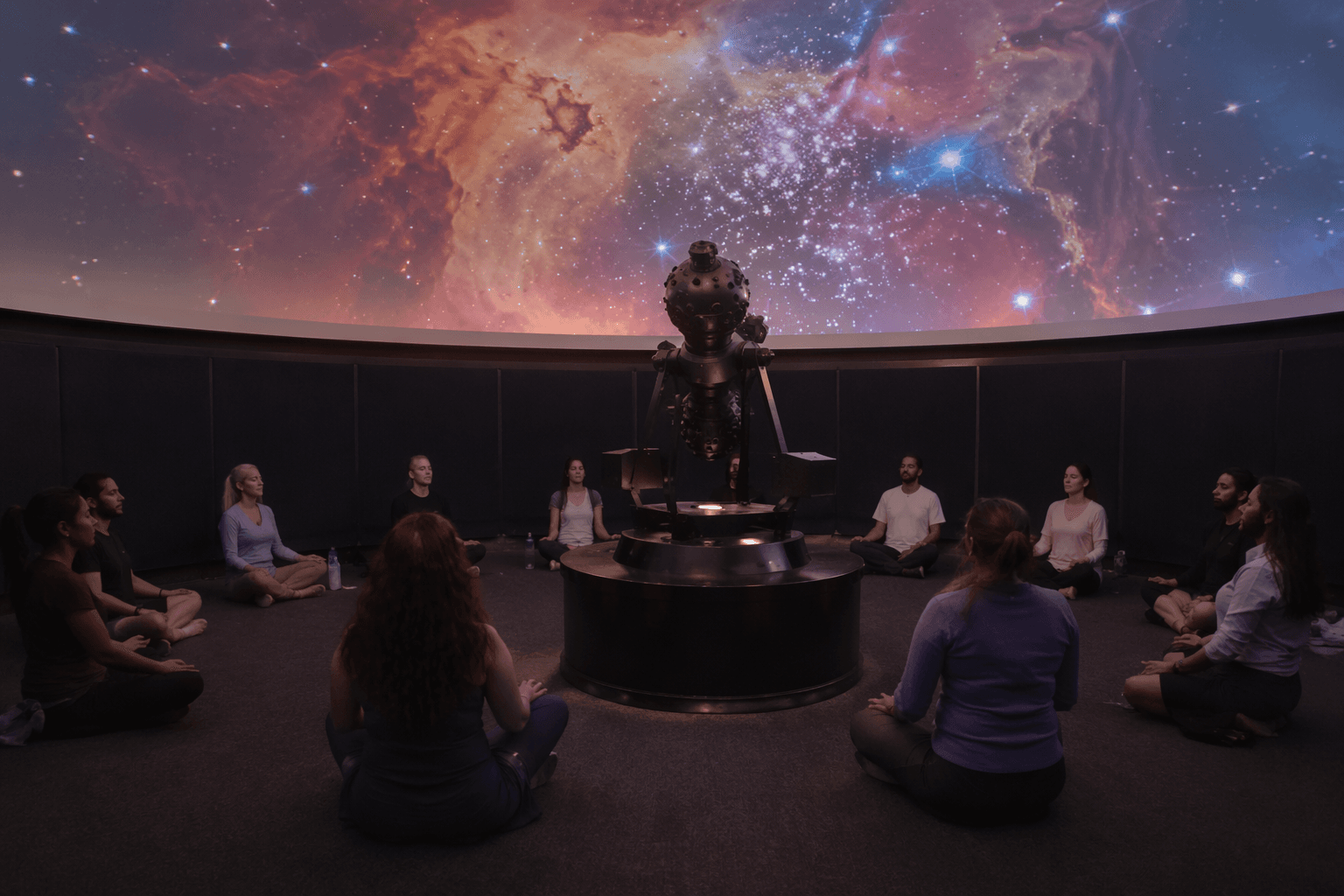
The most interesting thing about this session was how deliberately it refused to behave like a standard mindfulness class. Instead of treating breathwork, meditation, and reflection as separate stations, the gathering braided them together with poetry, and that changed the emotional temperature of the room. Makiah Malan opened with box breathing and guided meditation, then Jaye Elizabeth Elijah led participants into Ashley M. Jones’s “Lullaby for the Grieving,” turning the whole session into a communal practice of attention, language, and care.
That sequence matters because it shows a format other organizers can borrow. The event did not ask people to “relax” in the abstract. It gave them a container with a beginning, a mood, a text, and a shared direction for feeling. The result was a mindfulness experience that made room for sorrow without flattening it.
How the session was built
The structure was simple enough to repeat, which is part of why it works. Malan began with box breathing, a technique that steadies the body through an even rhythm of inhale, hold, exhale, and hold. From there, the guided meditation helped participants settle attention before the group moved into Elijah’s reading and exploration of the poem.
That order is not accidental. Breathwork creates a physiological reset, guided meditation quiets the room, and poetry gives people language for emotions that often stay stuck just below speech. If you are planning a community practice, this sequence offers a sturdy template: start with the body, steady the mind, and then open the emotional field through a shared text.
Why poetry changes the work
Poetry does something a generic mindfulness prompt often cannot. It gives shape to feeling without demanding that anyone explain themselves fully, and it lets grief arrive indirectly, through image and cadence instead of confession. In this gathering, Ashley M. Jones’s “Lullaby for the Grieving” served as more than a reading selection. It became the doorway into the session’s deeper work.
That matters for communities that want mindfulness to feel less clinical and more human. Poetry can hold ambiguity, which is exactly what grief needs. It lets people listen for resonance rather than performance, and that makes the room feel safer for honest reflection.
The form also lowers the pressure to “do mindfulness right.” You do not need to arrive with the perfect insight or a polished journal page. You only need to listen, notice what lands, and stay with the feeling long enough for it to become legible.
The prompt that made the practice personal
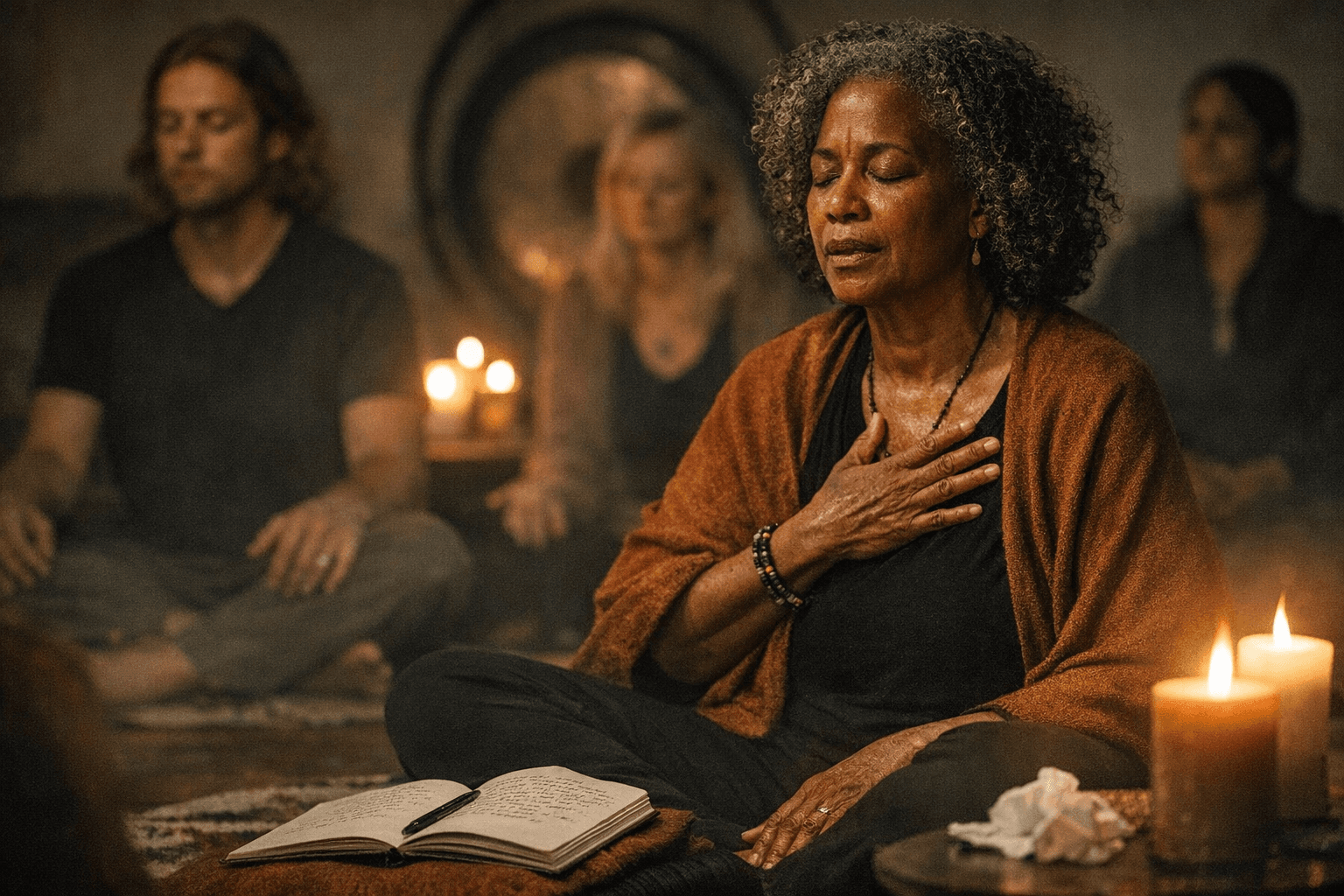
One of the most useful parts of the gathering was the writing prompt. Participants were invited to make small steps in their own grief, notice what their feet find, and write their hope exhaled into the trees. That language is important because it keeps the practice concrete. It moves grief out of the abstract and into the body, the ground, and the breath.
The prompt also shows how to build a mindfulness session that feels expressive without becoming performative. “Small steps” gives people permission to go slowly. “What their feet find” anchors reflection in physical sensation. “Hope exhaled into the trees” turns writing into something released, not just recorded.
For organizers, this is the model to copy: pair a contemplative technique with a prompt that translates inner experience into sensory language. That combination can unlock participation from people who might freeze in a more open-ended discussion. It gives structure without shutting down feeling.
What makes this a replicable community format
This gathering stands out because it is easy to imagine in other settings. A library, arts center, chapel, studio, campus room, or neighborhood meeting space could adopt the same arc and still make it feel local. The ingredients are familiar, but the sequencing gives them new power.
A useful version of the format would look like this:
- Open with a short breath practice, such as box breathing, to create a shared pace.
- Follow with a brief guided meditation so people arrive in the room together.
- Use one poem as the emotional center, not as decoration.
- Add a writing or reflection prompt that translates the poem into embodied language.
- End with quiet time for journaling, reading, or simply sitting with the work.
That structure is flexible enough to serve many communities, but specific enough to feel intentional. It also changes the expectation of what a mindfulness gathering can do. Rather than offering only calm, it can offer companionship in difficult feeling.
Why grief belongs in mindfulness spaces
The real insight in this gathering is that grief does not have to sit outside mindfulness practice. In fact, grief may be one of the places where mindfulness becomes most meaningful. When people are invited to notice breath, listen to a poem, and write from the body, the practice becomes less about escaping emotion and more about staying present with it.
That is a different promise from the one many people expect from meditation. It is not about shutting down pain or replacing it with serenity. It is about making sorrow a little more livable through shared attention, careful language, and a room full of people willing to stay with the moment together.
The invitation to submit ideas to Mindful Poetry Moments 2026 makes the point even more clearly: this is not just an event, it is a format in motion. The gathering shows how a community can build a repeatable practice out of breath, text, and silence, then keep refining it as more voices join in. For anyone designing meaningful group mindfulness, that combination of poetry, grief work, breath practice, and guided meditation offers a model with real staying power.
This article was produced by Prism’s automated news system from verified source data, official records, and press releases, then run through automated quality and moderation checks before publishing. The system is built and supervised by the people who set the standards it runs under. Read our full AI policy.
Did this article answer your question?