Sound Meditation Lowers Brain Activity, Heightens Awareness in Study
Sound meditation dampened brain activity across every EEG band, yet left participants more alert, a rare mix that may matter more than simple relaxation.
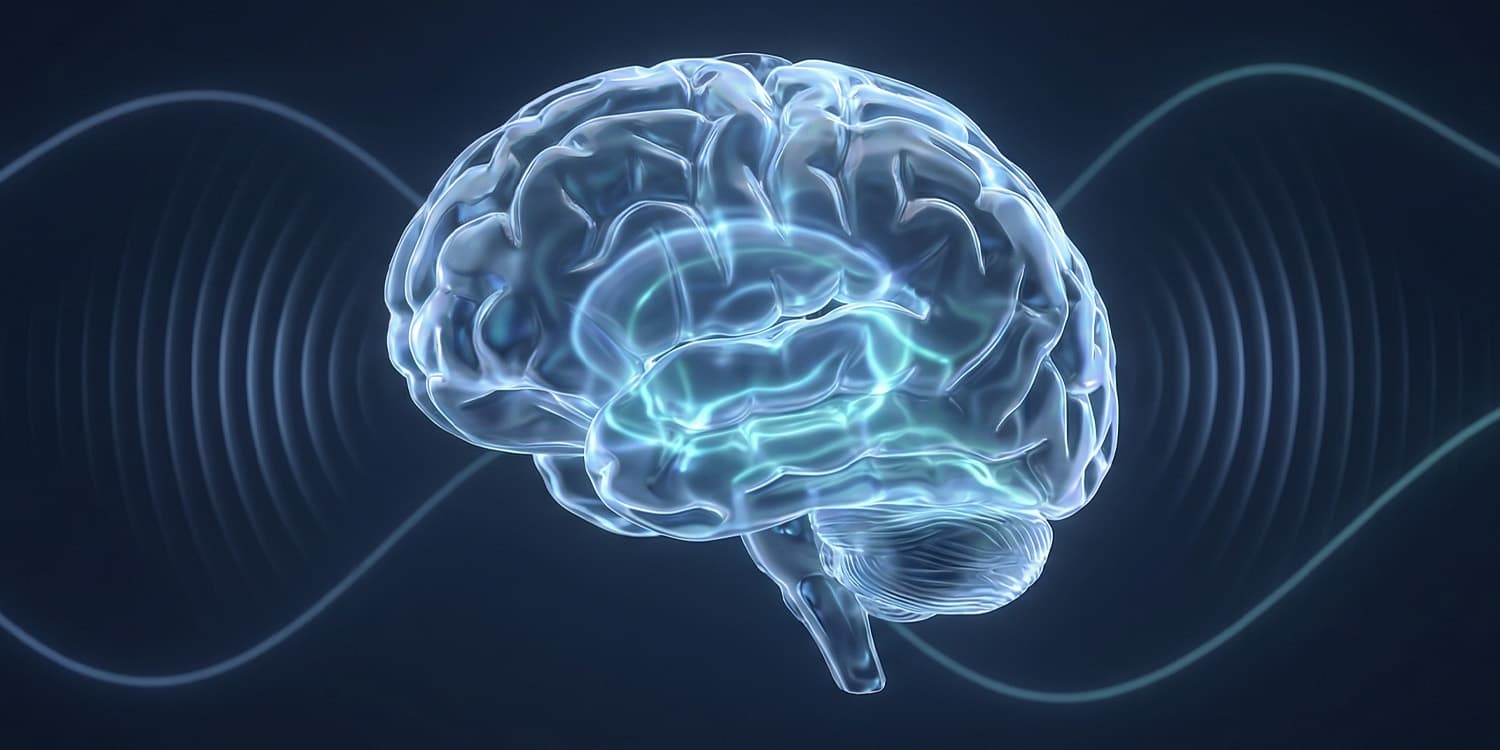
Sound meditation seemed to do two things at once: quiet the brain’s electrical activity and sharpen awareness. In a small study of 15 healthy adults, rhythmic sound meditation cut EEG power across delta, theta, alpha, beta and gamma bands, while subjective alertness rose after the session instead of fading.
The paper, titled Sound-based Meditation Alters Brain Activity: EEG Evidence for Power Reduction and Enhanced Conscious Alertness, was published online ahead of print on March 1, 2026 in Annals of Neurosciences. Km Megha, Ankita Mishra, Raksha Sharma, Pallabi Pal, Vijay Shanker Yadav, Arjun Ram Roja, Arun Sasidharan, Gulshan Kumar and Sanjib Patra led the work with affiliations across India, including the Central University of Rajasthan, S-VYASA University, Lakshmibai National Institute of Physical Education, Banaras Hindu University and the National Institute of Mental Health and Neurosciences.
Each participant, whose mean age was 24.8 plus or minus 3.6 years, completed two 26-minute sessions in a randomized, counterbalanced design: rhythmic sound meditation, or RSM, and a resting-state comparison. The team recorded brain activity with a 64-channel actiCHamp EEG system. The strongest reductions showed up in prefrontal and frontocentral regions, which is a useful clue for anyone who has felt sound practice turn the mind inward without putting it to sleep.
That is the practical difference from silent sitting. Silent meditation often asks practitioners to notice whatever arises without an external anchor. Rhythmic sound meditation gives the nervous system something to lock onto, and in this study that seemed to reduce overall electrical power while leaving people more consciously alert. After RSM, 93.3 percent of participants reported feeling alert, compared with 73.3 percent after resting. For meditators who struggle with dullness, restlessness or a wandering mind, that combination may be the point.

The altered-state language is not just hype, but it does need restraint. The authors said the findings support altered states of consciousness and expand neuroscientific understanding of sound-based meditation. That fits a wider research arc. A 2023 review in Pharmacological Reports noted growing scientific and clinical interest in meditation and psychedelics, and pointed to neurophysiological and phenomenological overlaps while also warning that stronger research is needed before clinical translation. A 2024 systematic review in Biomedicines linked mindfulness and meditation to better emotional regulation, lower anxiety and changes in sensory perception-related brain regions. A 2025 Mount Sinai study in PNAS went deeper still, showing meditation can alter activity in the amygdala and hippocampus.
Annals of Neurosciences, a free-access journal from the Indian Academy of Neurosciences, has now added a clean EEG result to that picture. Sound-based practice is looking less like a wellness fad and more like a distinct meditation mode: one that may quiet the brain without dimming attention.
This article was produced by Prism’s automated news system from verified source data, official records, and press releases, then run through automated quality and moderation checks before publishing. The system is built and supervised by the people who set the standards it runs under. Read our full AI policy.
Know something we missed? Have a correction or additional information?
Submit a Tip