Compassion can help or harm mood, study finds on distress
Compassion was linked to lower depression in one path and higher distress in another in 604 Polish adults. The split may matter most for meditators trying to care without getting flooded.
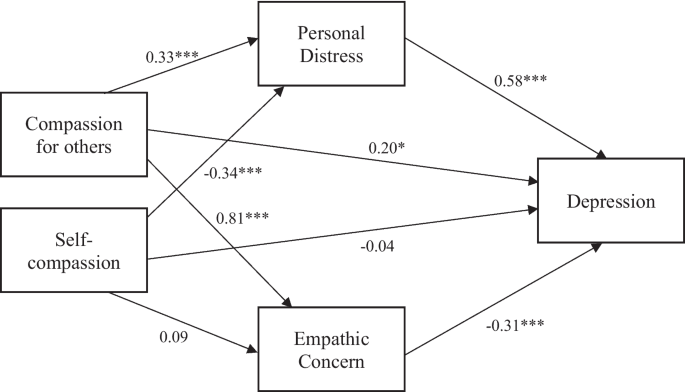
Compassion is not one thing in this new mindfulness study, and that difference may be the whole story. In a nationally representative sample of 604 Polish adults, Paweł Holas, Patryk Roczon and colleagues found that compassionate self-responding and compassion for others moved mood in sharply different directions depending on whether the response stayed grounded or tipped into personal distress.
The paper, published May 25, 2026 in Mindfulness, examined compassionate self-responding, compassion for others, affective empathy and depressive symptoms. Its central finding was simple but important for meditation circles that treat compassion as automatically protective: self-directed compassion was associated with lower personal distress, and lower personal distress in turn predicted lower depressive symptom severity. In other words, the benefit came through calm regulation, not just warm feeling.

Compassion for others was more complicated. It was positively related to empathic concern, and empathic concern was linked to lower depression. But compassion for others was also tied to personal distress, and that distress was linked to higher depression. Personal distress emerged as the strongest mediator in the model, sharpening the boundary between healthy care and the kind of over-identification that leaves a person emotionally spun up by someone else’s suffering.
That distinction gives mindfulness teachers and practitioners a practical frame. The study suggests that compassion practice is not only about how much care is generated, but also about whether the mind can stay steady while caring. Self-compassion practices may be especially useful when they reduce distress and improve emotional regulation. Outward-facing compassion may need balancing tools, so concern for others does not tip into overwhelm.
The authors also noted that the preprint was not pre-registered, a detail that matters for how firmly to weigh the findings. Still, the result fits broader evidence that self-compassion interventions can reduce depressive symptoms, anxiety and stress, and that mindfulness-based interventions can reduce depressive symptoms across mental disorders. A 2025 meta-analysis on compassion for others also tracked 54 effect sizes linking compassion for others and well-being, while a 2023 longitudinal study asked whether empathy leads to depression over one year. A review of personal distress pointed in the same direction: the painful side of emotional empathy looks more closely tied to harm than empathic concern does.
For meditators drawn to compassion practices, the takeaway is not to care less. It is to notice when compassion is landing as steady concern and when it is becoming a mood-draining flood.
This article was produced by Prism’s automated news system from verified source data, official records, and press releases, then run through automated quality and moderation checks before publishing. The system is built and supervised by the people who set the standards it runs under. Read our full AI policy.
Know something we missed? Have a correction or additional information?
Submit a Tip