Mindfulness app Pawz adds virtual pet companionship to meditation sessions
Pawz tests a bigger idea: a virtual pet may keep meditators coming back when timers and audio alone don’t. The question is stickiness, not cute novelty.
What Pawz is trying to change
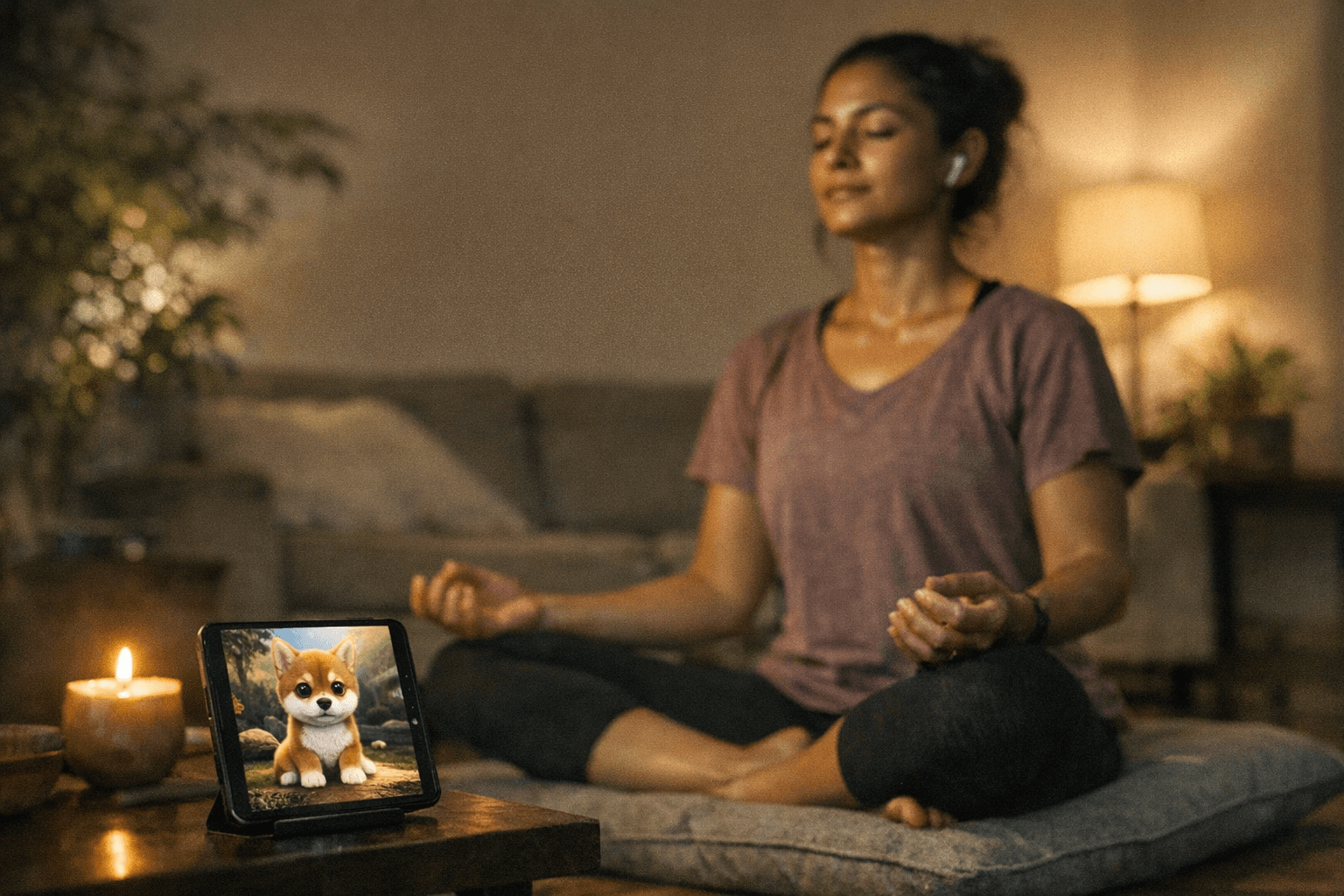
Pawz takes a familiar meditation format and adds something most mindfulness apps leave out: companionship. Instead of relying only on guided audio or a timer, the concept places an interactive virtual pet beside the user during practice, turning a solo routine into a small relationship.
That shift matters because meditation apps do not usually fail on content alone. They often fail on follow-through. People may start with real enthusiasm, but the harder part is showing up again tomorrow, then again a week later, until the practice has a chance to stick.
The real problem is adherence, not access
The strongest argument for a companion-based app is not that it makes meditation more playful. It is that it addresses the central weakness of the category: people drop off. Research on mindfulness meditation apps has found that regular, long-term use is needed to preserve benefits, yet sustained engagement remains difficult for many users.
That is why app makers study abandonment so closely. A 2022 Journal of Medical Internet Research study used data from 2,600 new Calm subscribers to predict future app abandonment, showing how seriously the industry treats drop-off as a design problem. In plain terms, the question is no longer whether people can download a meditation app. It is whether they will still be using it after the novelty wears off.
Why a virtual pet could help, and where it may fall short
Pawz is betting that emotional attachment can do what reminders and streaks often cannot. A digital companion can make the practice feel less solitary, give users a reason to return, and create a soft sense of accountability without feeling punitive. That is a different strategy from the usual “open app, press play, sit still” model.
The upside is obvious for people who struggle with isolation, boredom, or inconsistency. A pet-like companion can make a session feel alive, even when the meditation itself is short. The risk is equally clear: if the companion is only decorative, the novelty will fade fast, and the app will become one more icon on a phone full of abandoned wellness tools.
How it compares with guided-audio leaders
Standard meditation apps still dominate by keeping the experience simple and accessible. Calm, for example, highlights The Daily Calm, a 10-minute meditation, and says it offers more than 500 Sleep Stories. That approach is straightforward: give users a short daily anchor and a deep library they can dip into when they need sleep support, stress relief, or a structured session.
Headspace is moving in a more conversational direction with Ebb, its empathetic AI companion that offers personalized meditations and activities. That puts Headspace closer to Pawz’s territory, because the product is no longer just delivering audio, it is trying to create a more responsive relationship with the user. Pawz pushes that idea one step further by making the companion visible, playful, and present as part of the meditation session itself.
What the evidence says about app-based mindfulness
The broader research picture helps explain why companies are experimenting. A 2024 systematic review in npj Mental Health Research included 28 randomized controlled trials involving 5,963 adults and found that mindfulness apps can produce meaningful changes in some psychological processes. At the same time, the review made clear that more research is still needed to optimize app design and strengthen the evidence base.
That balance is important. The field has enough evidence to say app-based mindfulness can help, but not enough to declare any one design solved. Features like virtual companions, personalization, and gamified feedback are attempts to improve the part of the experience that matters most in real life: keeping people engaged long enough for the practice to matter.
The veteran studies point to both promise and friction
A 2024 study in ScienceDirect on app-augmented mindfulness groups for veterans adds a useful reality check. The app-supported format helped some participants grow mindfulness skills and apply them in daily life, which is exactly the kind of practical payoff the category promises. But the same study also found that some users thought the apps were hard to navigate and difficult for building new habits.
That tension defines the whole market. Digital tools can make meditation more available, more flexible, and more personalized. They can also create new friction if the interface feels clumsy or if the experience never becomes emotionally rewarding enough to survive the first few weeks.
Why the market is moving toward companions and smarter design
Pawz fits into a wider wellness-tech trend toward gamification and personalization. Instead of expecting users to keep returning only because they value mindfulness in theory, these products try to reward routine, build attachment, and make the app feel responsive. In practice, that could mean emotionally intelligent characters, biofeedback-informed prompts, or interfaces that nudge users back without sounding like a drill sergeant.
That shift is not happening in a vacuum. The FDA cleared Rejoyn in 2024 as the first prescription digital therapeutic for major depressive disorder, and the American Psychological Association said the Centers for Medicare & Medicaid Services proposed three reimbursement codes for mental health digital therapeutics in 2024. Together, those developments show growing institutional openness to app-based care when the product is evidence-based and clinically serious.
What Pawz really signals for meditators
The clearest takeaway is not that every meditation app needs a mascot. It is that the market is testing whether companionship mechanics can solve the biggest adherence problem in mindfulness: getting people to come back after the first few sessions.
For users who already like guided meditations and stick with them, Pawz may feel like a clever extra. For people who repeatedly abandon meditation apps, it could be more than novelty, because it targets the exact reason many routines fail. If the next generation of mindfulness tools can make practice feel less lonely and more relational, the competition will no longer be about who has the biggest audio library. It will be about who can help people keep showing up.
This article was produced by Prism’s automated news system from verified source data, official records, and press releases, then run through automated quality and moderation checks before publishing. The system is built and supervised by the people who set the standards it runs under. Read our full AI policy.
Did this article answer your question?