Mindfulness-Enhanced Resistance Training Boosts Well-Being in Female College Students
An RCT embedded breath cues and body scans directly into weight sessions and found female college students lifted their well-being alongside their reps.

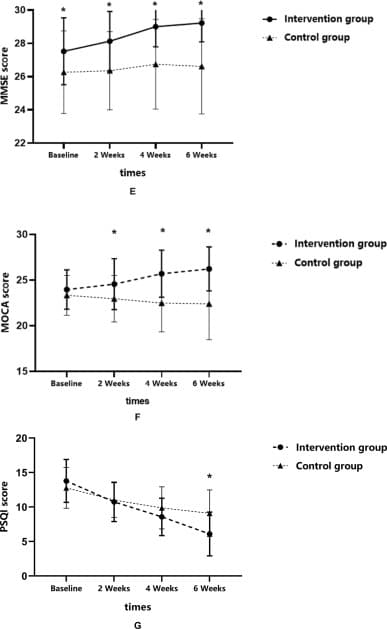
Female college students who lifted weights with embedded mindfulness cues reported measurably greater subjective well-being than peers who trained without them, according to a randomized controlled trial published in MDPI's Behavioral Sciences. The study tested a Mindfulness-Enhanced Resistance Training program, referred to throughout as MRT, and represents one of the more methodologically deliberate attempts to fuse the two disciplines within a single, structured session rather than running them as parallel practices.
The architecture of MRT is what separates it from simply telling gym-goers to breathe more intentionally. Mindfulness instruction was woven directly into the resistance training itself: breath awareness cued between sets, body scanning practiced during rest intervals, and moment-to-moment noticing anchored throughout each lift. Participants also completed mindfulness homework outside of sessions, extending the attentional practice beyond the training floor without requiring additional formal exercise time.
That combination matters for the target population. Female college students carry a particular cluster of stressors: academic pressure, body-image concerns, and the kind of chronic low-grade tension that makes present-moment attention difficult to access. Resistance training already exists on most university campuses, meaning MRT asks for adaptation from within existing infrastructure rather than the construction of entirely new programming.
Peer reviewers of the manuscript described the intervention as "long, comprehensive, and well designed," with recommendations focused on manuscript clarity rather than fundamental methodological concerns. The timeline reinforces the study's substance: submission in December 2025, revision and acceptance in March 2026, with the version of record published April 8, 2026.
Practitioners wanting to approximate the MRT approach in their next session can start with three anchored cues. Before the first set, pause for two full breath cycles and name one physical sensation in the body as a grounding point. Between sets, rather than reaching for a phone, close the eyes and run a brief scan from the soles of the feet upward, noting tension or fatigue without judgment. After the final set of each exercise, take one slow exhale and observe how the body feels compared to the start of the movement. These three touchpoints map directly to the breath awareness, body scanning, and moment-to-moment noticing the MRT protocol embedded into standard resistance sessions.
The publication is open-access, placing the full trial protocol and results within reach of campus wellness coordinators, sport psychologists, and certified trainers who want to replicate or build on the design. What the MRT trial now puts on record is that the psychological return on a resistance session can be meaningfully improved without extending its length, simply by directing attention more deliberately throughout the time already spent.
This article was produced by Prism’s automated news system from verified source data, official records, and press releases, then run through automated quality and moderation checks before publishing. The system is built and supervised by the people who set the standards it runs under. Read our full AI policy.
Did this article answer your question?