Mindfulness Group Therapy Cuts Stress in Schizophrenia, Study Finds
A four-week clinician-led mindfulness group cut stress, distress, and cortisol in schizophrenia spectrum disorders, but the authors warned against overreading the result.

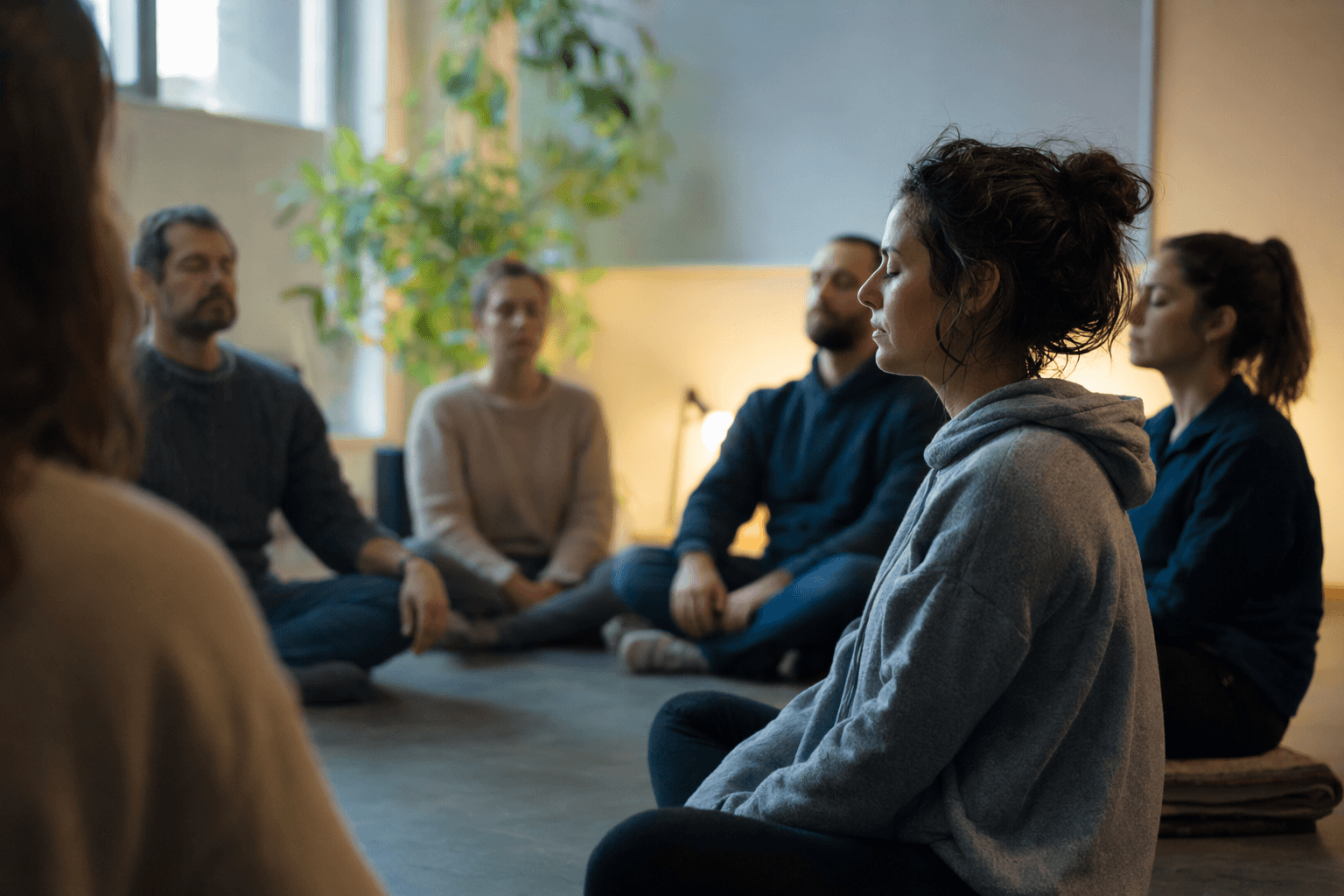
A four-week mindfulness-based group therapy program lowered self-rated stress, symptom-related distress, and saliva cortisol in people with schizophrenia spectrum disorders, offering a measured but notable signal for a population where stress can drive relapse and day-to-day instability.
The early-access manuscript in Schizophrenia randomised 45 participants, with 22 assigned to the mindfulness arm and the rest to treatment as usual. Researchers tracked both subjective and biological markers: general stress, symptom-related distress, cortisol collected from saliva, and oxytocin measured before and after the first and last sessions. In the mindfulness group, stress scores and distress scores fell significantly, and cortisol levels dropped as well.
The biology was interesting, but not simple. Oxytocin rose during the first session and then decreased by the final session, a pattern the authors treated as exploratory rather than definitive. They also reported correlations between the psychological and biological stress markers, along with links between stress reduction and changes in self-reported negative symptoms. That makes the intervention look more complex than a generic relaxation exercise; it may be interacting with stress pathways that matter clinically in schizophrenia spectrum disorders.
Still, the paper stopped well short of claiming a breakthrough. The authors noted that the trial lacked a session-specific control group, which limits causal interpretation. That matters because this was not a casual mindfulness class or a broad wellness offering. It was a structured, clinician-led group intervention tested in a psychiatric population where timing, setting, and clinical oversight can shape outcomes far more than they do in mainstream meditation courses.
The manuscript was received on January 13, 2026, accepted on April 17, and published as an unedited early-access article on April 30. Lead author Marco Zierhut worked through Charité - Universitätsmedizin Berlin and the BIH Charité Clinician Scientist Program, alongside coauthors from the Berlin Institute of Health at Charité, Brandenburg Medical School, the German Centre of Mental Health, and the University of New South Wales. The work was supported by a NARSAD Young Investigator Grant from the Brain & Behaviour Research Foundation.
The result lands in a field that has been building slowly. A 2024 multisite trial in Hong Kong, with 152 fully remitted patients with schizophrenia or non-affective psychosis, found no one-year relapse advantage for a seven-week mindfulness-based intervention over psychoeducation. A 2023 pilot of virtual reality-based mindfulness in 64 patients with psychosis also showed limited symptom effects. Even so, a 2026 meta-analysis of 24 studies and 1,292 patients found small to moderate symptom benefits from relaxation approaches, while noting they remain uncommon in guidelines. This new study adds a sharper question to that debate: whether brief, supervised group mindfulness can shift not only how people feel, but also how stress shows up in the body.
This article was produced by Prism’s automated news system from verified source data, official records, and press releases, then run through automated quality and moderation checks before publishing. The system is built and supervised by the people who set the standards it runs under. Read our full AI policy.
Did this article answer your question?