Mindfulness Helped GW Turn Peace Walk Into Campuswide Connection
A 2,300-mile monk walk became GW’s mindfulness engine. Amitha Khema Thero shows how meditation can keep a campus connected long after the headline fades.
From a peace walk to a campus practice
A peace walk did not end when 19 Buddhist monks reached Foggy Bottom. It turned into a campus rhythm, one built around Amitha Khema Thero’s instinct to treat mindfulness as something students could return to, not just witness once.
That is the real shape of the story at George Washington University: a global religious journey became a local practice of connection, and the afterlife of the event mattered as much as the arrival itself. The monks had begun walking in Fort Worth, Texas, on October 26, 2025, and crossed about 2,300 miles through nine states before reaching Washington, D.C., on February 10, 2026. GW then turned the final stretch into a two-day set of gatherings that made peace visible on campus and in the city.
Amitha Khema Thero’s role was to turn scale into intimacy
Khema, GW’s Buddhist chaplain, did not treat the Walk for Peace as a spectacle to be watched from the sidelines. He saw it as an opportunity for connection and proposed that the university host a talk or meditation event for the monks. That small idea became the organizing spark for a broader response that included a community talk, a welcoming ceremony, overnight lodging for the monks, visits to major Washington landmarks, and a public meditation for thousands at the Charles E. Smith Center.
That expansion matters because it shows how mindfulness works in real campus life. It is not only about silence or individual calm. In this case, it also meant making space for hospitality, religious respect, and a shared emotional register that could hold a large and complicated event without losing its center.
The campus already had the bones of a mindfulness community
GW did not have to invent an interfaith structure from scratch. The university’s Center for Interfaith & Spiritual Life began operating in fall 2024, with a mission that includes interfaith engagement, education, service, worship, and meditation. That gave the Walk for Peace a home inside an already active network, rather than dropping it onto campus as a one-off event.
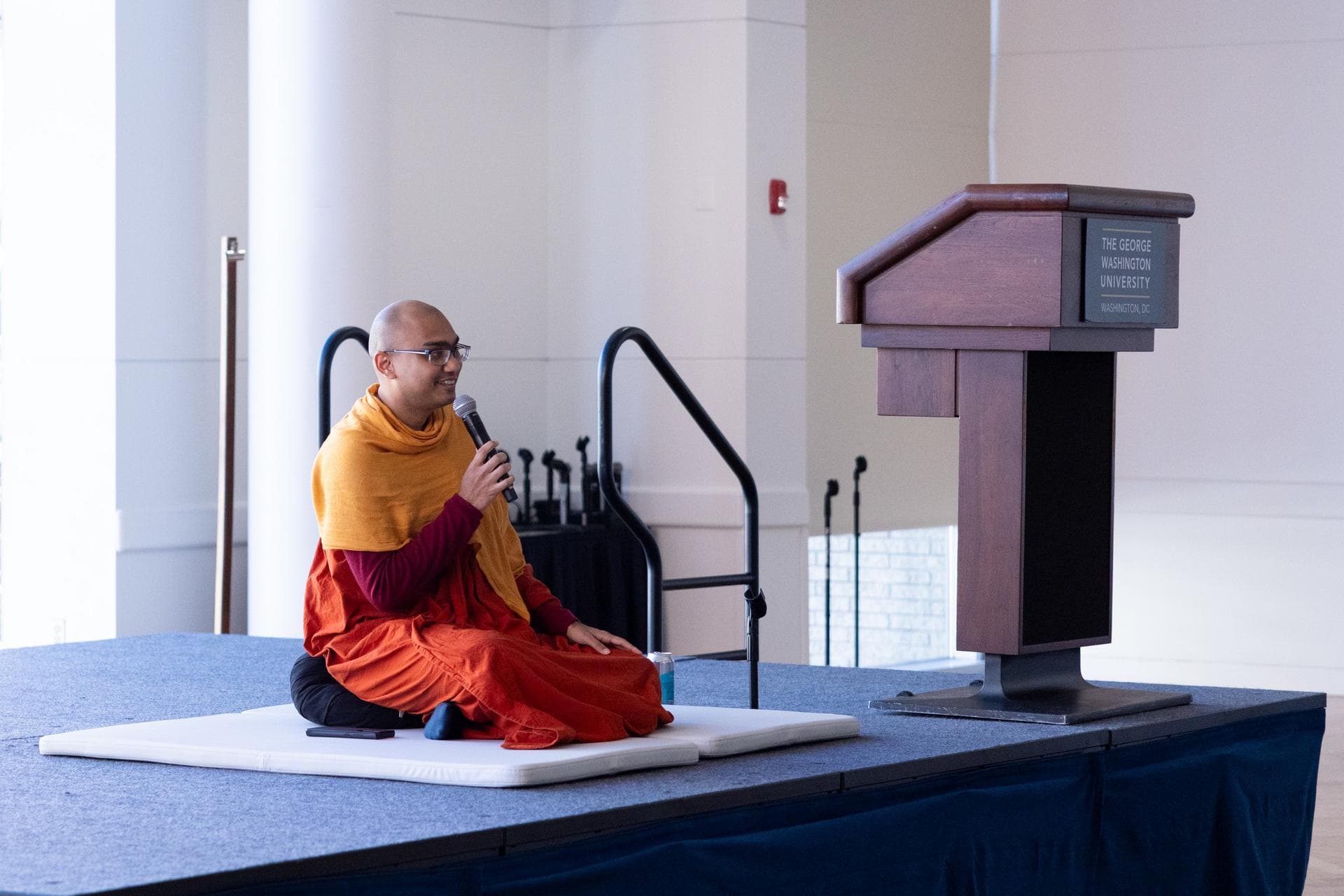
The center’s work had already shown up in recurring programming before the monks arrived. Khema led a November 6, 2025 “Meditate with a Monk” session in the Grand Ballroom, described as a peaceful space to cultivate mindfulness, compassion, and connection. GW’s fall-semester “Meditate with a Monk” sessions were also framed as a way for people to pause, breathe, and recharge, language that feels especially practical on a campus where deadlines, schedules, and stress often arrive all at once.
Why the February events felt bigger than a single evening
By the time the monks reached Washington, the scale had become impossible to miss. GW warned in advance that the Feb. 11 public event at the Charles E. Smith Center would significantly affect Foggy Bottom operations, with road closures and crowd impacts shaping the day. The university was not simply hosting a lecture or a quiet meditation, it was absorbing a city-scale moment into campus life.
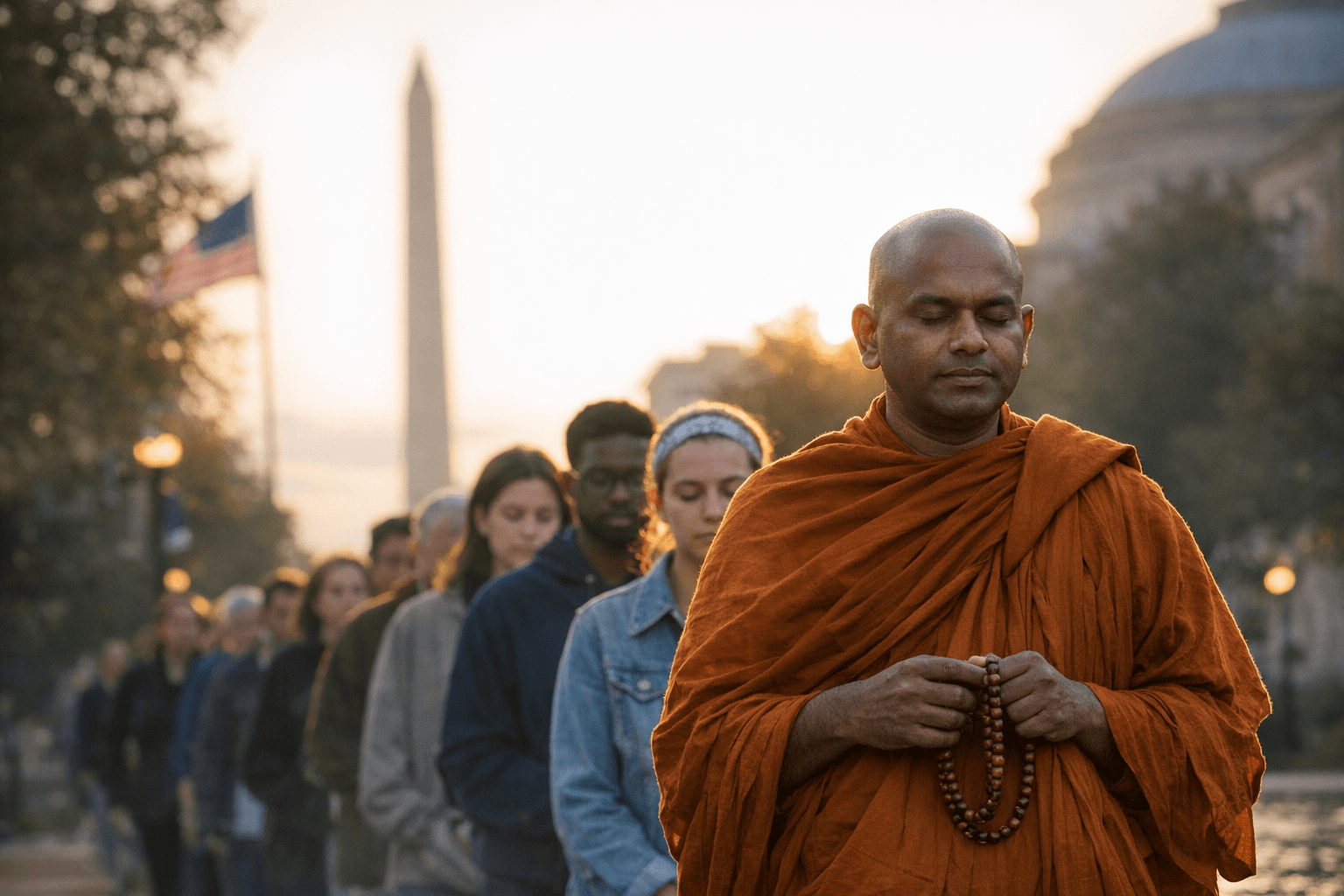
The monks were received at Washington National Cathedral before a crowd of thousands, including faith leaders from across the nation, before heading to GW for the campus program. That sequence gave the walk a public finish that moved from sacred ritual to university gathering, with the Charles E. Smith Center serving as the place where peace, blessings, and meditation were meant to land in front of a broad audience. The message was simple, but the logistics were not.
Mindfulness held the project together under pressure
The behind-the-scenes work is where the story becomes especially instructive for anyone who thinks of mindfulness as only a personal wellness tool. Khema and university chaplain Kristen Glass Perez had to build plans, backup plans, and backup-to-the-backup plans while dealing with severe weather, health issues among the monks, and the need to respect the faith tradition carefully.
That kind of coordination is mindfulness in action. It is the steadiness to keep returning to the purpose of the event while weather, health, transportation, and crowd management threaten to pull attention in a dozen directions. The campus response shows that mindfulness can be an organizing practice as much as a contemplative one, helping people stay centered when a meaningful event becomes operationally difficult.
The real legacy is what kept happening afterward
The April 17 feature makes its strongest point in the aftermath. The question was never just how GW would receive the monks once. It was how the university would keep the spirit of that visit alive for students and the wider community after the cameras moved on.
That continuity is visible in GW’s broader interfaith calendar. The university’s 2025 Interfaith Week included more than 40 programs, and its prayer and meditation spaces remain open to all GW community members. Those details matter because they show the Walk for Peace was not an isolated peak. It fit into a larger pattern of access, repetition, and invitation, where mindfulness is available in ordinary weeks as well as during major public moments.
What GW’s response suggests about campus mindfulness
The campus lesson here is not that every university should stage a massive public procession. It is that mindfulness becomes durable when it is embedded in a structure students can actually use. At GW, that structure included a center dedicated to interfaith life, recurring “Meditate with a Monk” sessions, open prayer and meditation spaces, and a community willing to turn a once-in-a-lifetime arrival into a broader practice of shared calm.
The Walk for Peace may have been the headline, but the lasting story is the one that followed it. Khema helped make sure the moment did not dissolve after the final blessing. Instead, it became part of how GW thinks about healing, resilience, and what it means to build a mindful community that can hold both ceremony and pressure without losing its balance.
This article was produced by Prism’s automated news system from verified source data, official records, and press releases, then run through automated quality and moderation checks before publishing. The system is built and supervised by the people who set the standards it runs under. Read our full AI policy.
Did this article answer your question?