Mindfulness meditation may boost creative personality, EEG microstate changes
A four-week mindfulness course lifted creative personality scores in 58 students and shifted an EEG microstate linked to attention.
A four-week mindfulness meditation course did more than settle nerves. In a randomized trial of 58 Chinese undergraduates, Xiaoqian Ding and colleagues found measurable changes in creative personality scores and in resting-state EEG microstate activity, including a pattern often discussed in relation to attention-network dynamics.
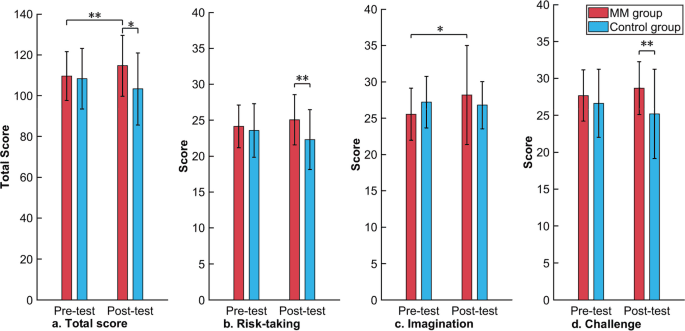
The study used a simple comparison that hobbyists and creators will recognize instantly: mindfulness group versus waitlist control. Before and after the intervention, the students completed the Williams Creativity Aptitude Test and underwent resting-state EEG recording. That design matters because most earlier mindfulness-and-creativity work has treated creativity as a task performance issue. This paper asked a broader question: can mindfulness reach deeper, trait-like creative tendencies?
The answer, at least in this small trial, was more than a mood bump. After the program, the mindfulness group scored significantly higher than controls on overall creative personality, risk-taking orientation and challenge orientation. Within the meditation group itself, total creativity scores rose from pretest to posttest, and the imagination dimension improved as well.

The EEG results tracked alongside those questionnaire changes. Students in the mindfulness group showed a higher occurrence of Microstate D and lower transition probabilities from A to C and from C to A than the control group. A correlation analysis also found that increases in Microstate D were positively associated with gains in imagination. The authors interpreted that pattern as preliminary evidence that mindfulness meditation may influence imagination by modulating a specific brain microstate, not by magically turning on creativity, but by shifting the state the brain is cycling through.
That caution matters. The paper was not preregistered, and the sample was limited to undergraduates. Even so, the findings fit a wider literature that has already pointed in the same direction. A 2023 meta-analytical review reported positive overall effects of mindfulness interventions on creativity, with effect sizes of d = 0.42 for control-group designs and d = 0.59 for pretest-posttest designs. Earlier studies also found that mindfulness, and mindfulness-plus-compassion practices, could improve verbal creativity and creative art-making in students.

For anyone who wants to test the idea without overselling it, the cleanest experiment is still a short one. Try a brief mindfulness practice for a few weeks, then compare your own work before and after on one fixed creative task, whether that is sketching, writing, photography or brainstorming. The promise here is not that mindfulness makes everyone inventive on command. It is that, in a small lab-backed trial, a short practice seemed to nudge the mental conditions creative work depends on, right when the sketchbook or blank screen opens.
This article was produced by Prism’s automated news system from verified source data, official records, and press releases, then run through automated quality and moderation checks before publishing. The system is built and supervised by the people who set the standards it runs under. Read our full AI policy.
Did this article answer your question?