Mindfulness meditators show distinct brain responses in attention task
In a 35-vs-29 EEG test, experienced meditators showed a stronger fronto-midline N2 on hard NoGo trials and a more frontal P3.
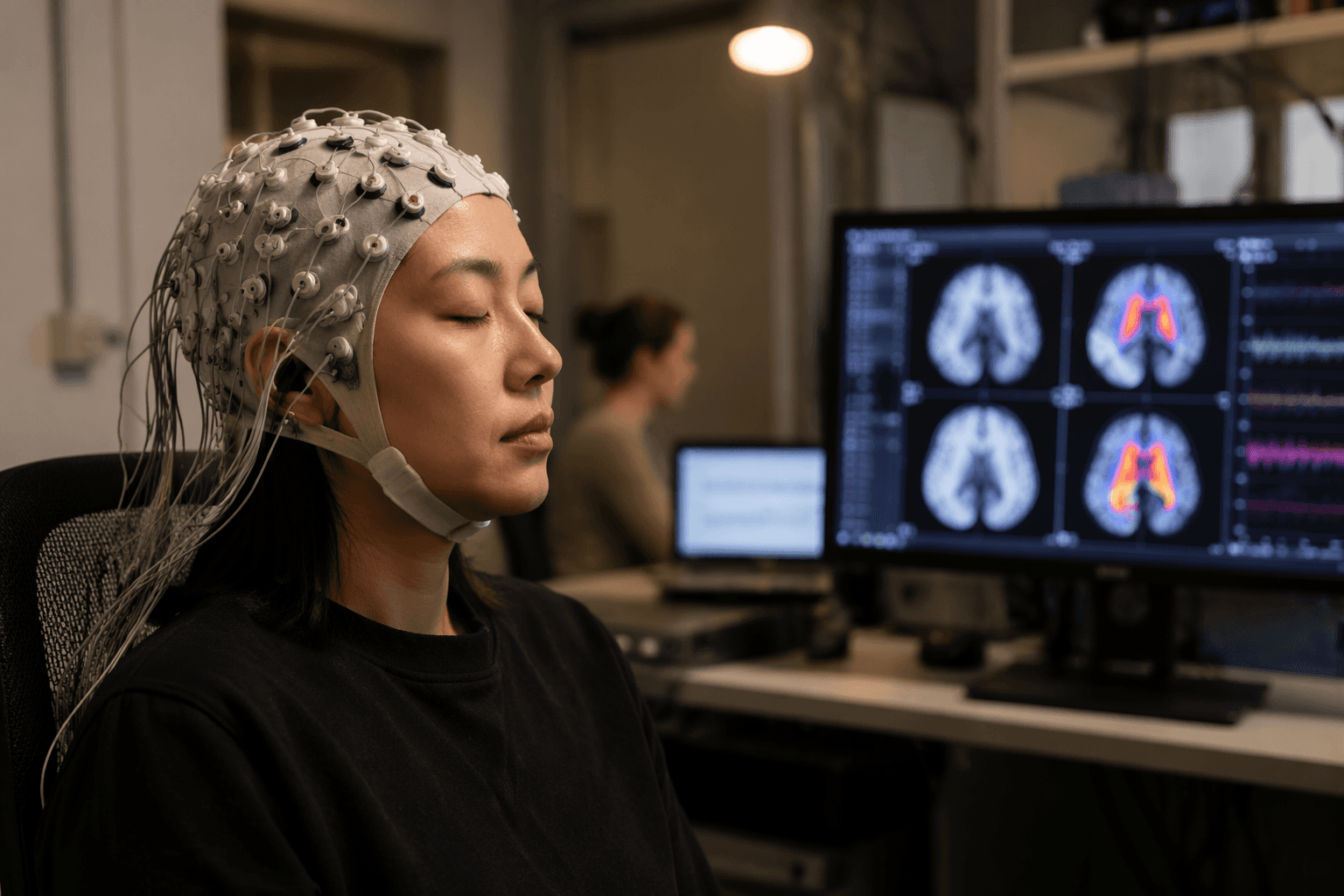
Experienced meditators showed a stronger fronto-midline N2 on hard NoGo trials and a more frontal P3 pattern that shifted with task difficulty in a 35-versus-29 EEG study built around easy and hard Go/NoGo conditions. The new paper, Neural Differences in Conflict Monitoring, Stimulus Expectancy, and Attention-Related Processes in Experienced Meditators, used event-related potentials to watch how the brain handled competing signals in real time.
The preprint split the task into two versions, one with 50% NoGo stimuli and another with 25% NoGo stimuli, then compared 35 meditators with 29 non-meditators. On the harder NoGo trials, meditators showed the clearest fronto-midline N2 response, while the P3 pattern sat farther frontally and varied with task difficulty instead of simply rising everywhere. That is the useful wrinkle: the signal did not look like a blunt boost in brain activity, but like a different way of allocating attention when the task became demanding.
That distinction matters because the N2 and P3 are not new mysteries. Earlier work has treated the NoGo N2 as an indicator of conflict monitoring and response conflict, and past Go/NoGo research has tied anterior N2 and P3 activity to a mix of conflict monitoring, sensory mismatch, action inhibition and attention. In other words, this study was not chasing an exotic marker. It used familiar ERP components with a long interpretive history and asked whether meditation experience changes the pattern under pressure.
The new findings also land next to an earlier EEG Go/NoGo study of 34 experienced meditators and 28 matched controls, where meditators were more accurate and showed a more frontally distributed P3 to both Go and NoGo trials. That paper read the frontal P3 as sustained attention rather than response inhibition alone. The newer study pushes the conversation a step further by showing that the fronto-midline N2 becomes especially pronounced when the NoGo demand is harder, which nudges the field away from vague talk about a generally calmer brain and toward the narrower question of how conflict is monitored and handled.
That is also where the Massachusetts General Hospital Meditation Research Program fits in. The program says its mission is to advance multidisciplinary research and education on advanced meditation, while noting that the field still has a nascent understanding of advanced practice and limited research beyond clinical mindfulness applications. For practitioners, the practical read is simple: the most believable edge for long-term mindfulness training may show up when attention has to stay online, the response has to be stopped, and the task leaves no room for autopilot.
This article was produced by Prism’s automated news system from verified source data, official records, and press releases, then run through automated quality and moderation checks before publishing. The system is built and supervised by the people who set the standards it runs under. Read our full AI policy.
Did this article answer your question?