Mindfulness painting trial shows lasting boosts in emotion regulation and brain function
Mindfulness-Oriented Expressive Painting held gains for a full 52 weeks, improving emotion regulation, stress biology and brain connectivity in adults with high dysregulation.
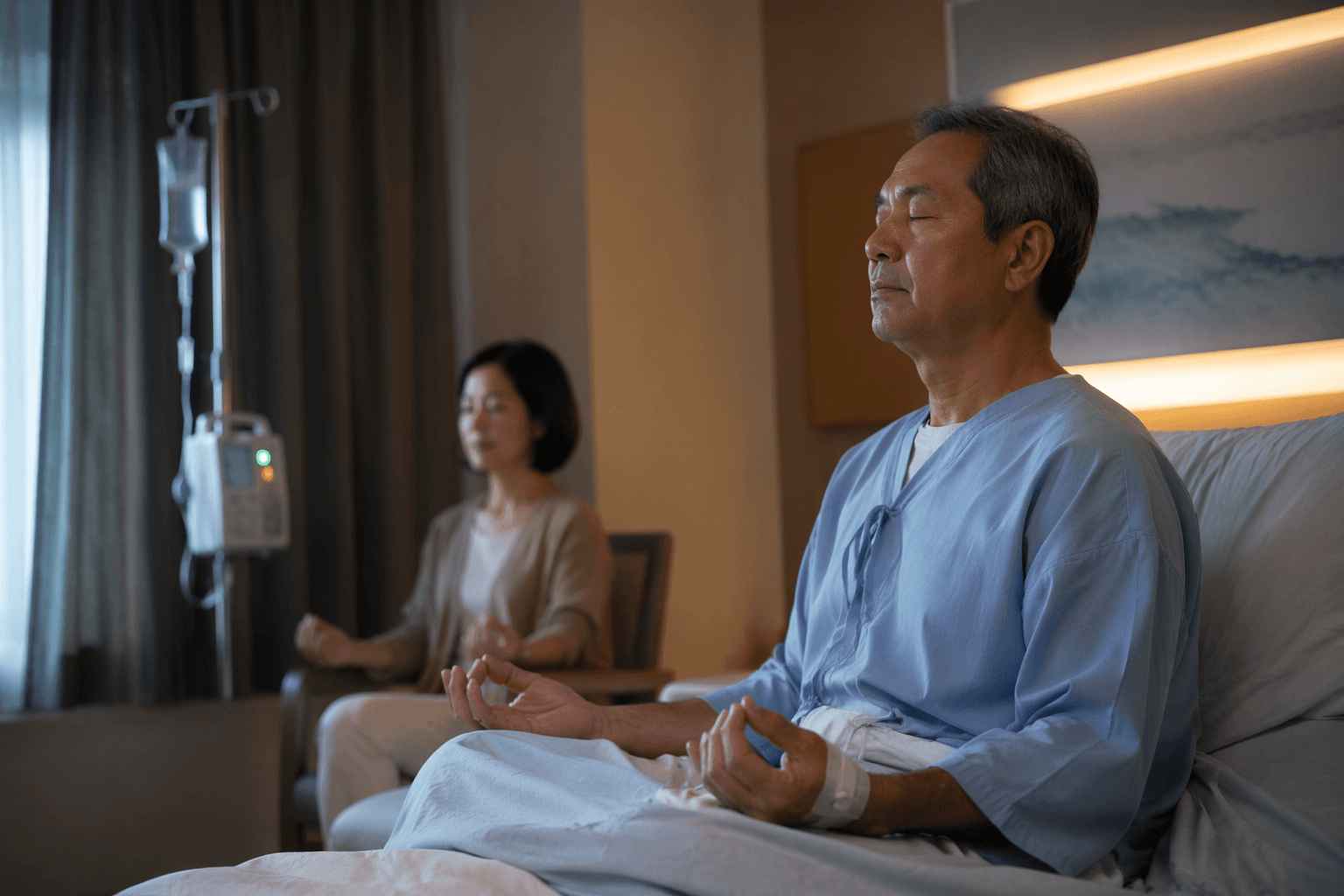
For adults who struggle to sit still with a meditation cushion, the more useful doorway may be a paintbrush. In a 52-week randomized trial of 195 adults with elevated emotion dysregulation, Mindfulness-Oriented Expressive Painting delivered lasting gains not only in self-report, but in heart-rate variability, cortisol, inflammation and fMRI connectivity.
The study, published June 10, 2026 in Mindfulness by Qiang Qin Qin, WenKai Wang and Aqun Wang, enrolled adults ages 18 to 55 whose emotion dysregulation scores met the trial threshold of DERS 80 or higher. Participants were randomized to MOEP, an active control or a waitlist control, giving the researchers a direct test of whether a structured art-based mindfulness practice could outperform comparison conditions when the central problem was emotional regulation.
MOEP ran for 16 weeks, with weekly 90-minute group sessions and 30 minutes of online practice. The follow-up then continued for another 36 weeks, making this a full 52-week longitudinal trial. That long runway matters because many mindfulness studies can show early movement; this one asked whether the gains would stick.
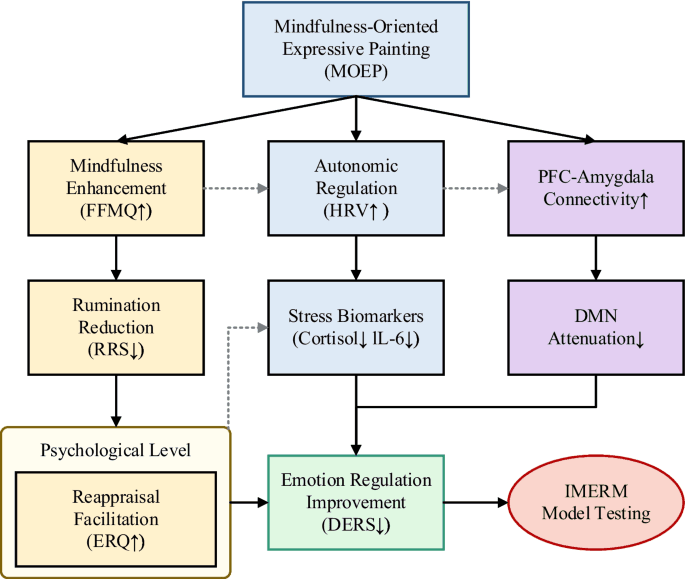
The answer was yes. The MOEP group showed large and sustained improvements in emotion dysregulation, trait mindfulness, rumination and cognitive reappraisal. The same pattern appeared in the body and brain measures the team tracked through its Integrative Multilevel Emotion Regulation Model, or IMERM. Heart-rate variability improved, cortisol fell, inflammatory activity dropped, including markers such as IL-6, and fMRI measures showed stronger prefrontal-amygdala connectivity alongside reduced default mode network activity.

That profile gives the trial its practical edge. It suggests mindfulness does not need to be limited to silent sitting or breath awareness to work as a contemplative intervention. For people whose main barrier is emotional flooding, verbal overprocessing or frustration with conventional meditation formats, expressive painting may offer a better entry point because it builds present-moment attention through making rather than merely observing.
The trial also fits a larger move in the field toward mechanism-focused research. A 2024 systematic review and meta-analysis of mindfulness-based emotion regulation strategies analyzed 110 studies, 767 effects and 8,105 participants, while a 2024 randomized study of mindfulness-based art therapy using watercolor painting reported effects on emotion regulation, mindfulness and obsessive symptoms. MOEP pushes that line of work further by tying a creative practice to measurable psychological, physiological and neural change over an entire year. When mindfulness is paired with art, the strongest case may be for the people who cannot get traction from sitting still alone.
This article was produced by Prism’s automated news system from verified source data, official records, and press releases, then run through automated quality and moderation checks before publishing. The system is built and supervised by the people who set the standards it runs under. Read our full AI policy.
Did this article answer your question?