Podcast explores namaste as a lived ethic beyond yoga mats
Jeremy David Engels turns namaste from a class-ending habit into a daily ethic. The episode tests whether the word still means respect, humility, and shared dignity once the mat is rolled up.
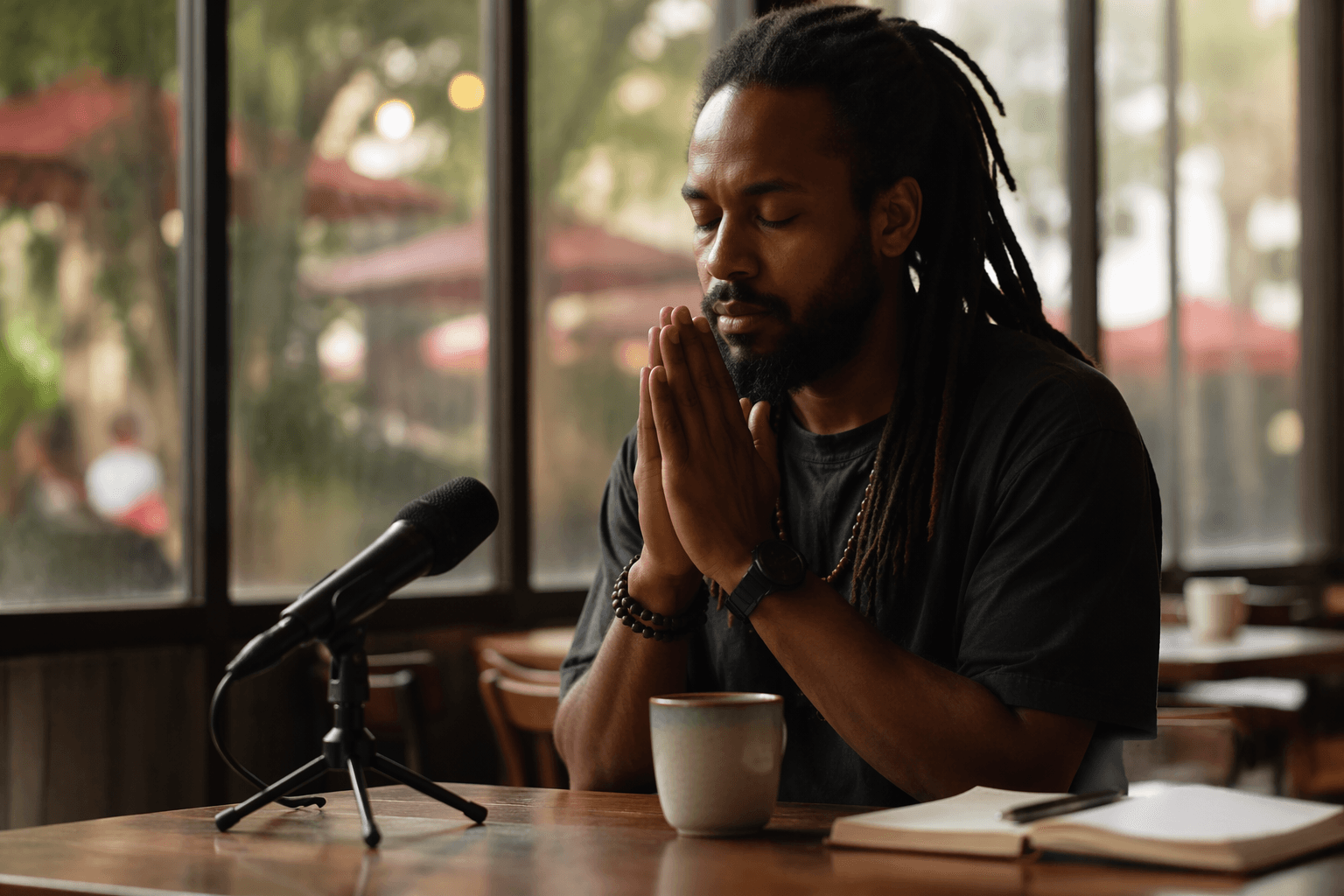
A yoga-class sign-off gets a harder test here: can namaste still mean something once the mat is rolled up? Sean Fargo’s June 26, 2026 episode with Jeremy David Engels pushes the word past etiquette and into daily conduct, framing it as a lived ethic rather than a decorative slogan. The conversation uses one familiar term to ask a larger question that meditators know well: when does language support practice, and when does it drift into performance?
From greeting to ethic
The episode begins from a familiar tension in modern yoga culture. Namaste is repeated constantly, but, as the show description puts it, it is among the least lived words in the room. Engels treats that gap as the point, not a footnote, and uses it to move from surface-level greeting etiquette toward a more demanding standard of mindfulness.
His version of the term is not ceremonial. It is everyday respect, humility, and the decision to see other people as carrying the same human dignity. That shift matters for meditators because it relocates namaste from a closing ritual to a behavioral check, one that should show up in tone, attention, and response when things get uncomfortable.
The episode’s 46-minute format gives that idea room to breathe without turning it into a lecture. Fargo and Engels keep returning to ordinary moments, not abstract ideals, which makes the discussion useful for anyone who wants a practice that survives real life.
What namaste is not
The core misuse problem is easy to name: namaste becomes branding when it is detached from conduct. In the yoga world, the word can slide into a polished wellness sign-off, useful for atmosphere but thin on accountability. Engels’s point is that the term loses force when it is treated as a vibe instead of a discipline.
- The word deepens practice when it marks a real pause before reacting.
- It becomes branding when it is used to decorate a class, product, or persona without changing how people treat each other.
- It should be repeated only when the speaker is willing to pair it with humility, restraint, and care.
A practical test helps separate the two:
That framing is especially relevant for teachers. If namaste is used at the end of class, students and instructors should ask whether the moment is being held as a genuine expression of respect or as a reflex that nobody has examined. The same question applies in retreat spaces, studios, and online offerings where spiritual language can be borrowed faster than it is understood.
Mindfulness after the mat
Engels extends the discussion into practical mindfulness by insisting that the work continues after practice ends. The episode links namaste to pausing before reacting, choosing wisdom over conditioning, and treating others as bearers of the same dignity you want for yourself. In other words, mindfulness here is not only inward regulation. It is relational awareness.
That broader view also appears in the episode’s attention to gratitude. Engels treats gratitude as thanksgiving rather than indebtedness, a distinction that matters in communities where appreciation can easily become obligation. The conversation connects that idea to a gratitude walk, which turns the abstract value into something bodily and repeatable.
The same relational frame also opens a path across political divides. The episode does not pretend agreement is easy, but it suggests that mindfulness can help people notice shared values before they harden into camps. That is a useful shift for a field that often talks about calm without talking enough about community.
Interbeing, shamatha, and vipassana
The conversation also widens into Buddhist practice language, bringing in shamatha, vipassana, and Thich Nhat Hanh’s teaching on interbeing. That move grounds the episode in a more explicit contemplative lineage and keeps the ethical argument from floating off into generic wellness talk.
The Thich Nhat Hanh Foundation defines interbeing as the deep interconnectedness of all people, all species, and all things. It also says the Plum Village tradition is taught through eleven official mindfulness practice centers and more than 1,000 local sanghas worldwide. That scale matters because it shows interbeing is not only a concept for private reflection, it is a lived structure for communal practice.
Engels’s use of that frame is practical. If everything is connected, then attention, speech, and response are never purely personal choices. They shape the room, the sangha, and the wider community that practice is supposed to serve.
Why Engels’s broader project fits the episode
The episode also fits into a wider 2026 rollout around Engels’s book Living Namaste: A Practical Guide to Mindfulness, Yoga, and Building Community, published by Inner Traditions. The publisher describes the book as revealing the deeper meaning of namaste as a principle for building connection and community, while Engels’s own website says it includes practical strategies, mindfulness meditations, and self-study exercises.
His biography helps explain the tone of the project. Engels is the Liberal Arts Endowed Professor of Communication Arts & Sciences at Penn State University, and he says he studied Sanskrit, yoga philosophy, pranayama, and chanting at the Krishnamacharya Yoga Mandiram in 2012 and 2013 after multiple trips to India and Nepal. That background gives the book and the episode a specific kind of authority, one rooted in language study, embodied practice, and repeated exposure to the traditions being discussed.
The same public-facing push includes another 2026 book, On Mindful Democracy: A Declaration of Interdependence to Mend a Fractured World, and a run of events that keeps the message moving offline. Engels’s events page lists a Living Namaste event in Boulder, Colorado, on July 21, 2026, alongside appearances in Cambridge, Massachusetts, on June 23 and Washington, D.C., on July 1. The pattern is clear: this is not just a podcast conversation, but part of a larger effort to test whether mindfulness can still mean something in community life.
The most useful takeaway from the episode is also the simplest. Namaste is only as strong as the conduct that follows it. If it is used as a lived ethic, it can deepen practice, sharpen attention, and widen compassion. If it is used as a slogan, it becomes another word that sounds spiritual while asking nothing of the people who repeat it.
This article was produced by Prism’s automated news system from verified source data, official records, and press releases, then run through automated quality and moderation checks before publishing. The system is built and supervised by the people who set the standards it runs under. Read our full AI policy.
Did this article answer your question?