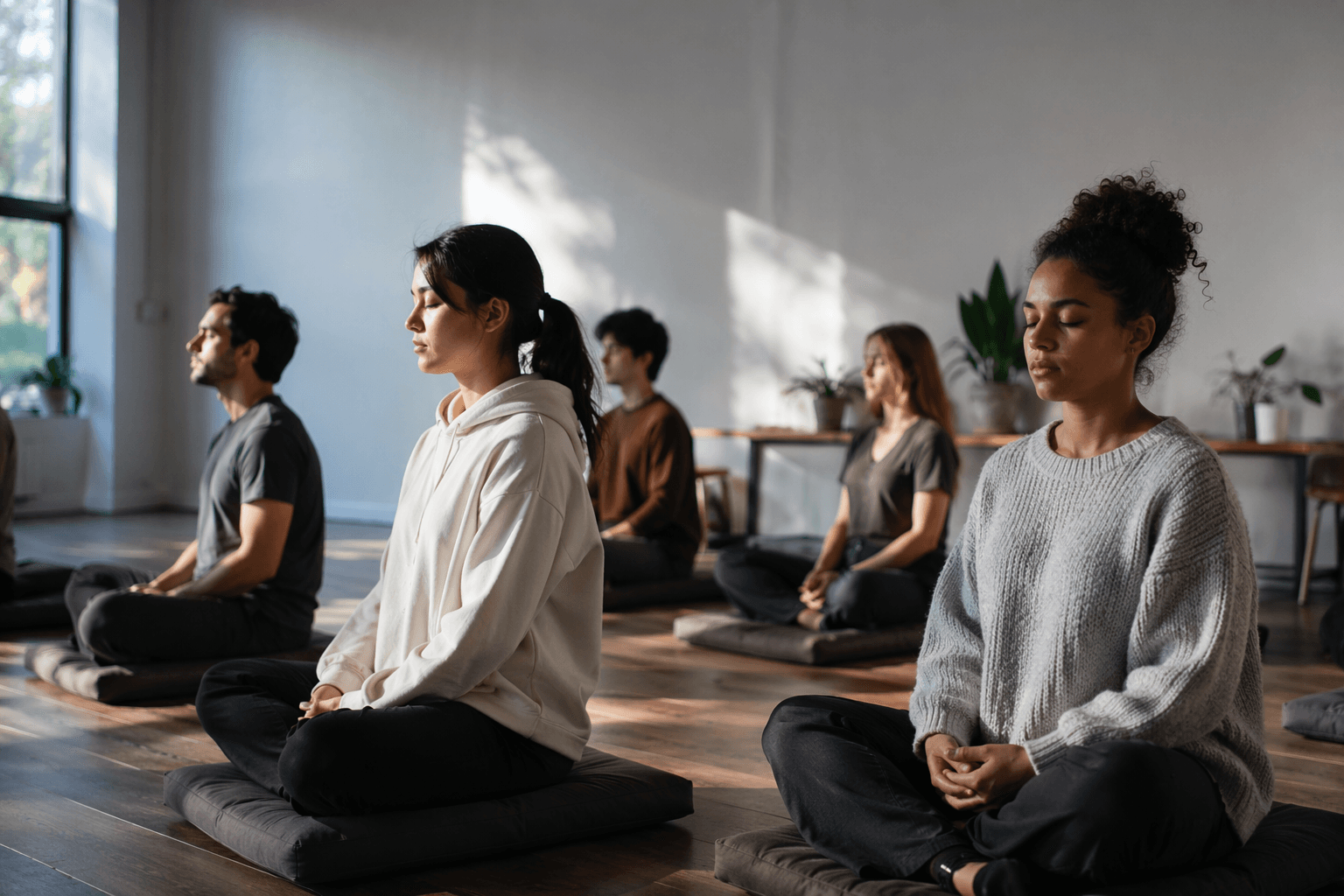
Regular meditation practice linked to measurable changes in affective startle reflex and lower negative emotionality in psychophysiological study
Meditators blink slower under stress, and that tiny delay carries outsized implications for everyday reactivity, according to a new psychophysiological study.
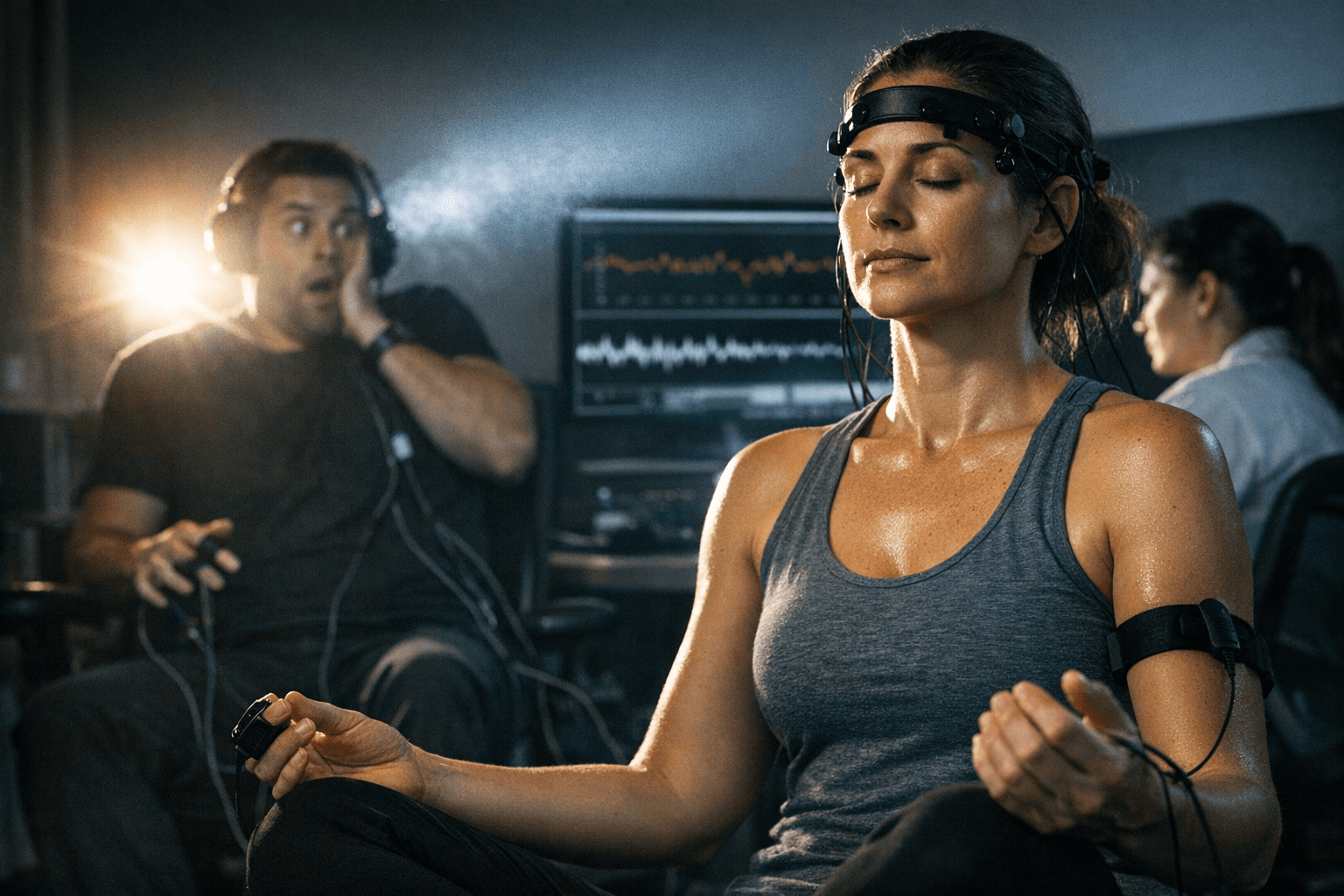
The jolt when a door slams, the spike of irritability when a notification hits at the wrong moment: those micro-reactions may look measurably different in the nervous systems of people who meditate regularly. A psychophysiological study published April 3 in Applied Psychophysiology and Biofeedback found that meditators show longer onset latencies in the acoustic eye-blink startle reflex compared to non-meditators, a timing difference that a research team including Meenakshi Shukla, Niti Upadhyay, Vishnukant Tripathi, Veena Kumari, and Rakesh Pandey interprets as a physiological marker of reduced state anxiety.
The startle reflex is involuntary: a sudden loud sound triggers an automatic defensive eye-blink, and how fast that blink fires reveals how the nervous system is emotionally primed at that moment. In laboratory settings, negative images typically accelerate and amplify the reflex, while positive images blunt it, a pattern called affective startle modulation. The Shukla team's contribution was to apply this paradigm directly to a meditator-versus-non-meditator comparison, a gap the existing literature had largely left open.
Seventeen meditators and 30 non-meditators viewed pleasant, neutral, and unpleasant images while acoustic probes triggered eye-blink responses. The meditator group scored higher on two specific facets of dispositional mindfulness, Observing and Non-reactivity, and reported lower stress and fewer difficulties maintaining goal-directed behavior while experiencing negative emotions. Their startle responses came later across the entire experiment, which the authors connect to lower ambient threat sensitivity.
The convergence of those two data streams is the study's central finding. Self-report surveys can reflect social desirability or motivated reasoning. Startle latency cannot. "Mindfulness, whether cultivated through meditation or as a trait, reduces negative emotionality," the authors conclude, pointing to the alignment of subjective and objective measures as the core contribution.
Across the full pooled sample of 47 participants, higher trait mindfulness correlated with lower alexithymia (difficulty identifying and describing feelings), fewer emotion regulation difficulties, and lower scores on depression, anxiety, and stress scales. Those patterns held whether mindfulness came from deliberate practice or from naturally higher dispositional tendencies, suggesting the mechanism is broader than logged hours on the cushion alone.
The authors are careful not to overclaim. A meditator group of 17 is modest, and the design cannot specify what duration or type of practice is required to produce these physiological shifts. Replication in larger cohorts remains necessary. What the study does establish is a methodology: affective startle paradigms offer a sensitive, objective window for quantifying emotion regulation changes that self-report alone cannot capture, and they represent a promising avenue for studying how practice reshapes defensive responding across clinical populations and long-term training programs.
This article was produced by Prism’s automated news system from verified source data, official records, and press releases, then run through automated quality and moderation checks before publishing. The system is built and supervised by the people who set the standards it runs under. Read our full AI policy.
Did this article answer your question?