Rubin Museum podcast uses lotus goddess art for Awakening meditation
Kimberly Brown turns a Nepalese lotus goddess into a 20-minute Awakening sit, showing how a museum podcast can give meditation art, lineage, and an easy daily form.
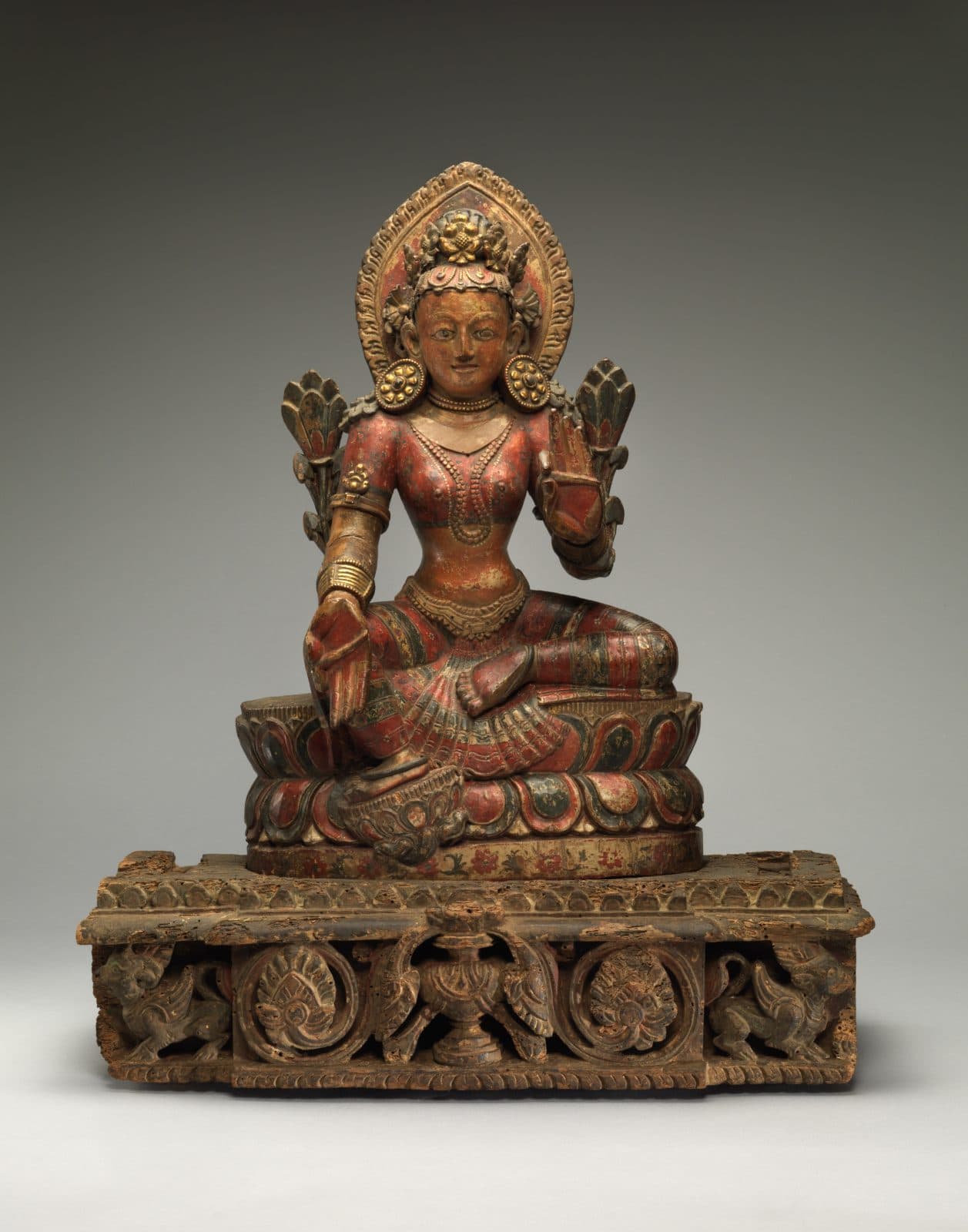
Kimberly Brown’s latest Rubin Museum meditation turns a Nepalese sculpture of Lakshmi as a lotus goddess into something immediate and usable: a 20-minute sit built around the theme of Awakening. That is the quiet power of this series. It does not ask listeners to start from scratch, it asks them to start from an artwork, a teacher’s voice, and a practice structure that is already waiting for them.
A museum podcast that feels built for real practice
Released as episode 526 in the Rubin Museum of Himalayan Art’s Mindfulness Meditation series, the session follows a format that is simple enough to trust and specific enough to stick. Each weekly episode is inspired by a different work from the museum’s collection, framed around a monthly theme, and shaped with an opening talk followed by a 20-minute guided meditation. The Rubin’s live version adds a closing discussion, which helps explain why the podcast version feels so clear and contained.
That structure matters because it gives meditation a setting. Instead of floating free as a generic wellness prompt, the practice is anchored in Himalayan art, Buddhist symbolism, and a public museum context. For listeners, that means the meditation arrives with a visual language already built in: in this case, the lotus goddess image becomes the place to return when the mind wanders.
Why Kimberly Brown gives the episode its center of gravity
Brown is not just a pleasant guide with a soothing voice. The Rubin describes her as a meditation teacher and author who studies in both the Tibetan and Insight schools of Buddhism, and as a certified mindfulness instructor. Her teaching emphasis on compassion and kindness meditation gives this episode a distinct emotional texture, one rooted in reconnecting people to themselves and to others.
That background makes her especially well suited to a museum-hosted meditation series. Brown’s latest book, *Happy Relationships: 25 Buddhist Practices to Transform Your Connection with Your Partner, Family, and Friends*, points to the same practical concern that runs through her teaching: how practice shows up in daily life. A current profile says she has led thousands of classes, retreats, and workshops since 2011, which is the kind of scale that instantly changes how you hear her on a podcast. This is not a one-off appearance; it sounds like the voice of someone who has spent years refining how to make contemplation legible to ordinary schedules.
What the museum model offers that an app usually cannot
Meditation apps can be useful, but the Rubin’s series gives listeners something different in four ways:
- Voice: Brown is a recognizable guide with a long public teaching life, not an algorithmic prompt.
- Lineage: Her work sits across the Tibetan and Insight schools of Buddhism, and the series itself is presented with Sharon Salzberg, teachers from the New York Insight Meditation Center, the Interdependence Project, and Parabola Magazine.
- Thematic depth: Monthly themes and artwork-based episodes create a sense of continuity. Earlier Brown episodes in the archive have explored New Beginnings, Ritual, Interconnectedness, and Compassion.
- Accessibility: The sessions are open to beginners and skilled meditators alike, and the podcast format gives you a clean, repeatable 20-minute practice you can revisit at home.
That combination is why a museum-hosted meditation can feel more grounded than a standard app session. The art gives the meditation a point of entry, the teaching lineage gives it a spine, and the public-programming frame makes it feel shared rather than self-contained. The program is also supported by the Frederick P. Lenz Foundation for American Buddhism, which reinforces that this is a serious educational offering, not a side project.
The lotus as a practical object for attention
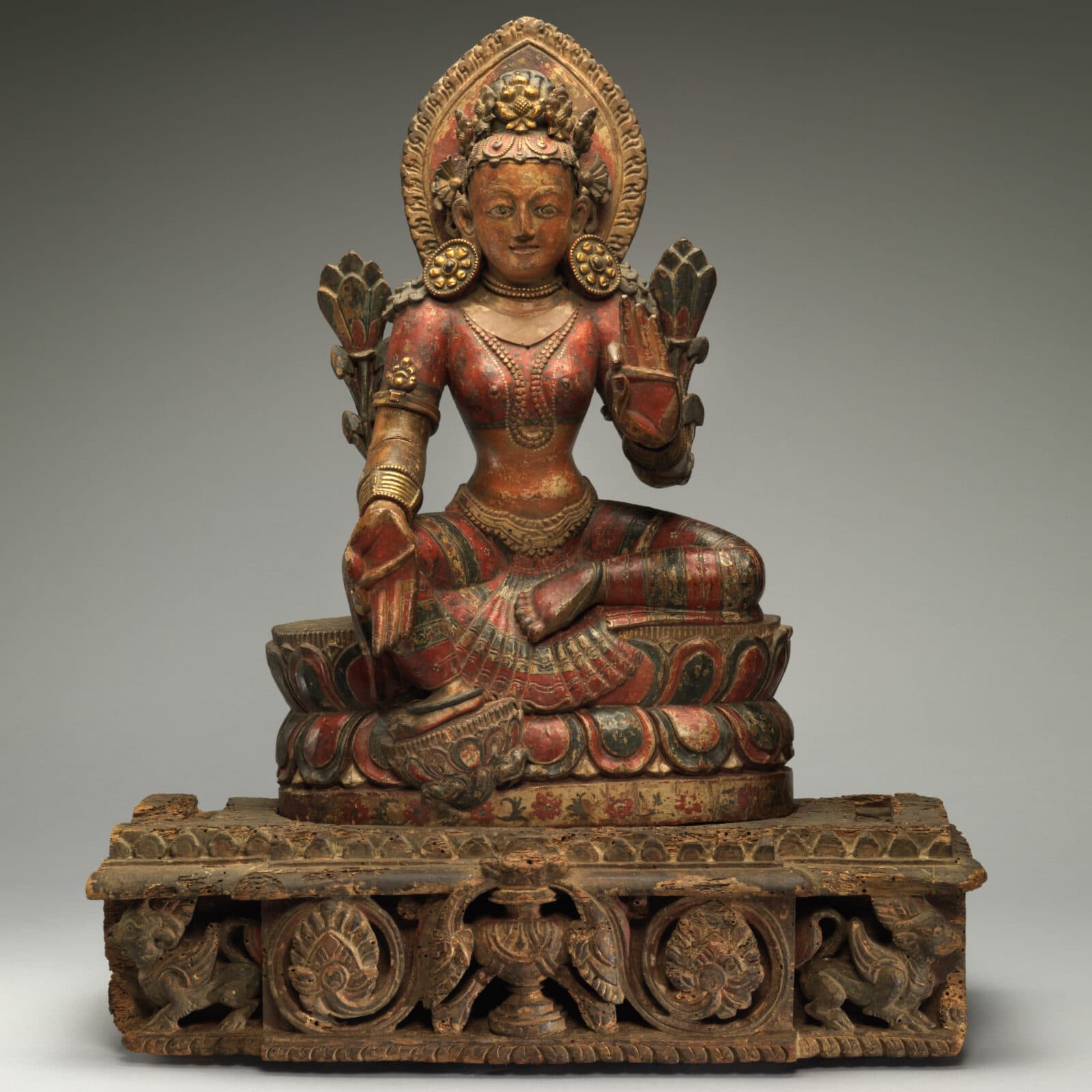
The episode’s visual anchor is a Nepalese sculpture of Lakshmi as a lotus goddess, and the museum’s framing is elegantly practical. The lotus becomes a metaphor for transformation, abundance, and the ability to flourish even in difficult circumstances. That gives listeners something concrete to hold in mind, which is often the missing piece in at-home meditation: not more information, but a stable image.
This is where the episode’s theme of Awakening lands most clearly. Brown is not asking for a dramatic breakthrough. She is asking listeners to notice how an image can steady the mind, and how a symbol can hold both beauty and pressure at once. The lotus is not treated as decoration; it becomes a working part of the practice.
A same-day practice drawn from the episode
The most useful takeaway here is also the simplest: sit with one image and keep returning to it. If you try the Rubin’s approach today, use a single visual anchor for 20 minutes, ideally something that suggests resilience or unfolding, and let it stand in for the quality you want to cultivate. When attention drifts, come back to the image without trying to force the mind into silence.
That small move is the bridge between museum art and lived practice. It works because it is modest, repeatable, and easy to understand in real time. You do not need to master a technique to begin; you only need a clear object of attention and enough structure to stay with it.
Why this series keeps finding an audience
The Rubin’s Mindfulness Meditation series has the kind of public-facing clarity that makes people return. It is weekly, art-based, and taught by recognizable names in the meditation world, including Sharon Salzberg in the broader program. It is also specific enough to feel nourishing rather than vague, which may be the real reason it lands. A 20-minute sit built around a lotus goddess is not trying to be everything; it is trying to give you one thing you can actually use.
That is the promise of this episode and of the series around it. It makes meditation feel less like a private reset button and more like a shared cultural practice with a lineage, an image, and a rhythm you can follow again tomorrow.
This article was produced by Prism’s automated news system from verified source data, official records, and press releases, then run through automated quality and moderation checks before publishing. The system is built and supervised by the people who set the standards it runs under. Read our full AI policy.
Did this article answer your question?