School mindfulness curriculum improves children’s cortisol stress rhythms
In a 57-child study, Pure Power was linked to healthier diurnal cortisol slopes, putting a hard biological marker behind a school mindfulness curriculum.
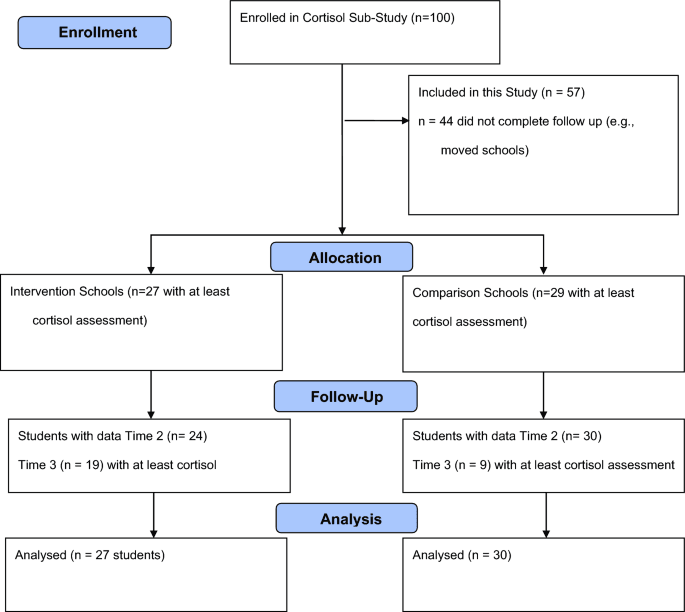
A school wellness curriculum built on yoga, mindfulness and emotion regulation did more than shift how children said they felt. In a sample of 57 children with a mean age of about 10, the Pure Power program was associated with improved diurnal cortisol slopes, a daily stress rhythm that gives researchers a physiological window into how the body manages pressure across the day.
That matters because cortisol is not just another wellness metric. It is part of the body’s stress system, tied to sleep, energy, alertness and recovery, so a healthier slope can signal better adaptation rather than a temporary sense of calm. The new paper, Preliminary Evidence of Changes in Diurnal Cortisol Following Exposure to a School-Based Curriculum Featuring Yoga and Mindfulness, centers that question directly: can a classroom program affect stress biology, not only self-reported mood?
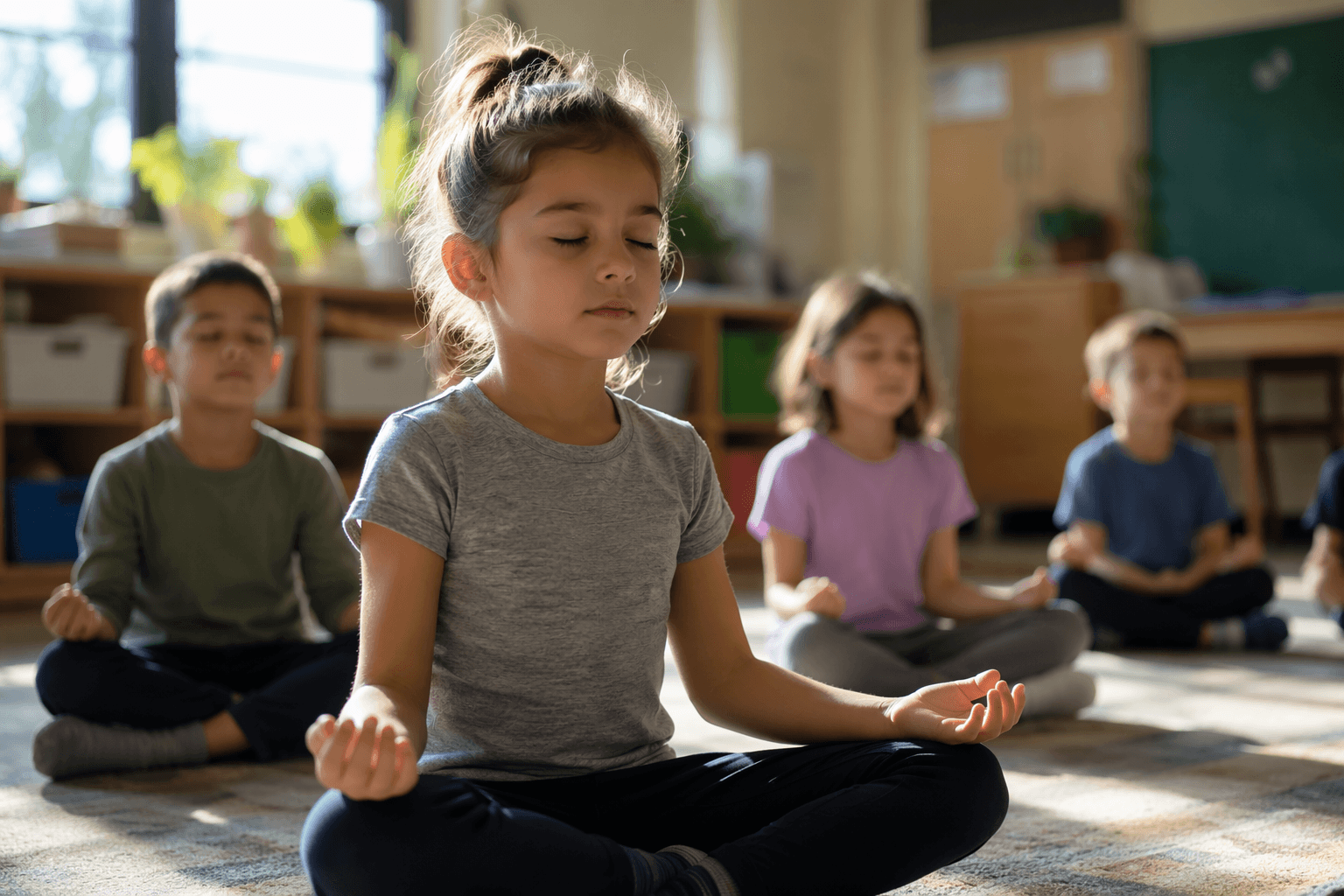
Pure Power was not designed as a one-note mindfulness class. Clinical trial records describe it as a school-based curriculum from the Sonima Foundation, now Pure Edge Inc., that combined yoga-based exercise, relaxation techniques, mindfulness practices and nutrition education. Stanford’s evaluation introduced it in 2014 to Ravenswood City Schools in East Palo Alto, California, and delivered the program for 30 minutes twice a week in dedicated school space. The control group came from Orchard School District, Alum Rock Union Elementary School District and nearby community organizations and after-school programs in the San Francisco Bay Area.
The cortisol result adds a biological layer to a program already under study in schools. A PLOS ONE evaluation published on April 4, 2024, followed 461 students in intervention schools and 420 matched comparison students in a non-randomized design. That study found relative gains in emotion regulation, spelling and math, while also noting the challenges of real-world implementation. The new cortisol paper does not replace that work, but it gives school wellness advocates a sharper claim to examine: not just better classroom behavior, but possible changes in stress physiology.

The finding also fits a broader, still uneven research base. CASEL lists Pure Power as a promising social-emotional learning program and points to an older randomized trial of 112 students in grades 9-11 that found higher average GPAs for students in the program. Other school mindfulness studies have reported benefits for emotion and behavior, and at least one pilot found reduced morning cortisol after a six-session mindfulness program. Still, the new Pure Power result is preliminary, and the field will need larger replications before anyone treats it as settled. For now, the most interesting thing about this curriculum is that it is no longer only about feeling calmer in class. It is about whether a school day can nudge the body’s stress curve itself.
This article was produced by Prism’s automated news system from verified source data, official records, and press releases, then run through automated quality and moderation checks before publishing. The system is built and supervised by the people who set the standards it runs under. Read our full AI policy.
Did this article answer your question?