Soul Shoppe Guide Gives Teachers Simple Mindfulness Tools for Calmer Classrooms
Soul Shoppe's classroom guide reframes mindfulness as a two-minute chime reset, not empty minds, with a ready-to-use script that cuts post-recess chaos immediately.
The premise that stops most teachers cold: mindfulness in a classroom of 28 kids will just produce 28 kids pretending to sit still. Soul Shoppe's new educator guide argues the opposite, and backs it with a two-minute classroom ritual that teachers report cuts post-recess chaos before a single math problem is written on the board.
Soul Shoppe, a social-emotional learning organization serving elementary and middle schools since 2001, released "A Practical Guide to Mindfulness in the Classroom in 2026" specifically for educators who want results without a weeks-long curriculum overhaul. The core reframe the guide insists on: mindfulness is not about emptying minds. It is about teaching attention, curiosity, and kindness, three cognitive capacities that directly underpin academic performance.
Why Students Arrive Already Behind
The guide opens with a clear-eyed diagnosis. Many students walk through school doors already emotionally dysregulated, their nervous systems pushed by digital overstimulation and social stressors that existed long before the first bell. Under that elevated arousal, sustained attention collapses and working memory shrinks — exactly the cognitive tools teachers need online for instruction to land. Brief, predictable mindfulness practices, the guide argues, prime both attention and emotional control, creating conditions where academic instruction can actually take hold.
Three Micro-Practices, Three Specific Moments
Soul Shoppe organizes its classroom recommendations around brevity and precision. Knowing not just what to do but exactly when matters as much as the practice itself. Here are the three teacher-ready micro-practices the guide highlights, each matched to a specific window in the school day:
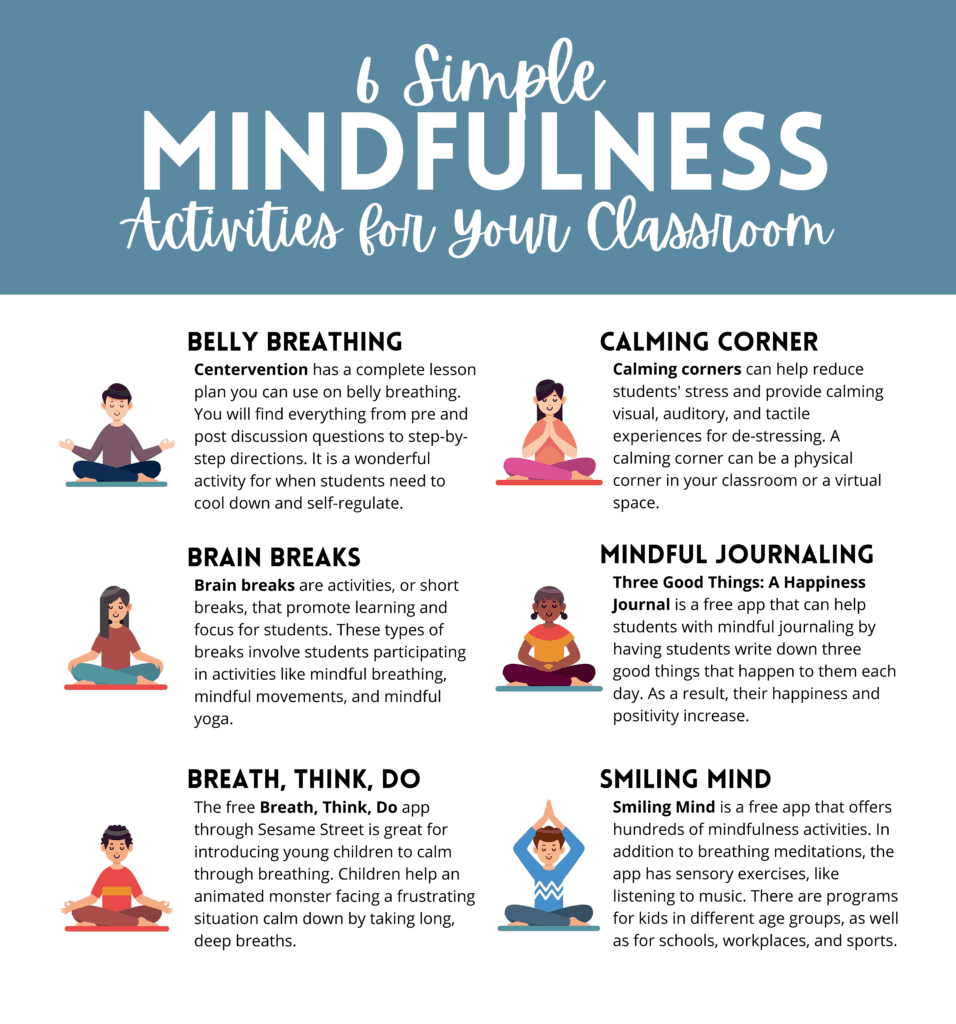
- The Chime Reset (transition time): Ring a small chime and invite students to follow the sound until it fully fades. Dim the lights, ask students to place both hands flat on their desks and feel their feet press against the floor. This two-minute ritual requires no instruction beyond the first introduction and creates a reliable transition anchor between recess, lunch, or a hall transition and focused classroom work. Teachers who use it consistently report a measurable drop in the ambient noise and movement that typically costs five to ten minutes of instructional time after transitions.
- The Breathing Buddy (self-regulation and younger learners): Place a small stuffed animal on a child's belly and ask them to watch it rise and fall with each breath. The toy delivers concrete, immediate biofeedback that abstract breath instructions simply cannot reach in early elementary students. It is especially effective when a student is beginning to escalate emotionally, giving the body something specific to do rather than leaving the child in open-ended distress. This practice also works as a quiet independent reset at a classroom calm-down corner and requires no teacher involvement once introduced.
- Sensory Grounding Prompt (test anxiety and high-stakes moments): Before a test or any high-stakes task, guide students through a brief sensory check-in: name what you can feel, hear, or notice right now without judgment. This practice reduces the cognitive load of anxiety by directing attention outward to present-moment experience, lowering arousal and creating the regulated state where working memory performs best. It takes under two minutes and requires no materials.
A Script You Can Copy and Use Tomorrow
Getting started is often the hardest part, particularly for teachers who worry they will do it "wrong." Soul Shoppe addresses this directly with practical, teacher-facing language and troubleshooting guidance throughout the guide. Below is a script drawn from the guide's classroom vignette that any teacher can adapt and deliver immediately:

*"Let's take a moment to settle in. I'm going to dim the lights just a little. When you hear the chime, rest both hands on your desk and feel your feet flat on the floor. Just listen until the sound is completely gone. There's nothing to do right now except notice. [Ring chime. Wait for silence.] When you're ready, bring your attention back to the room."*
This script works across grade levels and runs in under ninety seconds. Teachers do not need a mindfulness background to use it; they need only to practice it themselves a few times first. The guide names teacher modelling as its single most important implementation principle: experience the practice before you lead it.
Keeping It Inclusive: A Note on Consent and Opt-Out
One of the more practical sections of the guide addresses a concern school leaders regularly field from parents: is this a religious practice? Soul Shoppe is explicit that its classroom mindfulness framework is secular and non-religious by design. Every practice is framed in sensory and attentional terms, not spiritual ones, and no student is asked to adopt a belief or a worldview.
For classrooms where a family or student has concerns, the guide recommends maintaining a clear, low-pressure opt-out option. A student who prefers not to participate can sit quietly, draw, or rest while the practice runs; the goal is a regulated classroom environment, not uniform compliance. Sharing a brief, plain-language note with parents at the start of the year, describing the practices in concrete terms (a breathing exercise, a listening activity with a chime), addresses most concerns before they surface and keeps the practice culturally inclusive across diverse school communities.
What the Evidence Supports
Soul Shoppe connects its recommendations to a growing evidence base linking brief mindfulness practices to improved sustained attention and better working memory under conditions of lower physiological arousal. The mechanism is direct: when students are calmer, they think more clearly, and instruction lands more effectively. The guide situates these practices within the broader mindfulness-in-education field, which has expanded alongside a growing suite of teacher training programs and school wellness initiatives. Soul Shoppe frames every practice as a low-cost, scalable intervention that fits inside existing school schedules rather than demanding time carved away from instruction.
Starting Small, Measuring What Changes
For district wellness coordinators and school leaders, the guide's value lies in its deployability: these practices require minimal training, no special equipment beyond a small chime and a stuffed animal, and no disruption to existing timetables. For researchers and funders, the guide quietly surfaces a real gap in the field, specifically, the need for implementation science that identifies which specific micro-practices and delivery models produce the strongest outcomes across diverse student populations. The questions of dosage, frequency, and cultural adaptation remain genuinely open, and the guide is candid about pointing toward them.
For individual teachers, the entry point is simpler: pick one practice, use it in the same slot every day for two weeks, and watch what happens to the room in the five minutes after. Soul Shoppe's bet is that the data will speak for itself.
This article was produced by Prism’s automated news system from verified source data, official records, and press releases, then run through automated quality and moderation checks before publishing. The system is built and supervised by the people who set the standards it runs under. Read our full AI policy.
Did this article answer your question?