Study finds paced breathing changes mindfulness brain and body responses
Paced breathing pushed mindfulness in a different physiological direction than letting the breath settle, with theta, alpha, beta and skin conductance shifting apart.

If you have ever wondered whether to count the breath or simply watch it, this study suggests the difference is not cosmetic. In 80 young adults, deliberate slow breathing changed the brain-and-body pattern of a single mindfulness session in ways that spontaneous breathing did not.
Researchers randomly assigned the participants to either paced breathing or spontaneous breathing during meditation, then tracked respiration, electroencephalography and skin conductance before, during and after the session. That mix matters because it looks beyond self-report and into the signals that often get flattened into the word “calm.”
The clearest effect was on breathing itself. Intentional slow breathing lowered respiratory rate more than letting the breath settle naturally. But the rest of the physiology did not all tilt in the same relaxed direction. Compared with spontaneous breathing, paced breathing produced a larger increase in theta amplitude and a smaller decrease in alpha amplitude. Beta amplitude and skin conductance also rose from before to during the session in the paced-breathing condition, while those same measures tended to fall with spontaneous breathing.
That pattern is the point. The study does not argue that paced breathing is better or worse than breath awareness without control. It shows that breath pacing changes the psychophysiological signature of mindfulness in a measurable way, which is exactly the kind of distinction teachers, clinicians and app designers can use when they are deciding how directive a practice should be.
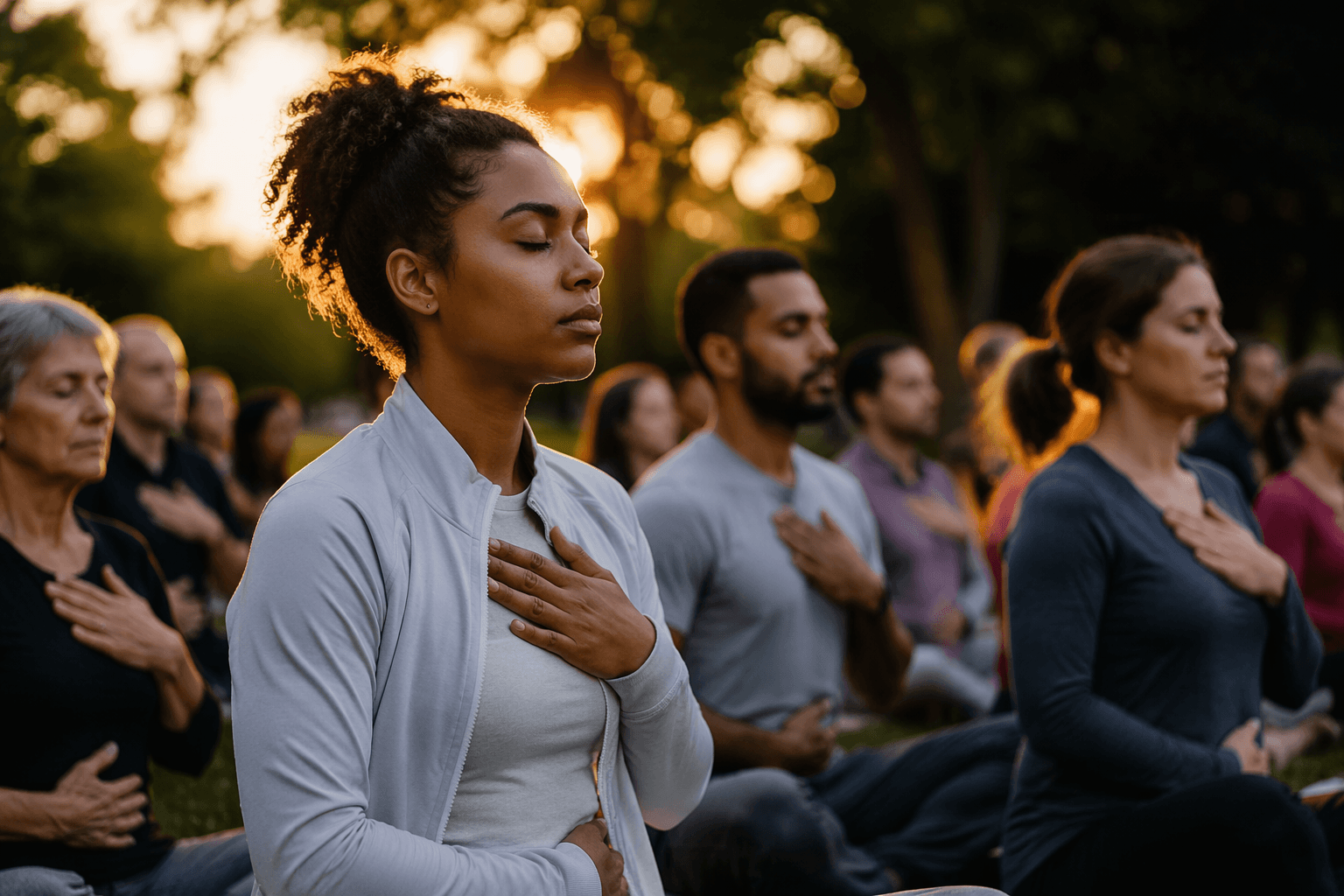
For some people, especially those with high stress or panic sensitivity, a guided slowing of the breath may feel more activating than grounding. For others, the rise in theta and the different skin-conductance response may help explain why structured breathing practices can feel sharper or more attention-driving than passive observation of the breath.
The findings also fit a longer line of work. A 2013 study of 34 novice meditators after a six-week intervention, presented at the IEEE Engineering in Medicine and Biology Society conference, found meditation and control differences in alpha, beta and theta bands and concluded that combining EEG with respiration improved classification over EEG alone. More recent comparative work has likewise reported different EEG and skin-conductance patterns for mindfulness meditation and paced breathing, reinforcing the idea that the way you breathe during practice is an active variable, not a minor implementation detail.
That makes the practical choice clearer: if the goal is a more directive, physiologically distinct practice, paced breathing is doing real work. If the goal is to let awareness settle with less interference, spontaneous breathing may be the cleaner fit.
This article was produced by Prism’s automated news system from verified source data, official records, and press releases, then run through automated quality and moderation checks before publishing. The system is built and supervised by the people who set the standards it runs under. Read our full AI policy.
Did this article answer your question?