Study links mindfulness, less self-absorption to more compassion in romance
Mindfulness may make partners kinder by easing self-absorption, not just stress. A diary study links that shift to more compassion in romance.
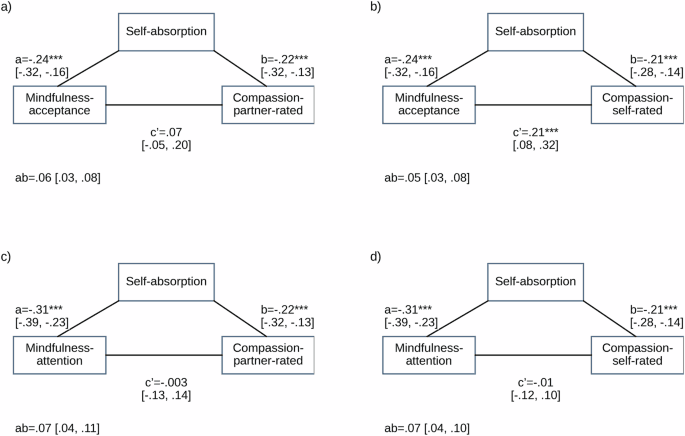
When mindfulness enters the relationship conversation, it is usually sold as a way to calm down. This paper pushes the question further: does mindfulness make partners kinder because it quiets the self, so there is more room for care when conflict flares? The new work in Communications Psychology suggests that the answer may be yes, and that the emotional engine underneath compassion is not just serenity, but a lower pull toward self-absorption.
The real mechanism may be less self-focus
The study by Jonathan Kimmes, Laurence Morin and Rao turns mindfulness into an interpersonal skill instead of a private coping tool. Its central finding is straightforward and useful: higher mindfulness and lower self-absorption predict greater compassion within romantic relationships. That matters because it points to a specific pathway, not just a broad wellness halo. If your attention is less trapped in your own reactions, worries and self-image, you have more room to notice a partner’s experience and respond with care.
That is a sharper story than the usual mindfulness headline. It suggests that present-moment awareness helps not only because it reduces distress, but because it interrupts the inward loop that can make a tense conversation feel like a threat to the ego. In that frame, compassion is not a vague byproduct of calm. It is what becomes possible when self-absorption loosens its grip.
A daily diary study gives the finding everyday weight
This was not a one-off snapshot. The paper is described as a daily diary study, which makes it especially relevant for anyone trying to understand what mindfulness looks like in real relationship life, not just in a lab or during a meditation session. Daily diary designs are valuable here because romance is built in small moments, a sharp reply, a patient pause, a willingness to repair, rather than only in grand declarations.
That daily rhythm also fits the question the study is asking. Compassion in a relationship is rarely about one dramatic act of support. More often, it shows up in the micro-moments: listening without rehearsing a defense, staying present when a partner is upset, and responding with less reactivity. The study’s framing makes those ordinary moments the main event.
Why self-absorption is the bottleneck
The paper’s logic is especially interesting for mindfulness practitioners because it offers a mechanism that feels familiar from meditation, but is easy to overlook in romance. Self-absorption can mean getting caught in your own interpretation, your own hurt, or your own need to be right. Mindfulness appears to reduce that inward tightening, which may free up the emotional bandwidth needed for perspective-taking and care.
That helps explain why the study’s summary emphasizes mediation by reduced self-absorption. The message is not that mindfulness simply makes people pleasant. It is that the practice may shift attention away from the self just enough to change how a partner is met in conflict. In relationship terms, that is the difference between reacting from the center of your own story and making room for someone else’s.
This fits a broader relationship science trend
The new paper does not appear in a vacuum. A 2017 study introduced the Relationship Mindfulness Measure, or RMM, to assess mindfulness specifically in romantic relationships, and showed that it is not completely overlapping with general trait mindfulness. That distinction matters because someone can be generally mindful and still struggle to stay present with a partner when the stakes feel personal.
Earlier work points in the same direction. A 2017 set of studies found mindfulness was associated with higher compassionate goals and lower self-image goals in relationships, which echoes the idea that less self-absorption can free people from performing, defending or protecting the ego. A 2018 study across five studies also found mindfulness was positively associated with forgiving tendencies, including forgiving tendencies rated by romantic partners. Taken together, those findings make the new compassion result feel less like an outlier and more like another piece of a growing relational puzzle.
What couples studies have already hinted at
The relationship literature has been building for years. A 2019 Florida State University study of 218 heterosexual couples found that relationship mindfulness correlated with higher relationship quality and lower stress. A 2023 Université de Montréal study found that couples with greater mindfulness reported lower stress and happier relationships. A 2024 systematic review then added another layer, finding that mindfulness interventions for couples seemed to increase mindfulness, self-compassion, well-being and quality of life.
That broader context is why this latest paper lands well for the mindfulness community. It does not just say that mindfulness feels good in the abstract. It suggests that mindfulness may be changing the social weather inside a relationship, especially when tension rises. For couples therapy, relationship education and self-guided meditation programs, that means the goal is not only less panic or rumination. It is also more responsiveness, more repair and more compassion under pressure.
How to use the finding in real practice
If you want to work with this insight, make the practice relational on purpose. Before a difficult conversation, take a brief pause long enough to notice whether you are locked into your own hurt, your own script, or your own need to win. Then shift attention outward and ask what your partner might be feeling beneath the words.
- Pause before answering, especially when you feel defensive.
- Notice whether you are arguing from self-protection or from understanding.
- Listen for the feeling underneath the complaint, not just the complaint itself.
- After the moment passes, look for one small repair, a softer tone, an apology, or a clearer acknowledgment.
A simple pattern can help:
That is the practical promise of this paper. Mindfulness is not just about staying calm in private. In romance, it may matter most when it makes the self a little less crowded, so compassion has somewhere to land.
This article was produced by Prism’s automated news system from verified source data, official records, and press releases, then run through automated quality and moderation checks before publishing. The system is built and supervised by the people who set the standards it runs under. Read our full AI policy.
Know something we missed? Have a correction or additional information?
Submit a Tip