Tokyo Startup Launches AI Buddha Zen App for Meditation and Buddhist Counseling
Tokyo's VeritasChain launched AI Buddha Zen on iOS March 19, drawing on 10,023 verified scripture verses and a cryptographic system designed to keep AI from inventing Buddhist teachings.
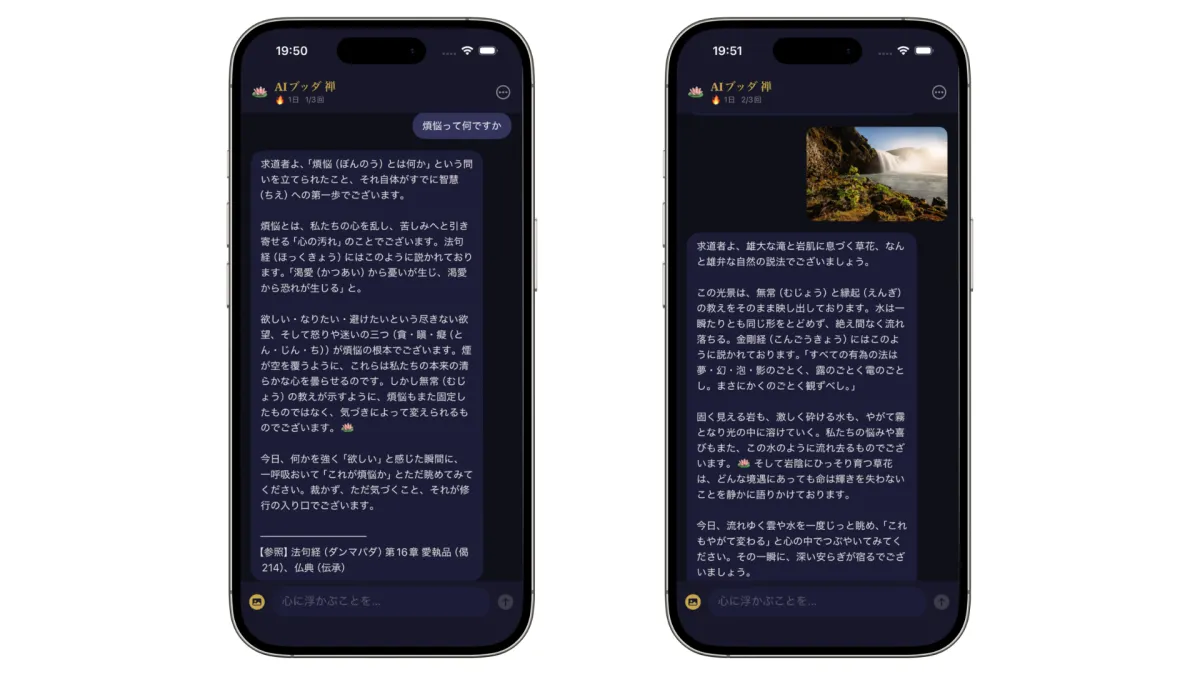
AI Buddha Zen is built on a proprietary RAG (Retrieval-Augmented Generation) database containing 10,023 verses selected from 18 Pali and Mahayana scripture texts, and it arrives at a moment when the meditation community's relationship with AI is both deepening and, for many practitioners, deeply complicated.
The iOS app launched on March 19, 2026, following the LINE Bot version released on March 13, 2026. The company behind it, VeritasChain Inc., led by Representative Director Tokachi Kamimura, developed and operates the service.
The stakes of getting this wrong are not abstract. As of March 2026, even state-of-the-art AI models exhibit hallucination rates ranging from 0.7% to 33%, with reasoning-focused models showing higher rates than their predecessors. In a dharma context, that kind of error isn't a minor inconvenience. When AI chatbots generate plausible but false information, users cannot easily verify whether a scriptural quote is authentic, and fabricated teachings may be accepted as genuine wisdom. The cautionary case is already on record: in April 2024, a Catholic AI chatbot called "Father Justin" told users that baptism with Gatorade was acceptable and offered to hear confessions, claims with no basis in Catholic doctrine.
VeritasChain's answer to this problem is a proprietary cryptographic framework. A critical gap exists in AI safety today: when an AI refuses to generate harmful content, there is no verifiable record that the refusal occurred or why. AI Buddha Zen addresses this with CAP-SRP (Content Authenticity Provenance – Safe Refusal Provenance), a proprietary cryptographic audit trail. CEO Tokachi Kamimura framed the ambition plainly: "When AI speaks on behalf of the Buddha, every response must be verifiable. CAP-SRP is our reference implementation proving AI safety and spiritual authenticity can coexist through cryptographic proof."

For daily practice, the app's feature set covers more ground than a standard guided meditation tool. Key features include text consultation with scripture citations in every response, photo dialogue that connects a submitted image to Buddhist teachings, and a "Write It Out" journaling mode where the AI remains silent while users write freely, then offers a single scripture verse upon completion. The app also includes automatic Japanese/English switching based on device language and requires no account registration.
The service covers 20 themes including work-related stress, interpersonal relationships, loss and grief, and managing anger and emotions. That breadth puts it in conversation with an increasingly crowded field. AI Buddha Zen differentiates through cross-tradition coverage of both the Pali Canon and Mahayana texts, systematic verse-level citations, four-tier confidence classification, cryptographic audit trails, and availability as a public iOS and LINE app.
AI Buddha Zen is free to use with daily consultation limits; premium plans at $5.99 per week or $19.99 per month provide expanded or unlimited access. The spiritual wellness app market reached $2.16 billion in 2024, growing at a 14.6% annual rate, while Japan's mental health app market is projected to reach $822 million by 2035, with iOS commanding approximately 69% market share. For a Tokyo startup staking its identity on the idea that every dharma gate deserves a cryptographic receipt, the timing is deliberate.
This article was produced by Prism’s automated news system from verified source data, official records, and press releases, then run through automated quality and moderation checks before publishing. The system is built and supervised by the people who set the standards it runs under. Read our full AI policy.
Did this article answer your question?