Airbrush or brush? one Nerdy Dad weighs speed against precision
Airbrushes buy speed and glassy blends, but brushes still own details, drybrushing, and corrections. The smartest miniature-painting setup may be both.
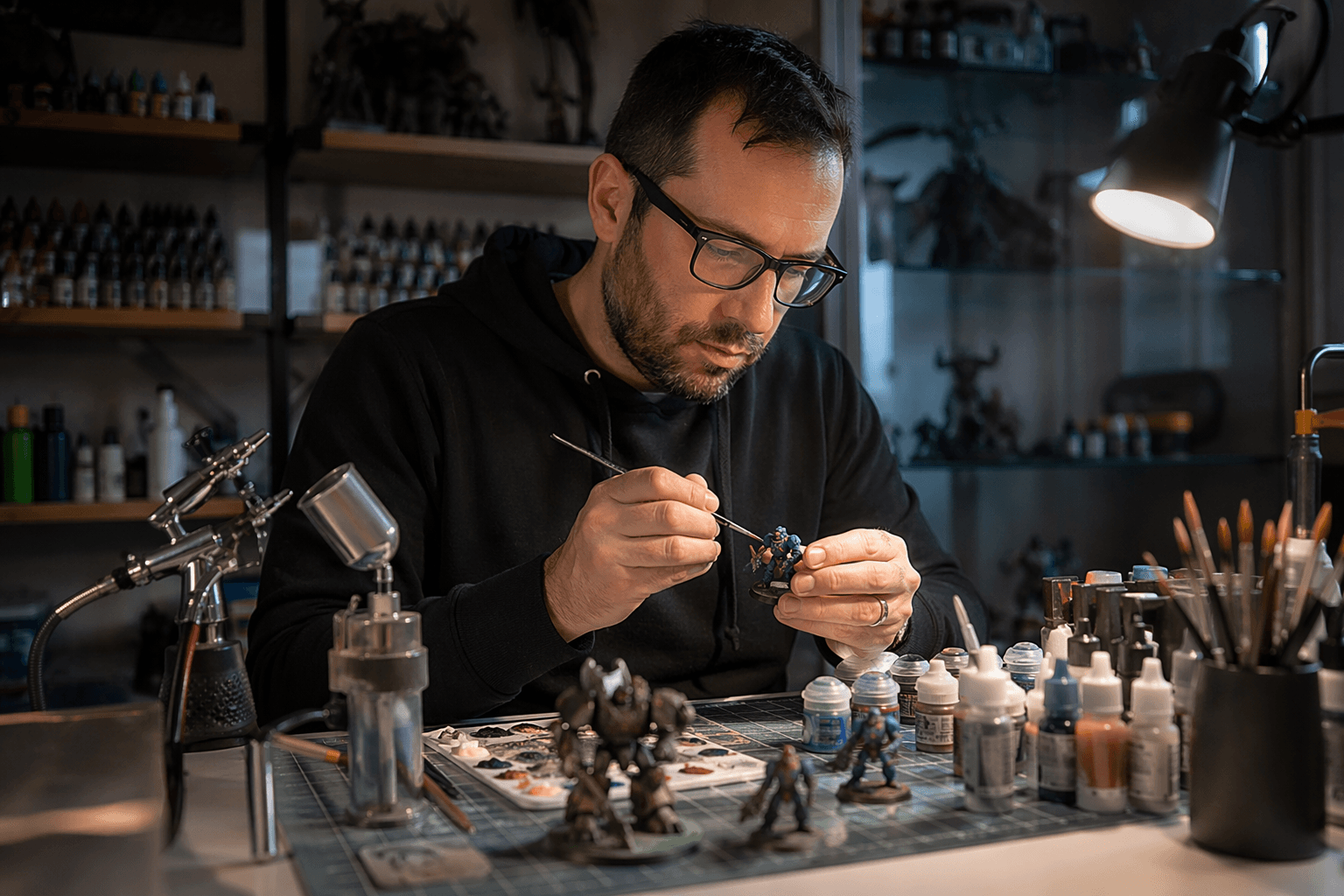
The real question is not whether an airbrush is better than a brush. It is which tool matches the kind of session you actually have, the kind of model you are painting, and the kind of money you want to tie up in gear. One Nerdy Dad’s guide cuts through the hobby debate with a simple takeaway: airbrushes shine for speed and ultra-smooth finishes, while brushes still win for precision, tiny details, and direct control.
Speed, control, and what you are really buying
Once you frame the choice as a workflow decision, the numbers start to matter. The guide puts airbrush systems in the $80 to $100 range to get started, while quality brushes can run about $15 to $25. That gap is not just about the first purchase, either. Airbrushes bring ongoing maintenance, and they may need specialized paints or supporting supplies before they feel truly efficient.
That is why the best choice depends on what you paint most often. If your hobby life is built around short sessions, one-off touch-ups, or models packed with tiny surfaces, the brush keeps things simple and immediate. If your desk time is usually a full evening of basecoats, blends, and broad color passes, the airbrush starts earning its keep fast.
Where the brush still owns the table
Brushes remain the stronger tool whenever the job calls for fine lines, texture work, drybrushing, or corrections. You get direct tactile control, which matters when you are tracing an edge, picking out a lens, or cleaning up a panel line that wandered. There is no setup ritual to beat before you can make a mark, and no compressor cleanup waiting at the end.
That makes the brush especially valuable on detail-heavy miniatures that reward planning. A model like the C’tan Shard of the Void Dragon, with its dense detail and clear need for forethought, is exactly the sort of project where a painter wants precise control from the first pass to the final cleanup. When the model itself is asking for patience and accuracy, the brush remains the most natural tool in hand.
Where the airbrush changes the game
The airbrush earns its reputation when the job shifts to large surfaces, army batch work, and smooth gradients. It covers broad areas faster than hand painting, and it makes transitions that would otherwise take much longer by brush feel far more achievable. That is especially useful on bigger models, where flat armor plates, broad cloaks, or sweeping vehicle panels can expose every wobble in a brush stroke.
Warhammer Community has long framed painting as one of the most satisfying parts of the Warhammer hobby, and its own building guidance notes that an airbrush can be an invaluable aid for smooth coverage on large, flat surfaces. That matches the practical reality most painters run into: the airbrush does not replace the brush, it unlocks a different kind of finish. If the goal is an even basecoat across an army or a soft transition from dark to light, the airbrush turns those jobs from chores into repeatable steps.
The smartest split is usually not either-or
The most useful part of One Nerdy Dad’s guide is not the tool comparison itself, but the workflow it suggests. The airbrush handles basecoats, broad transitions, and large areas. The brush comes in for details, edge work, and corrections. That split reflects how a lot of experienced miniature painters actually work, because the strengths of one tool cover the weaknesses of the other.
This hybrid approach also keeps expectations realistic. Airbrush setup and cleaning can eat into the time savings during short sessions, especially if you are still learning the equipment. A brush may be slower for large areas, but it is hard to beat when you only have 30 minutes, need to fix a mistake, or want to keep the whole process simple.
- Use the airbrush when you want fast base colors across an army.
- Use it again when smooth blends or broad transitions matter more than pinpoint control.
- Reach for the brush when the model needs fine lining, textures, edge highlights, or cleanup.
- Expect to spend extra time maintaining the airbrush if you want it to stay reliable.
Which hobby reality fits you best?
If you are building and painting armies, especially in batches, the airbrush is the tool that expands what you can finish in a night. If you care most about tiny details, crisp corrections, and hands-on control, the brush remains the more forgiving and economical choice. And if your models range from simple infantry to highly detailed centerpiece kits, the answer is already visible on the workbench: both tools solve different problems.
That is the real lesson here. The choice is not about picking a side and defending it forever. It is about matching the tool to the job, so your next session spends less time fighting the process and more time getting the finish your miniatures deserve.
This article was produced by Prism’s automated news system from verified source data, official records, and press releases, then run through automated quality and moderation checks before publishing. The system is built and supervised by the people who set the standards it runs under. Read our full AI policy.
Know something we missed? Have a correction or additional information?
Submit a Tip