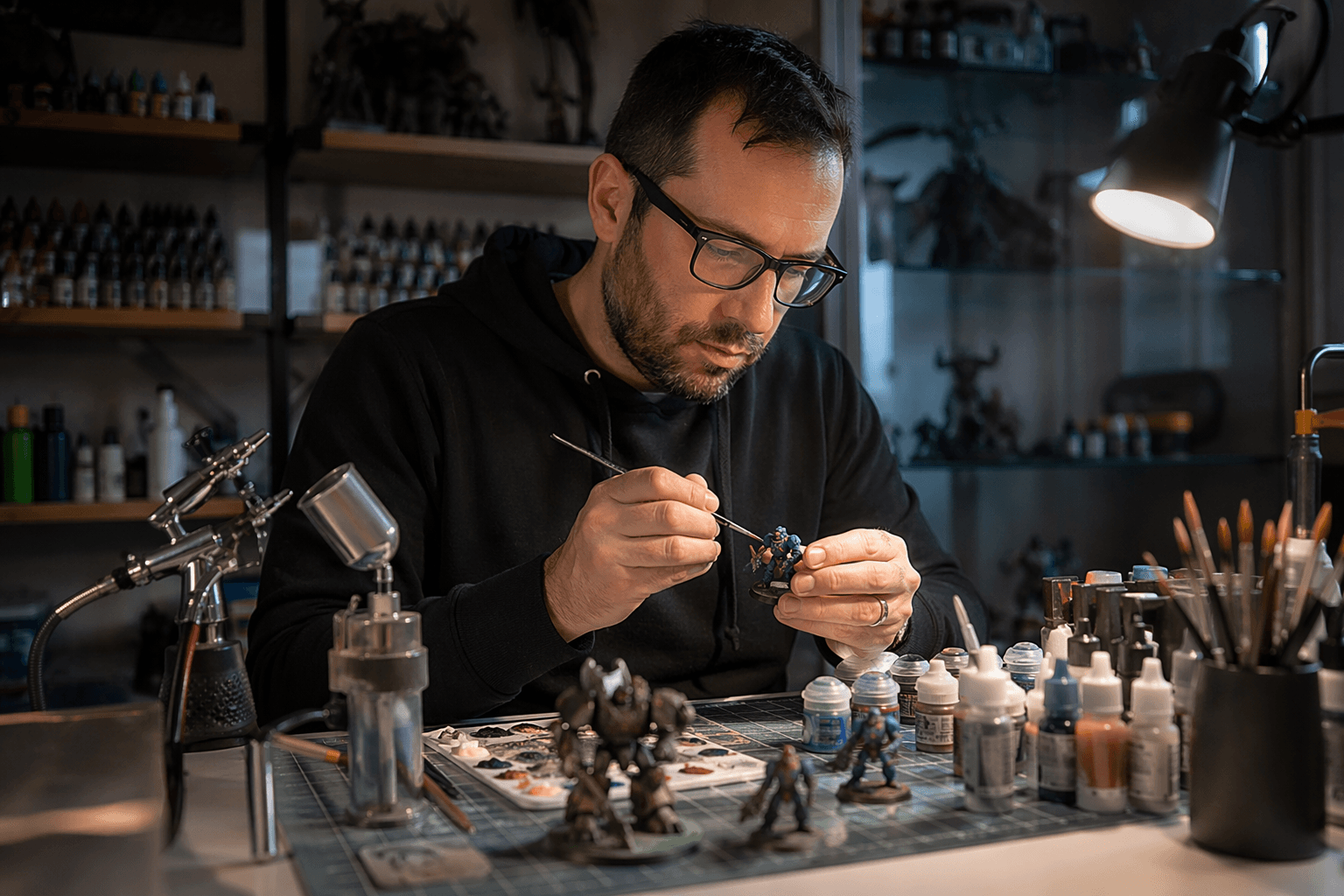
Keewa’s layered color plan gives Descendants a cohesive table-ready look
Keewa’s Descendants scheme shows how mixed-brand layers can turn a starter-box force into one cohesive, table-ready army with deeper shadows and cleaner transitions.
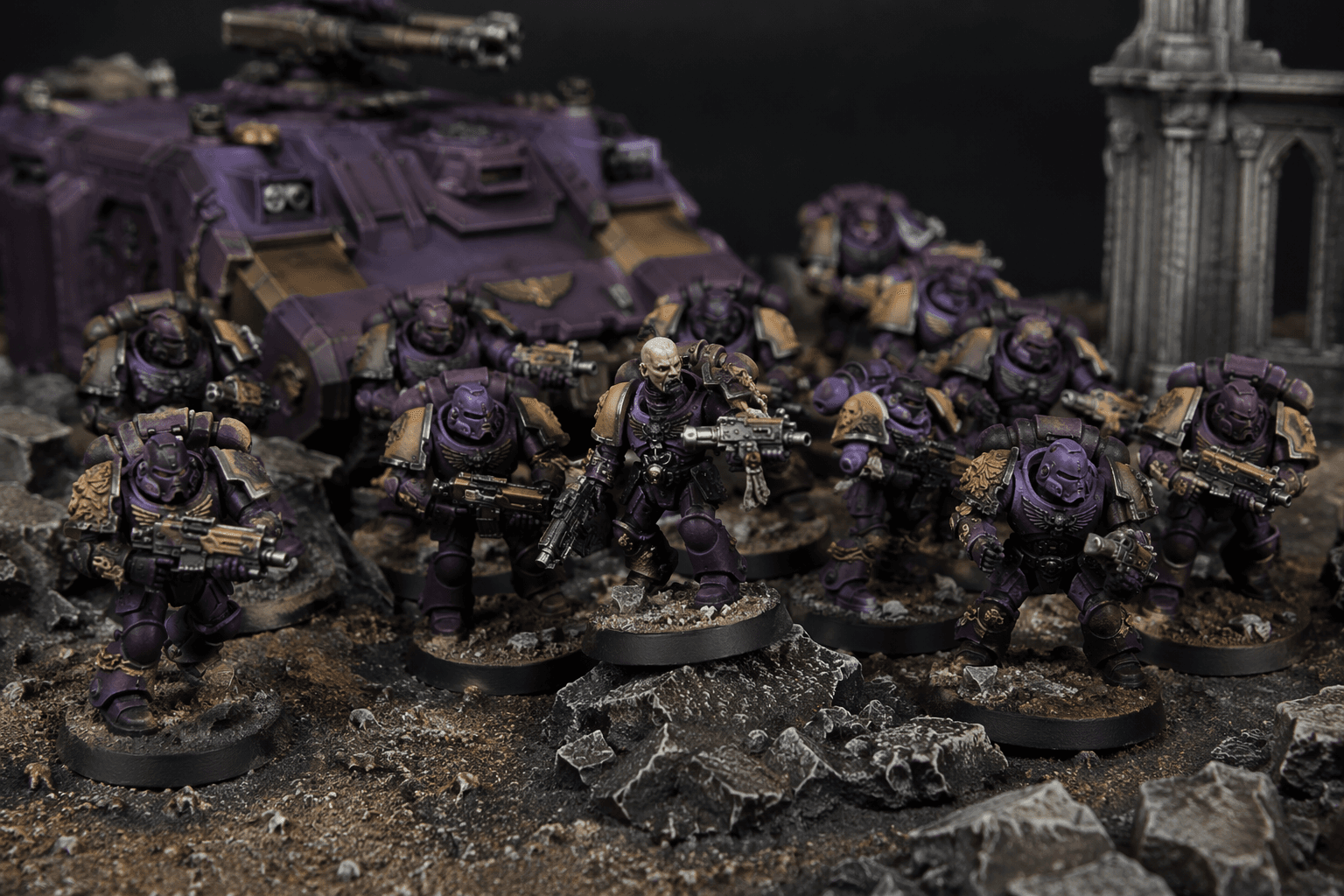
Keewa’s Descendants paint plan works because it treats the force like a single visual system, not a pile of unrelated units. The recipe starts with a black prime and a dark purple undercoat, then keeps pushing the same logic through cloth, armor, capes, and the Trail Ripper so every model reads as part of the same faction. That makes the article useful far beyond this specific army: the real takeaway is how to map color decisions, control transitions, and swap materials without losing cohesion.
Start with a map, not a color by color scramble
The strongest move in the scheme is the early decision to set the mood before any finish colors go on. A black prime gives the models immediate depth, while the dark purple undercoat from Army Painter Air pushes the skin and shadow areas into a richer place than a flat black base would. That means the later layers are doing less heavy lifting, because the underlying value structure is already doing part of the work.
From there, the article leans into mixed-brand layering in a way many painters can borrow immediately. Army Painter Fanatic and ProAcryl are used successively on the skirts and cloth, building from the darker stage into lighter edges while keeping the recesses intact. The effect is a step-down-to-step-up approach that preserves the shadows, then lets the raised folds catch the light cleanly, which is exactly what you want when a force needs to be readable across the table.
Use transitions to make the faction feel intentional
The gold treatment is where the scheme stops being merely tidy and starts feeling distinctive. Instead of jumping straight to metallic gold, Keewa begins with a brown undercolor, then adds the metallic layer, and finishes with a green-tinged Speedpaint highlight. That choice gives the armor a strange, mystical quality that feels tied to the setting rather than borrowed from a generic fantasy palette.
This is a useful reminder that transition control is not just about smooth blends, it is about choosing what kind of finish you want the army to project. Brown underpaint beneath gold keeps the metal grounded, while the green tint changes the read from “shiny” to “alien.” If you are painting a force that needs identity fast, that kind of controlled deviation is more powerful than piling on extra highlight steps.
The capes follow the same logic, but in a more flexible triad that can be adapted to almost any fantasy faction. The article moves from deep burgundy into lighter reds on the raised folds, then sharpens the corners with brighter highlights. That gives the cloth motion and direction, so the folds do not just read as red fabric, they read as fabric catching different amounts of light.
The biggest models prove the method scales
The Trail Ripper section is especially valuable because it shows how the same army can mix techniques depending on surface and scale. Keewa uses airbrush shading on the belly and inner legs to establish shadows quickly, then switches to drybrushing for the rest of the skin. That is a smart division of labor, because the creature’s larger forms benefit from broad shading first, while the more textured areas can be brought up efficiently with a rougher pass.
This hybrid approach matters because it breaks the false idea that a big model must be painted one way from start to finish. The article makes the opposite case: use airbrush, drybrush, and detail work where each one serves the sculpt best. For painters building a deadline army or a starter-box force, that is the kind of practical flexibility that saves time without making the model look compromised.
The smaller accents hold the whole force together after that. Gems, gem tones, and other little details repeat the same color logic across the army, which is what stops the scheme from fragmenting once you move from infantry to monsters. Those recurring hues give the eye a path to follow, so even when the surfaces change, the army still feels like it belongs to one universe.
What painters can steal from the Descendants side
The best part of this article is not any single recipe, but the workflow it models. It gives you a way to think about a force before you ever pick up the brightest color in the scheme. If you want the same kind of table-ready cohesion in your own project, the transferable decisions are clear:
- Map the palette early, using undercoats and shadows to define the army’s mood before the final colors go on.
- Control transitions by stepping through related tones, instead of forcing every surface into the same highlight pattern.
- Substitute freely between brands and techniques, as long as the underlying color logic stays consistent.
That mindset also fits the larger context around Stealing the Horizons. The game is framed as a 1- to 4-player skirmish experience set in Khaeedorra, where factions contest the Horizons, floating objective anomalies drifting over a shifting battlefield. Kickstarter materials describe it as a different kind of skirmish game with built-in problem solving, so a painting plan that emphasizes identity, readability, and cohesion is doing real work before the miniatures ever hit the table.
Keewa’s Descendants force succeeds because every major surface answers the same question: how does this color support the whole army? The black prime, purple undercoat, layered cloth, strange gold, red capes, and mixed-technique creature all point back to that same answer. If you want a force that looks unified from across the room and still holds up close, this is the kind of layered planning worth stealing.
This article was produced by Prism’s automated news system from verified source data, official records, and press releases, then run through automated quality and moderation checks before publishing. The system is built and supervised by the people who set the standards it runs under. Read our full AI policy.
Know something we missed? Have a correction or additional information?
Submit a Tip