Blades of Khorne artwork inspires grim, fiery miniature paint schemes
Khorne’s old artwork is a paint guide in disguise, pointing to red armor, brass trim, ash, and blood effects you can use on current models.
The art is the army list
The newest Blades of Khorne gallery works because it does not just celebrate old images, it hands you a ready-made mood for your next army. If you want your force to look like it walked out of a furnace, the classic Khorne look gives you the whole recipe at a glance: deep reds, dark leather, bone trophies, brass edges, black shadows, and motion that never quite settles.
That is why this kind of retrospective matters to painters. It turns nostalgia into something you can actually put on the desk, whether you are planning grim infantry, towering daemonic brutes, or a character piece that needs to look like it is in the middle of a sacrificial rite.
What the classic Khorne look gives your paint scheme
The strongest Blades of Khorne visuals always rely on contrast. Red carries the faction, but it only really bites when you break it up with bone, brass, and black. That makes the army unusually friendly to modern tabletop painting, because you can keep the base recipe straightforward and spend your effort on the details that sell the story.
A practical scheme built from those cues is simple to read and easy to repeat across a full force:
- Start with a saturated crimson as the army’s anchor color.
- Push the shadows deep, with dark red and black in the recesses so the armor does not flatten out.
- Use brass or aged gold for trim, weapons, icons, and sacred details.
- Save bone and off-white for skulls, trophies, teeth, and daemon features.
- Add heat in small doses, with orange edge highlights, ember glows, or a little fire-light on the lower edges of armor and blades.
The art also gives you permission to go harder if you want to. A Khorne force does not need to be polished to work. You can dirty the reds with soot, add battle dust to boots and greaves, and use ritual gore as a storytelling accent instead of coating every surface in blood.
How to turn artwork into a finished model
Classic Khorne art is rarely static, and that is the part worth stealing for the tabletop. The figures lunge, lean, climb, or surge through the frame, which means your basing and posing should carry the same energy. A Realmgore Ritualist is a perfect place to start, because the model already suggests ritual power, carved symbols, and the kind of dramatic presence that can justify burning runes or a more supernatural palette.
The Vanguard: Blades of Khorne force gives you a useful cross-section of the faction, with 10 Bloodreavers, 10 Blood Warriors, three Mighty Skullcrushers, and a Slaughterpriest. Each of those units can carry the same visual language in a different way: Bloodreavers can read as raw fury, Blood Warriors as hardened cult-fighters, Skullcrushers as a wall of weight and motion, and the Slaughterpriest as a focal point of blood ritual and command.
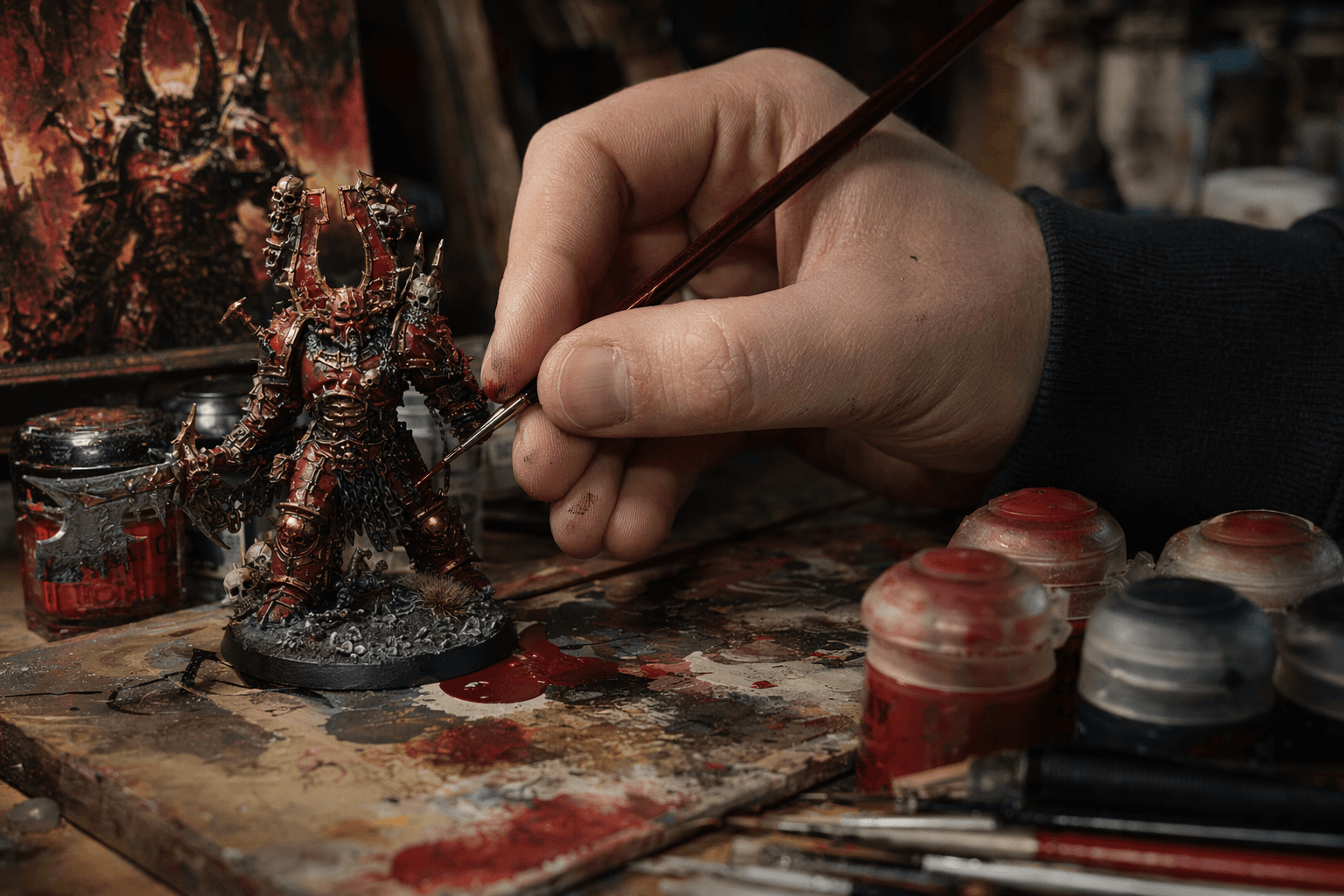
If you want the army to feel like the art, think composition as much as color:
- Tilt banners, axes, and spears so the army looks like it is advancing instead of posing.
- Build bases with broken stone, ash, scorched earth, or shattered ritual ground rather than clean dirt.
- Give each model one bright focal point, such as a glowing blade, a brass helm catching the light, or a blood rune.
- Keep some surfaces visually quiet so the red armor and gore effects have room to hit harder.
That approach works especially well on Bloodreavers and Blood Warriors, where the shapes are strong and the details read cleanly at arm’s length. The Mighty Skullcrushers want weight and momentum, so darker shadows under the mounts and brighter brass on the armor can make them feel like they are charging out of the artwork instead of standing in front of it.
Why the broader Khorne range makes this useful now
This is not just a memory exercise. The Blades of Khorne topic hub frames the faction as savage killers who honor the Blood God by taking skulls and drowning the Mortal Realms in gore, and the page sits alongside a steady stream of faction coverage. That ongoing support, spanning battle traits, fiction, a Scourge of Ghyran download, and a faction-focus feature, shows that Khorne is being treated as a living part of the game, not a relic.
The 106-page Chaos Battletome: Blades of Khorne reinforces that same idea. It includes background material, warscrolls, matched-play and narrative rules, plus a self-contained Spearhead section with gameplay and hobby advice. For painters, that matters because it ties the look of the army directly to the way it is played and collected. When the rules support the same brutal identity as the art, your paint choices stop feeling decorative and start feeling like part of the faction’s language.
The latest art feature also points forward by teasing a Cities of Sigmar piece for the following week. That makes the Khorne gallery feel like one chapter in a broader run of faction inspiration content, which is useful for anyone building an army around theme instead of chasing a generic red recipe.
Use the gallery as a paint plan, not a memory lane
The best way to use the classic art is to treat it like a reference board for decisions you can make right now. If you want a traditional Khorne force, lean into saturated red, brass, bone, and black with crisp iconography. If you want something meaner and more cinematic, mute the reds, add ash and soot, and let the gore and heat read as highlights instead of the whole story. If you want the army to feel mythic, push the glow effects, the runes, and the contrast so the force looks less like raw infantry and more like a ritual in motion.
That is the real strength of the retrospective approach. It does not just remind you what Khorne has always looked like. It gives you a clear path from old artwork to current miniatures, from mood to brushwork, and from a single Realmgore Ritualist to a whole army that looks ready to spill into the Mortal Realms.
This article was produced by Prism’s automated news system from verified source data, official records, and press releases, then run through automated quality and moderation checks before publishing. The system is built and supervised by the people who set the standards it runs under. Read our full AI policy.
Did this article answer your question?