How One-Coat Paints Reshaped Miniature Painting, Speed and Shading Combined
One-coat paints are fastest when texture does the work for you, but they shine only with the right primer, prep, and follow-up highlights.
The real promise of one-coat paint
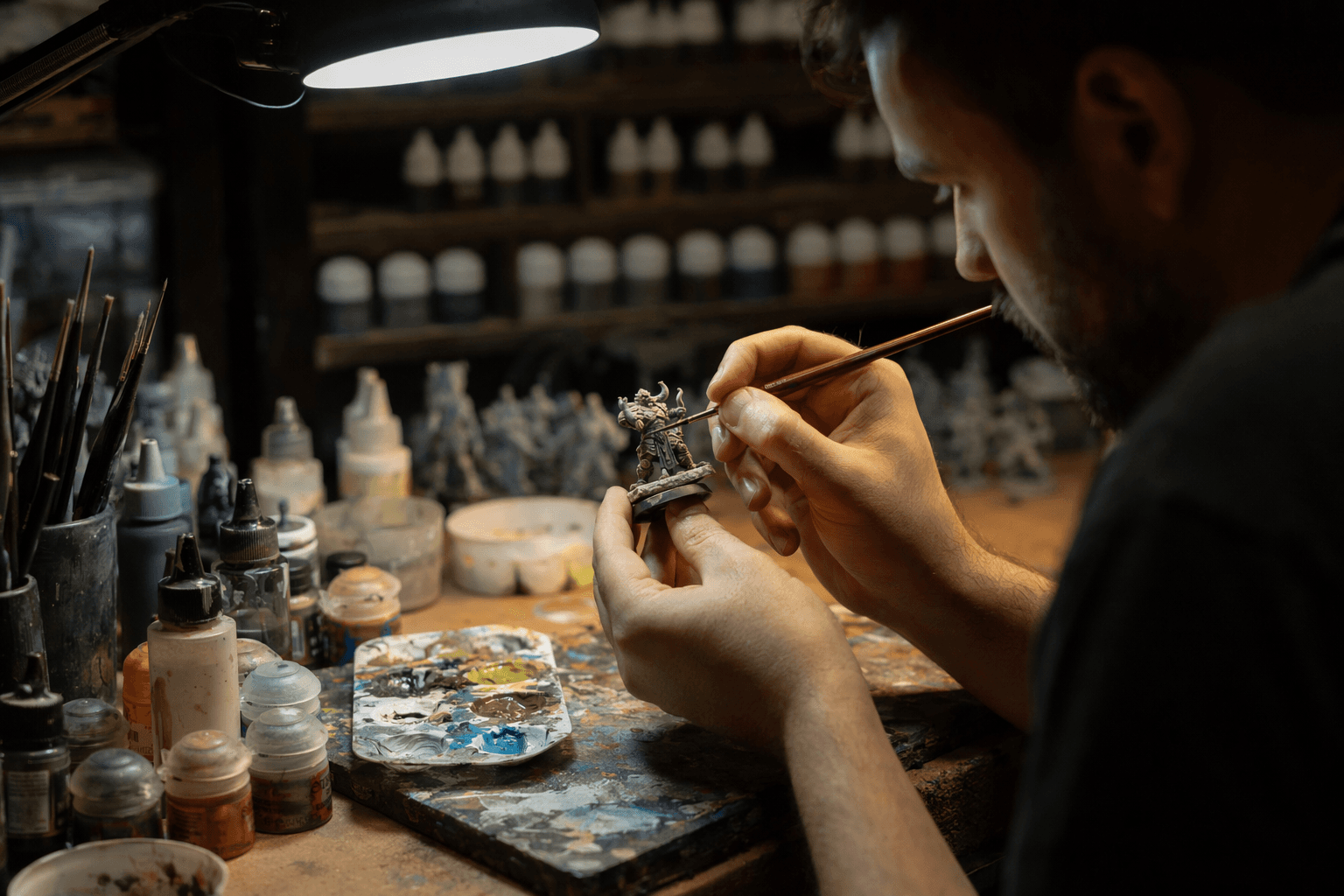
One-coat paints changed miniature painting because they solved the part most painters actually hate: the long march from primer to tabletop-ready color. Goonhammer’s take on Contrast, Speedpaint, and similar formulas is useful precisely because it treats them as transparent tools that can shift color, shade recesses, and create highlights in a single pass. That is the appeal when you are staring down a pile of infantry, not a showcase single.
The category matters most when speed is the goal and the model has enough texture to help the paint behave. A sculpt with folds, straps, scales, fur, or armor trim gives these formulas places to pool and places to catch, which is why they can look far smarter than their effort level suggests. On a deadline, that is the difference between a gray backlog and an army that is at least Battle Ready.
Where one-coat paints genuinely beat traditional layering
These paints outperform classic layering when you need volume painting with acceptable finish, not perfect control. Games Workshop built that idea directly into its Battle Ready standard, which can be reached with either Base, Shade, and Technical paints or Contrast and Technical paints. That tells you where the industry landed: this is not a gimmick for shortcuts, it is a legitimate production method for getting models onto the table.
The best case is simple: you want broad color, readable shadows, and enough pop to survive normal tabletop distance. Warhammer Community highlighted just how much time the method can save, citing a Craftworld Iyanden Guardian that reached Battle Ready in about 25 minutes using Contrast. The same article pointed out that painting the first four coats of yellow by conventional layering could take that long by itself, and that is the kind of comparison that makes the whole category click.
This is also why the one-coat approach is so attractive for beginners chasing clean results. Traditional layering asks you to control opacity, edge placement, blending, and brush pressure at the same time. A good one-coat pass strips that down to preparation and placement, which lowers the barrier without forcing the model to look unfinished.
Why preparation matters more than people expect
The mistake is assuming one-coat paint is a magic button. Goonhammer is careful about that, and it should be: performance varies not just across brands, but even within the same range. Some colors behave more like strong washes, while others cover more boldly and flatten out faster. If you treat every bottle the same, you will get inconsistent results.
That is why prep is not optional. Cleaning mould lines matters more with these paints than many painters expect, because the formulas exaggerate flaws by flowing into every seam and ridge. Priming white is another recurring recommendation because transparent paints need a bright undercoat to keep their color punch and preserve that shaded-but-clean look they are known for.
The practical takeaway is that one-coat paints reward the same discipline you would use for any serious army project. Good prep lets the paint do the heavy lifting; sloppy prep makes the shortcuts obvious. The formula saves time on brushwork, not on basics.
Where they fall short
One-coat paints are strongest on textured surfaces and much less convincing when you want exact, controlled opacity. Flat panels, large smooth armor plates, and ultra-bright solid colors can expose their limits quickly. If the model needs a crisp, uniform finish with tightly managed transitions, traditional basecoating and layering still do the job better.
They also struggle when the look you want depends on deliberate, sculpted highlights rather than whatever the paint decides to reveal. A strong transparent paint will shade recesses and tint raised areas, but it will not always give you the specific edge highlight placement that a careful layer stack can produce. That is why so many painters end up using one-coat paints as a foundation, then reinforcing edges, lenses, weapons, or cloth folds afterward.
This is especially true on centerpiece models. The speed advantage is real, but once you are past basic tabletop quality, the gain narrows. At that point, the best use of the formula is often as an underlayer for natural shading, not the final word on the miniature.
How the main ranges differ in practice
The modern one-coat market is no longer just Citadel Contrast. The Army Painter markets Speedpaint as a one-coat solution for primed miniatures, and it later reformulated Speedpaint 2.0 after user feedback to address reactivation issues and improve performance. It also added Speedpaint Metallics, which expands the range beyond standard cloth, skin, and armor use.
Vallejo’s Xpress Color sits in the same conversation, but its own materials push the fast-painting angle hard with matte finish and self-leveling properties. That matters in real hobby use because self-leveling can help reduce brush marks and create smoother transitions when the model and primer cooperate. For painters who want a fast, even finish without much fuss, that kind of behavior can be as important as color choice.
Citadel Contrast is still the reference point because Games Workshop launched it in 2019, announced it at Warhammer Fest in May of that year, opened preorder on June 8, 2019, and released it on June 15, 2019. Warhammer Community later said the range expanded by 25 new Contrast paints, which is a strong reminder that the category kept growing instead of peaking with the original launch. This is now a competitive space with distinct formulas, not a single brand’s party trick.
What the category changed for the hobby
The deeper shift is that one-coat paints made speed painting feel respectable instead of compromised. A generation ago, “fast” often meant messy. Now the better ranges can get a unit to a solid tabletop standard without looking like a rush job, which has changed how people approach rank-and-file armies, event prep, and even the first pass on display projects.
That is why Goonhammer’s broader Hobby 101 framing matters so much. It places one-coat paints inside a full workflow that still includes priming, basing, varnishing, and the traditional basics, rather than treating them as a standalone trick. That is the honest version of the hobby: use the shortcut where it saves you time, then fall back on conventional painting where control matters more than speed.
The category’s value is not that it replaces layering. It is that it gives you a better first pass, especially on textured models and army projects where getting 80 percent of the result in 20 percent of the time is exactly the right trade. Used that way, one-coat paints are not overhyped at all. They are one of the few modern hobby products that truly earns the word efficient.
This article was produced by Prism’s automated news system from verified source data, official records, and press releases, then run through automated quality and moderation checks before publishing. The system is built and supervised by the people who set the standards it runs under. Read our full AI policy.
Did this article answer your question?