How to choose brushes for miniature painting, natural versus synthetic
Airbrushes do the heavy lifting, but the right hand brush still decides your highlights, eyes, and basecoats. Here’s how to choose sable, synthetic, or skip the upgrade.
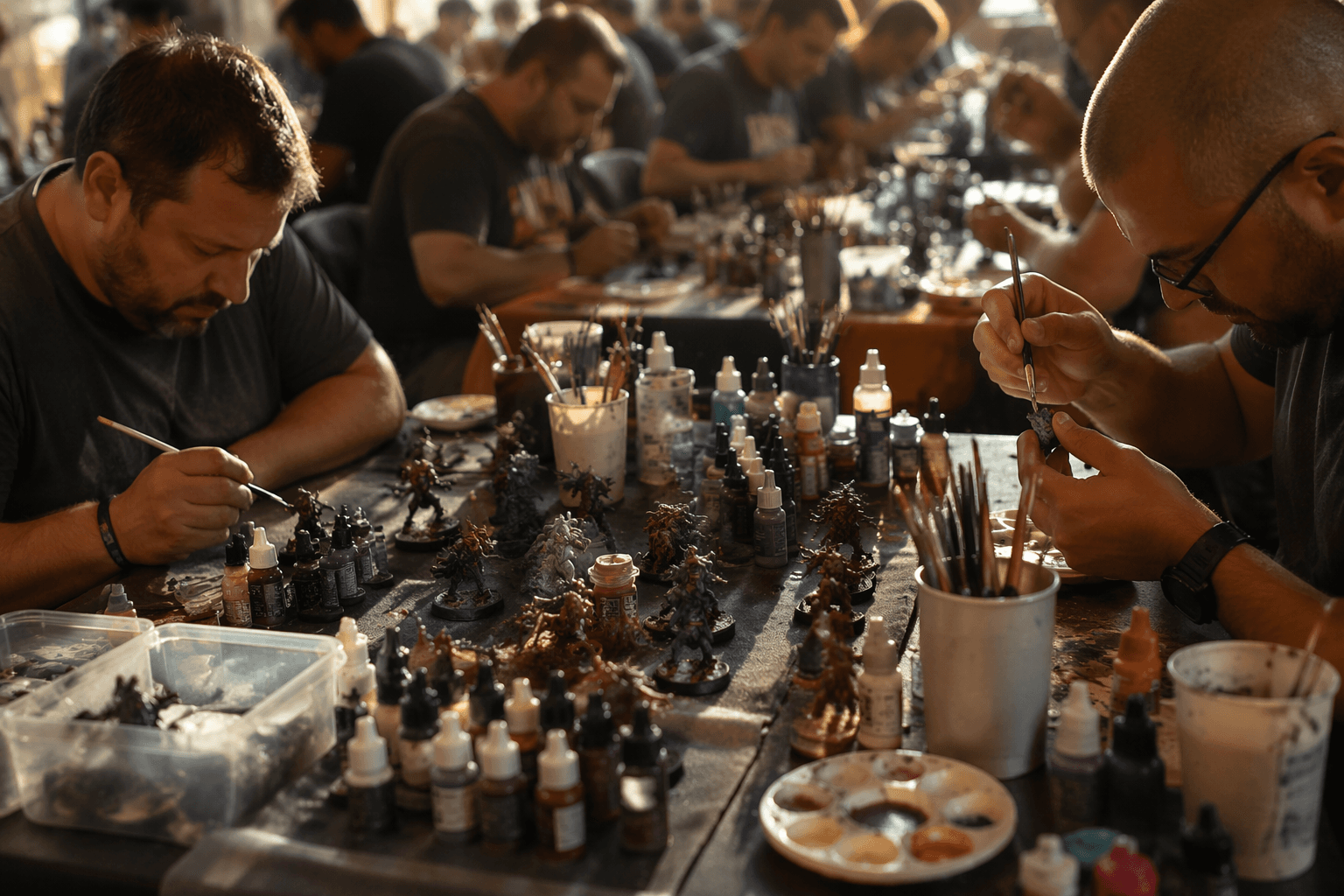
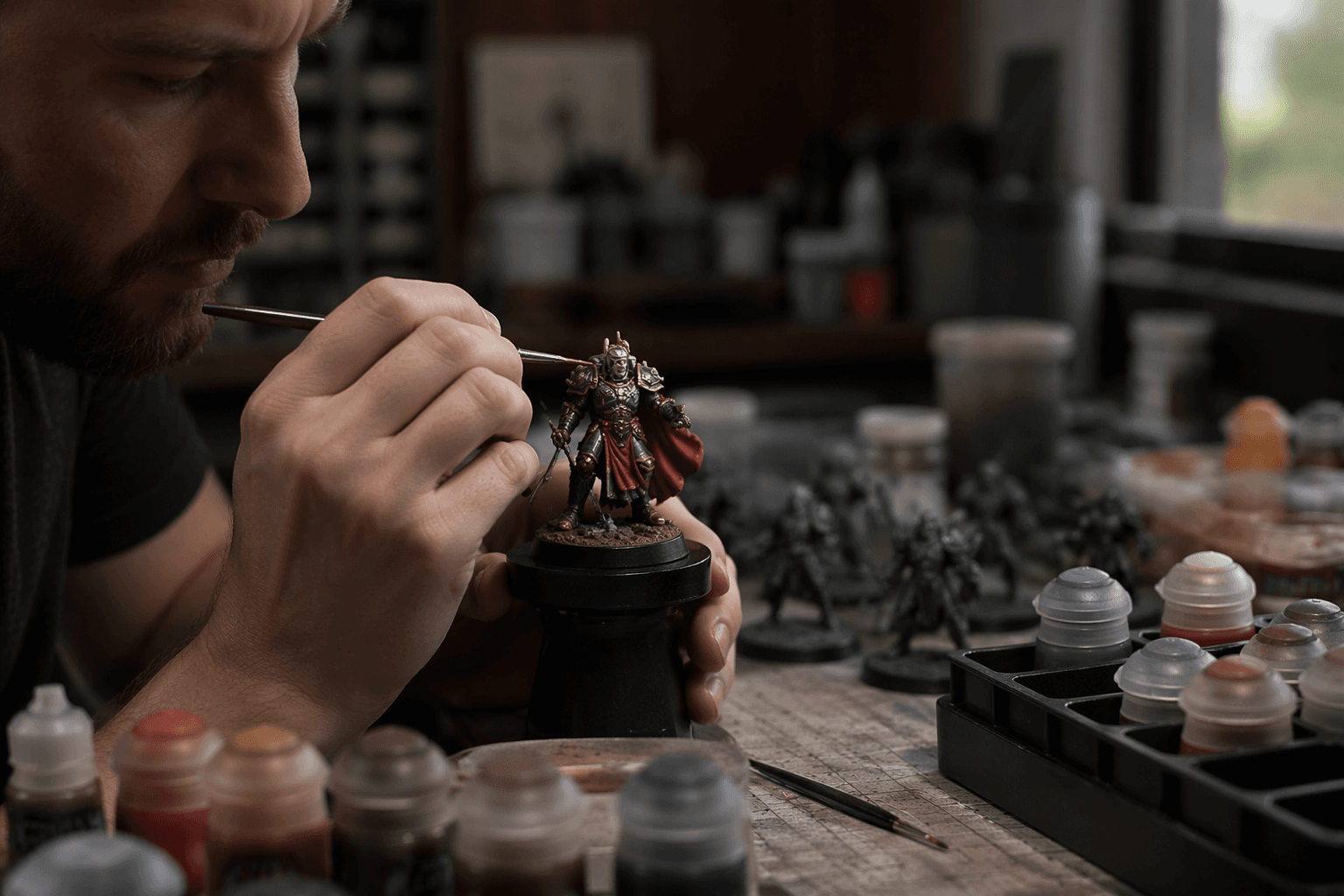
Even if your airbrush handles most of the coverage, the brush still decides whether the smallest parts of a miniature look sharp or sloppy. That is why experienced painters keep obsessing over brush choice: the right tip, spring, and size turn tedious touch-ups into clean work, while the wrong one wastes paint, time, and patience.
Why brushes still matter in an airbrush-heavy hobby
The airbrush is brilliant for primers, basecoats, and smooth blends across larger surfaces, but it does not replace every hand tool on the desk. Eyes, weapon highlights, edge lines, panel cleanup, and little corrections still depend on a brush that can land paint exactly where you want it. One Nerdy Dad’s guide makes the point plainly, the brush is not a cosmetic purchase, it is a precision tool that affects control, detail quality, and even how tired your hand feels by the end of a session.
That is the counterintuitive bit that keeps coming up in miniature painting circles. You can own an airbrush and still need to care a lot about a size 0 for tiny work, a size 1 for general use, and a size 2 for larger basecoats. If your hand-brush time is limited, the real question is not “Do I need brushes?” It is “Which jobs are still being done by hand, and what tool makes those jobs easier?”
Natural hair versus synthetic is really a question of priority
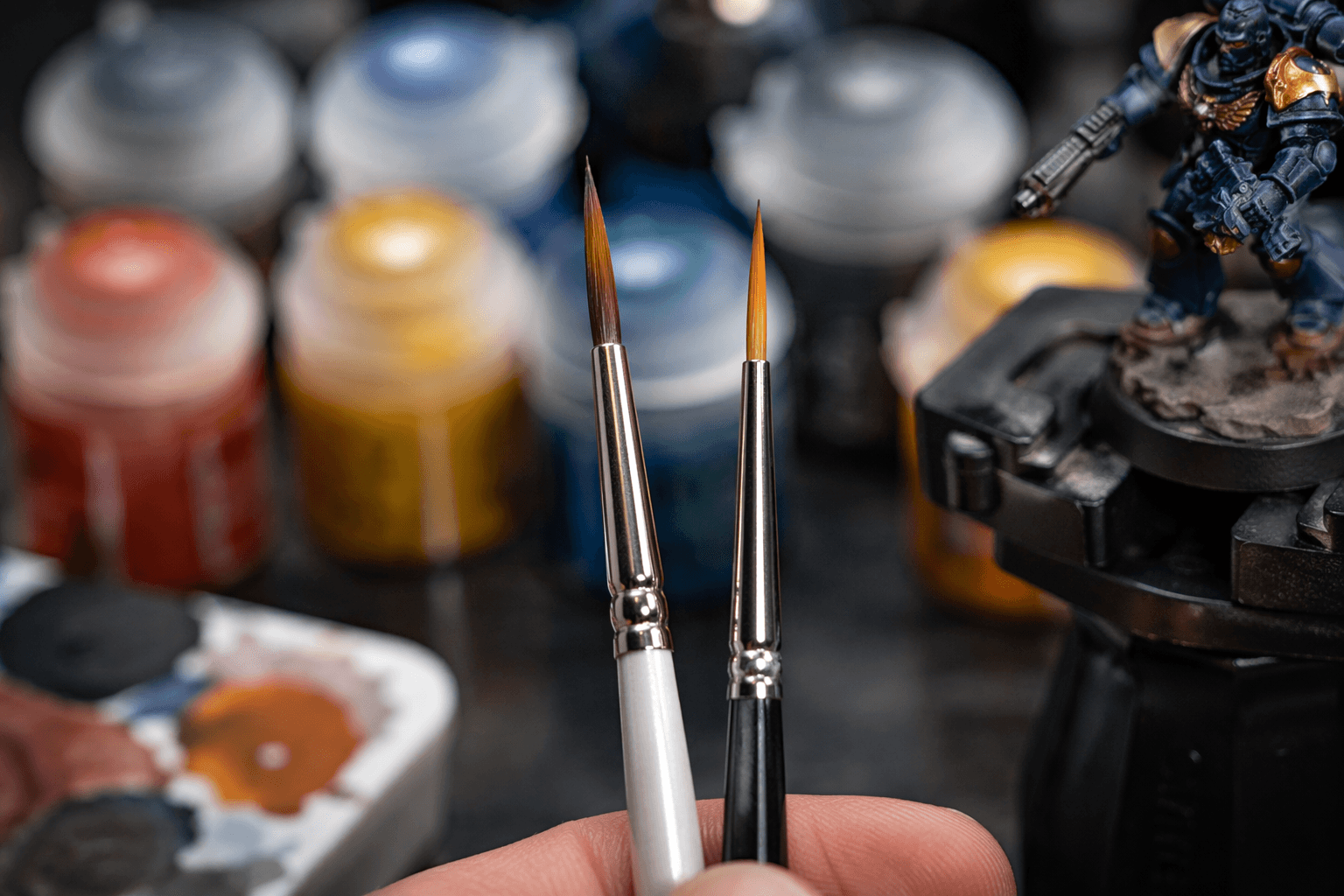
Natural hair brushes, especially Kolinsky sable, are still treated as the premium option because they hold a sharp point and carry paint consistently. Rosemary & Co describes pure Kolinsky sable as conical in shape, strong in character, with a long tapered point and a thick belly, which is exactly why detail painters like them for controlled lines and tiny marks. They are the brushes people buy when they want the best possible point and are willing to pay for it.
Synthetic brushes sit on the other side of the tradeoff. They are cheaper, easier to clean, and usually more durable in rougher use, even if they do not hold a point quite as well as a good sable. Warhammer Community specifically calls out the Citadel Colour STC synthetic range as a strong fit for drybrushing and highlighting raised edges because the fibres have springiness, balanced stiffness, and distinct snapback.
That means the material choice should follow the job. If you need crisp eyes, weapon runes, or ultra-fine lining, sable earns its place. If you are pushing pigment around on broad armor plates, knocking out edge highlights, or drybrushing texture, synthetic often makes more sense and costs a lot less.
Brush size should match the task, not the label on the pack
A lot of hobby frustration comes from buying a random set and assuming every brush will cover every need. Miniature painting does not work that way. One Nerdy Dad’s size guide keeps it practical: size 0 for eyes and weapon highlights, size 1 as the main general-purpose brush, and size 2 for basecoating larger areas.
That is the useful buying logic for anyone balancing brush money against paints, primers, or an airbrush setup. A size 1 natural brush can be the smartest “one good brush” purchase if you want a versatile tip for most hand-painting jobs. A size 2 synthetic can be the better workhorse if you want to move paint on larger surfaces without paying premium money for a brush that is going to get abused.
The key is not to overbuy. If your model work is mostly airbrushed and you only hand-brush details, a full premium set is usually overkill. If you paint a lot of faces, lenses, icons, and sharp edge highlights, one excellent sable detail brush is worth far more than three mediocre craft-store brushes.
Care is part of the purchase, not an afterthought
Brush care is where expensive brushes either justify themselves or fall apart. The warning hobby painters keep repeating is simple: if paint dries in the ferrule, it can permanently ruin precision and shorten the brush’s life. Once the paint has crept up into the metal, the point never quite behaves the same again.
That is why immediate rinsing, proper drying, and storage matter so much. A well-kept Kolinsky brush can last for years, which changes the whole math of the purchase. The “expensive” brush stops looking expensive if it survives long enough to replace multiple cheap ones.
This is also where synthetic brushes can be forgiving. They are easier to clean, and for the kind of aggressive, repetitive work that comes with drybrushing or basecoating, that matters. If your routine is fast and messy, synthetic buys you time as well as money.
What the market tells you about the decision
The price gap is wide enough to force a real choice. One Nerdy Dad’s synthetic-versus-sable comparison puts synthetic miniature brushes around $4 to $10, while Kolinsky sable brushes can start around $20 and climb well beyond that. That spread is why the decision lands beside other hobby purchases, not above them.
It helps to remember how mature the miniature-painting market has become. Games Workshop says it sells more than 250 Citadel acrylic paints and has been making paint for nearly four decades. In a market that crowded and established, brush choice is not about collector mentality, it is about whether your hand tool matches the way you actually paint.
For most airbrush users, the answer is one of three things. Buy a sable detail brush if tiny precision work is your bottleneck. Buy a synthetic workhorse if your hand-brushing is mostly basecoats, drybrushing, and edge highlights. Or skip the premium upgrade entirely for now if the airbrush already covers most of the model and your current brush still keeps a point.
That is the real test. The right brush is not the fanciest one in the drawer, it is the one that makes the next eye, edge, or basecoat go cleanly the first time.
This article was produced by Prism’s automated news system from verified source data, official records, and press releases, then run through automated quality and moderation checks before publishing. The system is built and supervised by the people who set the standards it runs under. Read our full AI policy.
Know something we missed? Have a correction or additional information?
Submit a Tip