Warhammer Community reveals step-by-step Commissar Yarrick painting guide
Commissar Yarrick gets an official step-by-step paint walkthrough just as Armageddon returns to center stage. The video turns a legend into a practical character-painting reference.
Why this Yarrick video matters right now
Commissar Yarrick’s return matters because Armageddon is once again the beating heart of Warhammer 40,000’s recent reveal cycle, and Games Workshop has put one of the setting’s most recognizable Imperial names back in front of painters at exactly the right moment. The new painting video follows that momentum by pairing the character’s comeback with a complete walkthrough, so the miniature lands as both a story beat and a desk-ready project.
That timing gives the tutorial more weight than a routine showcase. Yarrick is not just another officer with a cap and a sword, he is the Hero of Hades Hive, Old Bale Eye, and the man who has twice been instrumental in saving Armageddon from Ghazghkull Thraka. When a character that famous gets a fresh official paint guide, it becomes the sort of update people notice by name alone.
What the guide actually gives you
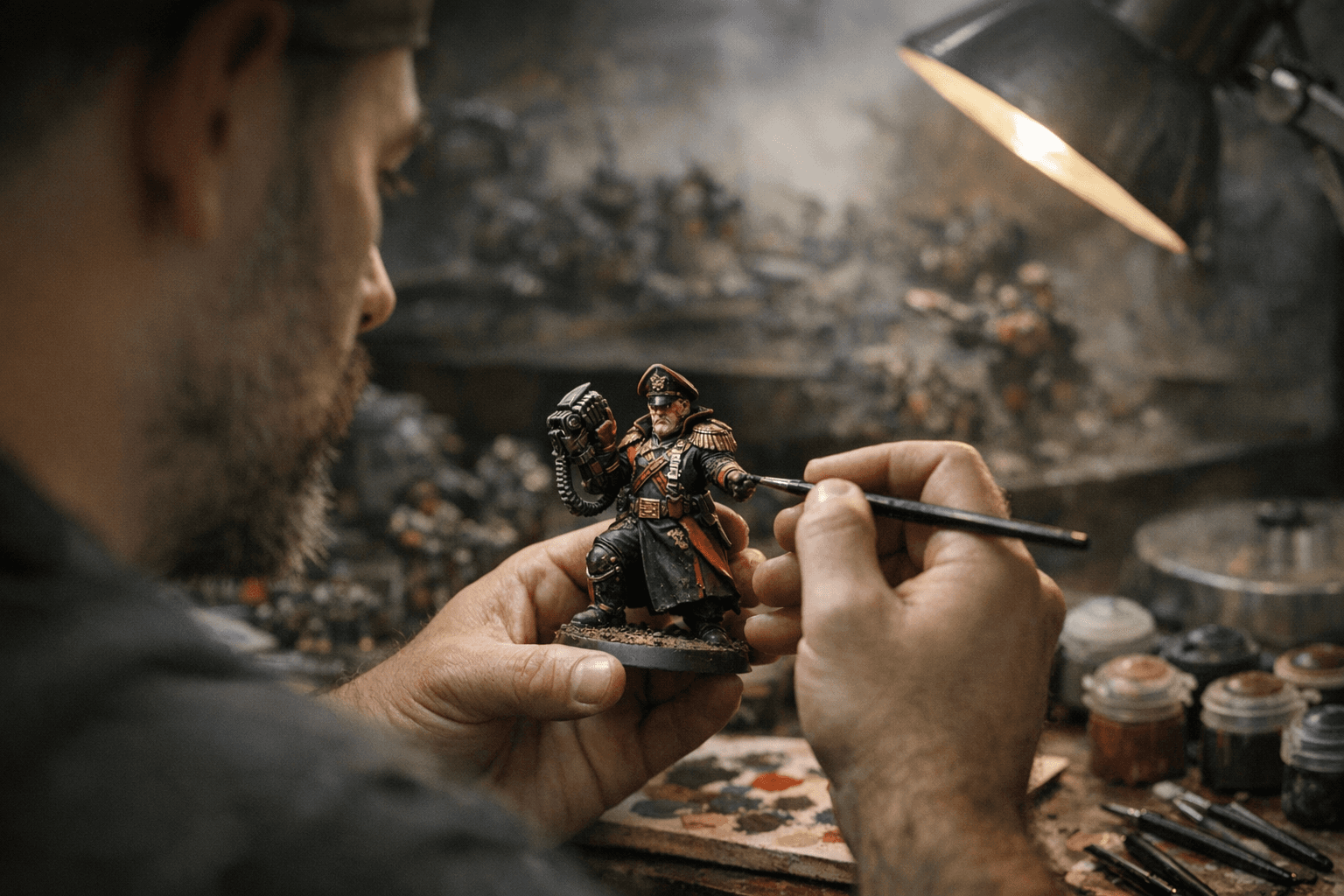
The video is a seven-and-a-half-minute painting walkthrough presented by Ollie, and the key promise is simple: it takes the new Yarrick model from start to finish. That makes it immediately useful if you want to paint the miniature as Games Workshop imagines it, rather than trying to reverse-engineer the studio look from a single glamor shot.
That format says a lot about how current character painting is being handled. Warhammer’s painting videos are explicitly positioned as a way to move miniatures from bare plastic to fully realised warriors, and this one follows that model closely by centering a named hero with a strong silhouette and a clear narrative identity. In practice, that means you are not just watching color choices, you are studying how the studio frames a centerpiece character so it reads instantly on the table.
For painters, that is the real utility. A premium character like Yarrick needs more than neat edge highlights, because the model has to sell age, authority, and a lifetime of war in one glance. This guide gives you a finished reference for the exact kind of miniature that rewards careful work on flesh, metal, cloth, and battle-worn details.
The Yarrick details you will want to copy
The new sculpt carries forward the classic Yarrick DNA, and the official video makes those details impossible to miss. His blazing bionic eye, billowing sash, shoulder epaulettes, and distinctive hat all survive from earlier versions, while his aged body now looks even more mechanical and exhausted, held together by servo-enhanced callipers and sheer stubbornness.
- The bionic eye is the cleanest focal point on the miniature, so it is the detail most likely to benefit from a bright, controlled finish. The model’s eye is also a key part of Yarrick’s identity, so if you want instant recognition, this is where you make the strongest contrast.
- The hat, epaulettes, and sash are pure Imperial character work. They give you large, readable surfaces for disciplined color blocking, and they anchor the silhouette so the model still looks like a Commissar even at a distance.
- The callipers and weathered body are where the miniature pushes beyond a simple parade-ground look. Those details invite careful metal work and wear effects, and they help sell the idea that Yarrick has survived long enough to become part legend, part machine.
- The laspistol in the hip holster is small, but it matters because it reinforces the character’s practical, battlefield-first presentation. Tiny elements like that are the difference between a generic officer and a model that feels like a named hero with a long history.
- The pilfered Ork power klaw remains the signature flourish that makes Yarrick stand out in any army. It gives you a chance to add brutal contrast, with Imperium order on one side of the model and Ork excess on the other.
If you are planning your own version, think in terms of storytelling rather than just surface finish. Yarrick’s strongest visual language comes from the clash between his formal Imperial rank and the scars of a war that has outlived ordinary men, so every paint choice should reinforce that split.
What Games Workshop’s current character-painting approach looks like here
This tutorial shows a very clear studio preference: named characters tied to major story beats are being treated as showcase projects, not side content. The whole presentation pushes the idea that the official finish is something you can follow step by step, which is especially useful when the miniature is meant to carry a campaign narrative as well as an army list.
Yarrick is the perfect subject for that approach because his model already does half the work for you. The pose is iconic, the silhouette is unmistakable, and the lore is loaded with recognition, from his return to Armageddon to his reputation as the war-scarred commander who refuses to stay down. A paint guide for a figure like that is not just instructional, it is a way of showing painters how the studio expects the character to live on the tabletop.
Why this is the kind of hobby update people remember
This is the sort of reveal that travels fast because it sits at the intersection of nostalgia, story, and utility. Yarrick is one of the most storied warriors in the Astra Militarum, the current Armageddon arc keeps him in the spotlight, and the tutorial gives painters a concrete reason to care beyond lore alone.
It also arrives in a wider wave of Armageddon coverage, from new Imperial reinforcements to the return of the setting’s old war heroes, which makes the paint guide feel like part of a larger release rhythm rather than a standalone upload. For anyone building an army around the campaign, this is the cleanest possible visual reference for how the flagship Commissar is supposed to look when he hits the display shelf or the tabletop.
By the time you finish the video, Yarrick is doing exactly what he has always done best: turning a war story into a model that feels larger than life. In a hobby landscape full of fast reveals, that kind of official, character-led paint guide is the one people keep returning to when they want the legend to look right.
This article was produced by Prism’s automated news system from verified source data, official records, and press releases, then run through automated quality and moderation checks before publishing. The system is built and supervised by the people who set the standards it runs under. Read our full AI policy.
Did this article answer your question?