Warhammer fans paint the Red Terror in striking new colors
The Red Terror is back in plastic, and the community gallery shows how to turn one Tyranid nightmare into motion, burrow, or classic hive-fleet menace.
Why this Red Terror matters now
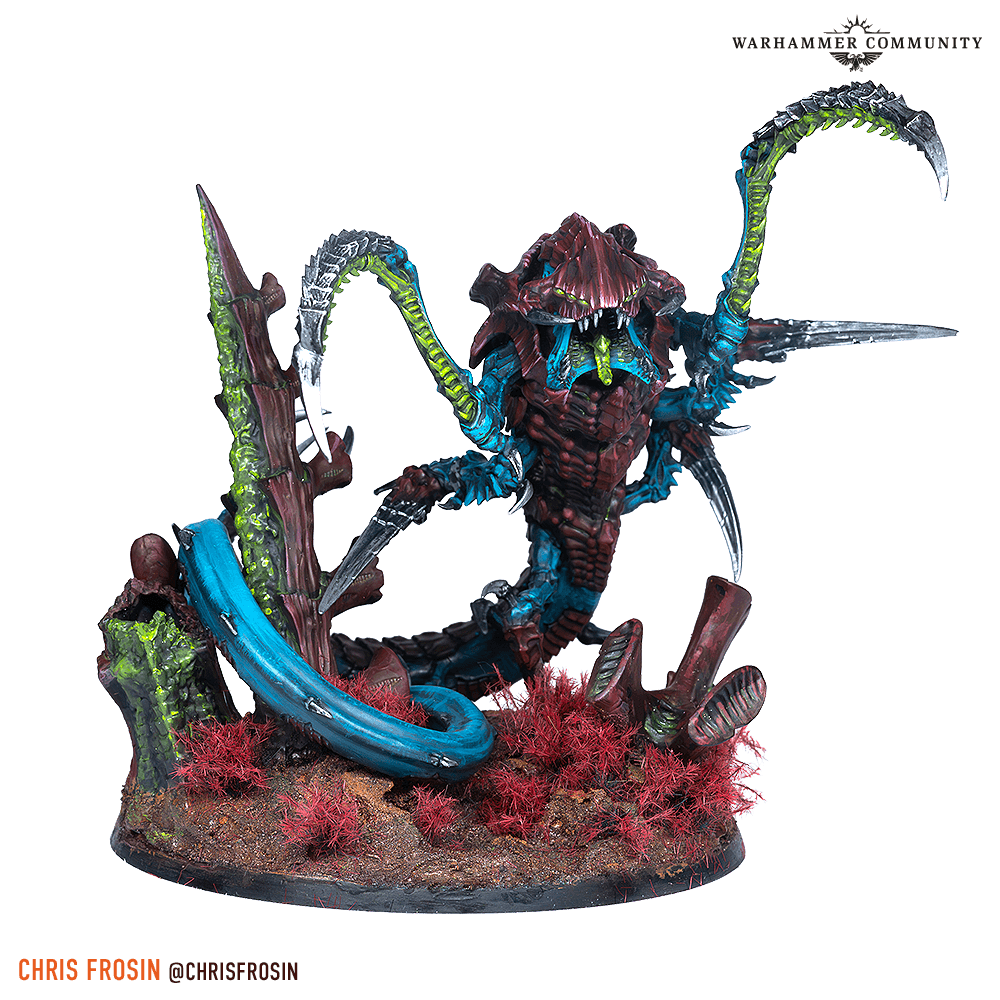
The best thing about the Red Terror reveal is that it refuses to behave like a single “correct” paint job. Warhammer Community’s gallery makes that clear immediately: Andy, Luki, Angelo, Chris, Denis, Jessica, Jason, David, James, Angel, and another Chris all pushed the model in different directions, and the monster still reads as the Red Terror every time. That is the real hobby win here. The sculpt is dramatic enough to survive almost any palette, which means you can chase the classic crimson look or use it as a playground for darker carapaces, brighter armor plates, and more alien skin tones.
That flexibility matters because the model comes with real lore weight attached. Warhammer Community says the Red Terror first appeared in the 3rd edition release of Codex: Tyranids, and ties it to the slaughter of Imperial citizens on Devlan before it vanished for years. Now it is being pushed as an iconic Tyranid bioform available in plastic for the first time, which explains why painters and collectors are treating it as more than a rules piece. It is one of those releases where the miniature history, the battlefield story, and the paint opportunity all line up in the same brutal silhouette.
What the gallery is actually teaching you
The showcase is not just a parade of nice photos. It is a practical lesson in how to sell three things on a Tyranid monster: motion, burrowing, and flesh. The most effective entries do not rely on a lot of tiny freehand or overcomplicated color theory. They use strong value contrast, purposeful basing, and a clear read on where the creature is coming from. That is why the Red Terror works so well in a gallery format: the sculpt does half the job, but the paint choices tell you whether this thing is erupting from the ground, crawling through a kill zone, or stalking through a hive fleet tide.
The model also benefits from terrain that feels specific. The article calls out how well the Red Terror can be integrated into all kinds of bases, from subterranean themes to more generic battlefield rubble. That is not a throwaway detail. On a monster this angular and predatory, the base is what sells scale and movement. A plain base can leave it looking like a nice display piece. A base with shattered rock, exposed earth, or tunnel debris makes it feel like a living weapon that just broke the surface.
The three treatments worth stealing
Motion through contrast
The easiest way to make the Red Terror look like it is in motion is to keep the carapace darker than the flesh and push the brightest tones where the eye should move first, usually the head, jaws, and leading limbs. Several of the community entries lean into darker shells with brighter plates, and that works because it creates a visual sprint down the body. If you want the same effect on your own model, keep the body tones tighter and reserve the strongest highlights for the face and talons so the miniature feels like it is lunging instead of posing.
This is also where the “not just red” approach pays off. A muted carapace with warmer underflesh can make the model feel more alive than a fully saturated crimson monster. The trick is not to overdo the palette split. Keep one family of colors dominant, then use a cleaner accent tone on the jawline, eyes, or ventral surfaces to force the eye forward.
Burrowing through the base
The burrowing look is the most natural fit for the Red Terror, because the model’s history and Devlan connection already suggest something that comes up through the ground to kill. Andy and Luki’s approaches, alongside some of the other community takes, show how far you can push that idea with the base alone. Rough subterranean texture, torn earth, rock fragments, and a sense of material displacement can make the model feel like it has just forced itself out of the table.
If you are adapting that idea at home, do not try to build the whole story with sculpted debris. One or two strong cues are enough. A cracked surface, a patch of darker soil, or a broken edge around the monster’s entry point can do more than a crowded scenic base. The point is to make the Red Terror look like it is cutting through terrain, not standing on top of it.
Alien flesh that feels wrong in the right way
The strongest alien-flesh schemes in the gallery are the ones that move away from the safe “everything in one red family” approach. Jessica, Denis, Chris, and Jason all help show why darker carapaces and brighter armor plates can make the flesh underneath feel more organic and unsettling. When the shell is restrained, the skin reads as wet, toxic, or predatory instead of simply red. That matters on a Tyranid monster, because the creature should feel biological first and decorative second.
For your own model, think in layers. Use a darker shell, then let the flesh carry a slightly different temperature, either paler, warmer, or more bruised. The danger here is flattening the whole thing into one value band, which makes the model lose that wet, living look. Keep the deepest shadows in the creases and under the jaws, then bring the brightest flesh up where the muscles and vents should catch light.
Why this release feels bigger than a gallery post
The timing gives the showcase real weight. A Sunday Preview on May 3, 2026 said Kill Team: Terror on Devlan would be available to pre-order the following Saturday, and Warhammer Community’s preview coverage on March 26, 2026 framed the box as a fight between veteran Cadian elites and the Red Terror. That is a smart pairing for painters, because it makes the monster feel like the centerpiece of an asymmetric skirmish battle rather than just another large Tyranid kit. It also keeps the release anchored in Kill Team, which Warhammer Community describes as an action-packed skirmish game set in the 41st Millennium.
The follow-up rules coverage matters too. On May 4, 2026, Warhammer Community said the Red Terror has the VANGUARD INVADER keyword and can be used with Vanguard Onslaught alongside the Deathleaper. That gives the miniature immediate tabletop relevance beyond the display shelf, and it explains why the painting conversation is so active. A model that can anchor a force and still look good in wildly different color stories is exactly the sort of kit that hobbyists end up discussing for months.
The takeaway for painters
The Red Terror is one of those Tyranid releases that rewards conviction. Go classic red if you want the iconic Devlan nightmare look, but do not feel boxed in by it. The community gallery shows that the sculpt can handle deeper shadows, stranger carapaces, and more experimental flesh tones, as long as the base and highlights keep the story moving.
That is the part worth stealing from this release: not a single paint recipe, but a way of thinking. Build the sense of motion first, give the base a job to do, and let the flesh look alive enough to make the whole miniature feel like it has only just surfaced from the dark.
This article was produced by Prism’s automated news system from verified source data, official records, and press releases, then run through automated quality and moderation checks before publishing. The system is built and supervised by the people who set the standards it runs under. Read our full AI policy.
Did this article answer your question?