Warhammer Paint Tutorial Reimagines Death Korps in Steel Legion Colours
Warhammer’s Krieg turns Steel Legion, and the swap makes the army feel newly rooted in Armageddon. Ollie’s 5:47 tutorial lays out the exact paints to copy it.
Why this Krieg scheme lands so well
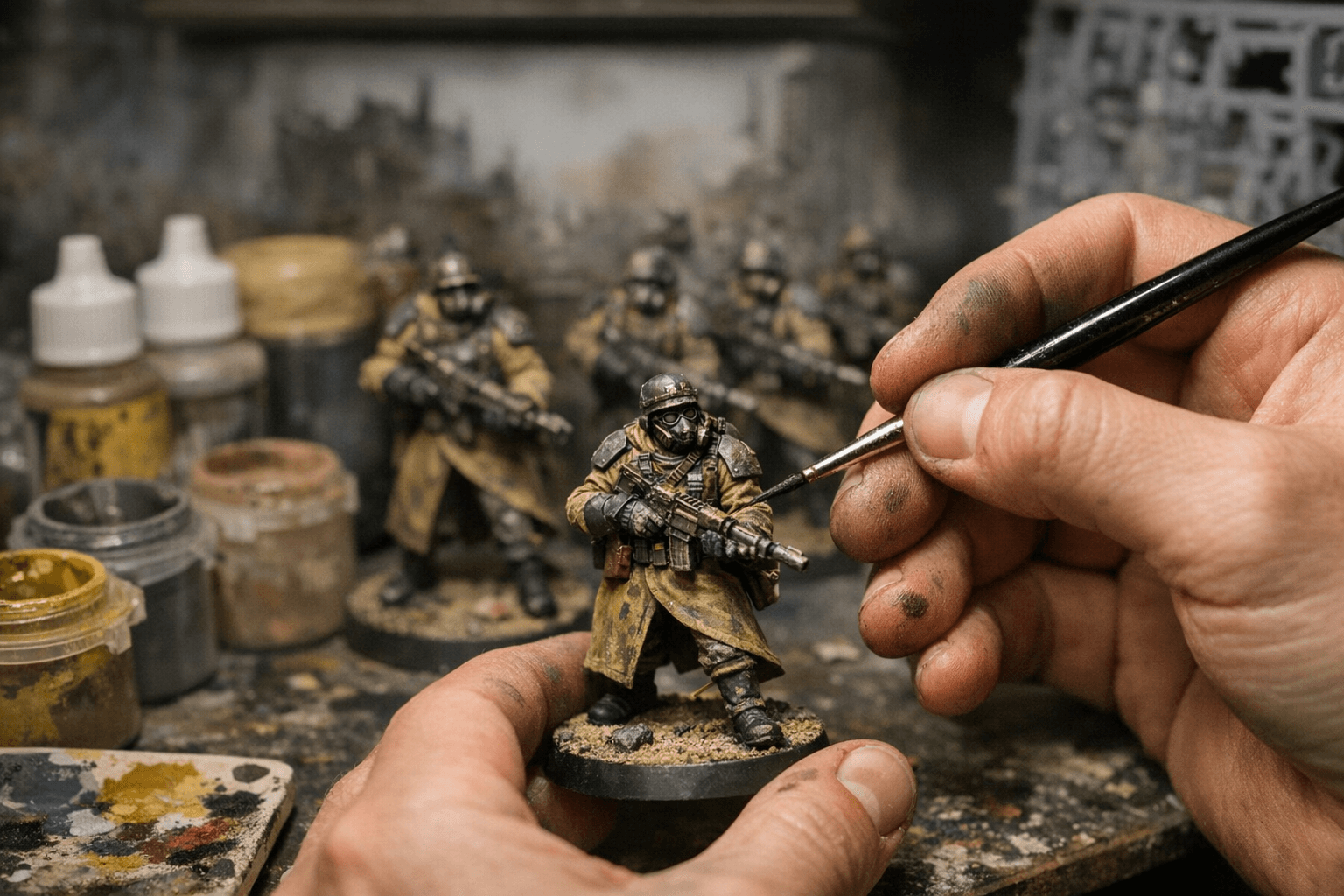
Warhammer just gave the Death Korps of Krieg a Steel Legion coat of paint, and that small change does real work. Instead of leaning on the usual trench-heavy Krieg look, the tutorial pushes the army back toward Armageddon, where the visual history of these regiments is messier, richer, and a lot more interesting.
That is the smart part. The video runs 5 minutes and 47 seconds, is presented by Ollie, and Warhammer Community published it on March 20, 2026. In other words, this is not a vague mood board or a broad “paint your infantry better” lesson. It is a very specific official recipe for a very specific battlefield identity, timed to a wider Armageddon push that is clearly running through Warhammer 40,000’s current animation and lore coverage.
The key twist is buried in the video description: the Death Korps of Krieg originally began as an alternate colour scheme for the Steel Legion. That detail reframes the whole tutorial. You are not watching an army get dressed up in a random crossover palette, you are watching Games Workshop lean back into its own internal design history and remind painters that these two famous Astra Militarum regiments have always been connected by more than just mud and bolters.
The palette is doing the storytelling
The reason the scheme works is that it keeps the Death Korps identity, the masks, the discipline, the grim infantry silhouette, while shifting the emotional temperature of the model. Steel Legion colours bring the army closer to Armageddon’s industrial war zone, which gives the model a different kind of weight. It still feels severe, but now it reads less like a permanent siege diorama and more like a regiment with a home theater, a campaign history, and a reason for its grime.
That matters because the Death Korps are one of the easiest armies to over-weather. Mud, chipped armor, and desaturated cloth can make every squad look interchangeable if you are not careful. By anchoring the look to Steel Legion Drab and the broader Armageddon palette, the tutorial gives you a way to keep the army dirty without flattening it into generic brown infantry.
Ollie’s demonstration is useful precisely because it shows that you do not need to invent a brand-new faction identity to make a Krieg model feel fresh. You need a clear color decision, then enough restraint to let the regiment still read as Krieg at arm’s length.
The exact paint recipe that makes it practical
Warhammer Community also published a companion paint guide with the materials used in the demo, which is what makes this tutorial easy to act on immediately. The list includes Death Korps Drab, Steel Legion Drab, Leadbelcher, Zandri Dust, Agrax Earthshade, Nuln Oil, Armageddon Dust, plus Abaddon Black and Dryad Bark in the base stage.
The strength of the recipe is that every paint has a job:
- Death Korps Drab and Steel Legion Drab do the heavy lifting on the fatigues and armor balance.
- Zandri Dust lightens the scheme and pushes it toward that worn desert-industrial feel Armageddon armies need.
- Leadbelcher gives you the hard metallic notes on weapons, rivets, and hardware so the model does not dissolve into a flat tan-and-brown block.
- Abaddon Black keeps straps, hoses, boots, and small details crisp, which is important when the rest of the palette is muted.
- Dryad Bark adds a dirtier brown anchor, useful for deep shadow and organic grime.
- Agrax Earthshade and Nuln Oil split the shading work nicely, with one warming the model’s recesses and the other tightening the cooler mechanical areas.
- Armageddon Dust is the final tie-in, because it sells the battlefield itself, not just the uniform.
If you are painting this as a tabletop unit rather than a display piece, the recipe is forgiving. The scheme does not depend on tiny custom blends or airbrush tricks. It depends on disciplined blocking, controlled shading, and weathering that feels tied to the base and lower legs rather than smeared across every surface in the same way.
What this says about the army, not just the model
This tutorial matters because it gives painters permission to revisit old factions with a more personal regiment identity. Warhammer’s own Astra Militarum line already treats regiments as world-specific military traditions, with Cadia, Krieg, Catachan, and Armageddon all sitting inside the same broader Imperial structure. Once you accept that, an off-canon colour decision stops being a deviation and starts looking like a legitimate way to tell a better story on the tabletop.
The current Armageddon focus makes that even clearer. Warhammer Community has been rolling out Armageddon lore coverage, and on April 7, 2026 it published Lore of Armageddon Part 1 – The Armageddon System. Put beside the painting tutorial, the message is obvious: the company is not just selling models, it is tightening the connection between paint, setting, and faction memory.
That is why this kind of video resonates with painters who already own Krieg, or own some other tired infantry block they are tempted to repaint. A different palette can reset the entire army without changing a single datasheet. You keep the same troop type, the same silhouette, the same battlefield role, but the force suddenly belongs to a different story. For a hobby where so much of the satisfaction comes from making plastic feel like a place, that is a very good trick to have in the toolbox.
How to steal the idea without losing the identity
If you want the look to work on your own force, keep the focus on contrast and cohesion. The Krieg masks and gear should stay the visual center, while the Steel Legion palette handles the mood and setting. That means holding the browns, khakis, and metals to a consistent repeatable pattern across the squad, then using dust and shade to unify the boots, hems, and lower armor.
The best version of this scheme is not the cleanest one. It is the one that looks like a regiment that has walked through Armageddon and still kept its field discipline. That is the payoff of the tutorial, and it is why the Steel Legion repaint feels more than cosmetic. It turns the Death Korps into a better story, one layer of paint at a time.
This article was produced by Prism’s automated news system from verified source data, official records, and press releases, then run through automated quality and moderation checks before publishing. The system is built and supervised by the people who set the standards it runs under. Read our full AI policy.
Did this article answer your question?