Warhammer TV’s Arena of Death turns painting and battle into one spectacle
Three Bloodthirsters, three Mega-gargants, and a Flamespyre Phoenix made Warhammer TV feel like one giant hobby ad for monsters, paint, and spectacle.
Warhammer TV has stopped acting like a side channel and started behaving like the centre of the hobby. The latest Arena of Death episode put monster kits front and centre, then wrapped them in the same subscription bundle as battle reports, lore, apps, the Warhammer Vault, subscriber giveaways, a yearly free miniature, and merch discount codes.
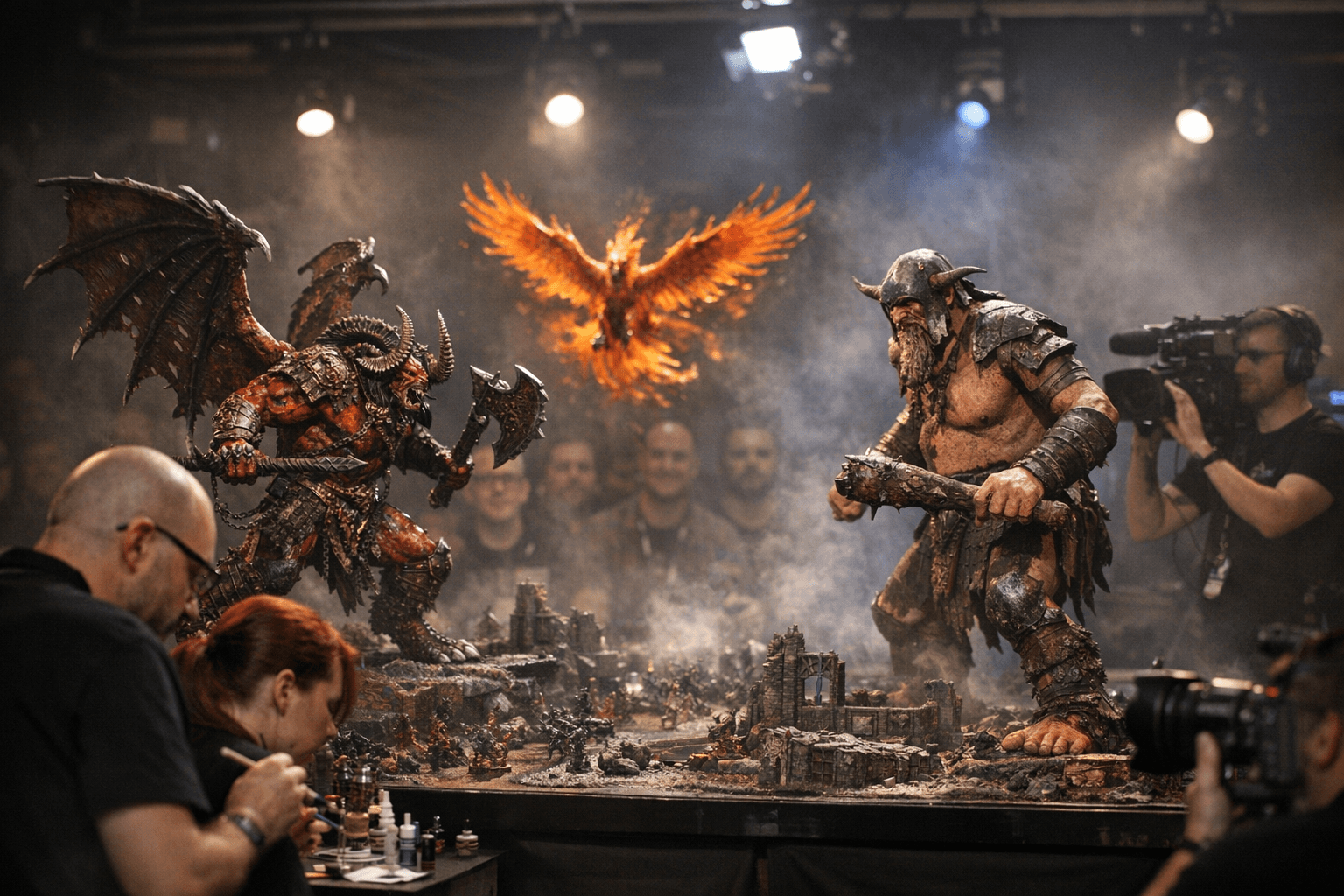
The monster lineups were the sort of roster that makes a painter stop scrolling. Chaos sent in three Bloodthirsters, Unfettered Fury, Insensate Rage, and Wrath of Khorne, backed by a Daemonsmith on Infernal Taurus. Order answered with a Drakesworn Templar, Spirit of Durthu, Treelord, Auric Runeson on Magmadroth, and an Alarith Spirit of the Mountain. Destruction kept it blunt and brutal with a Beast-smasher Mega-gargant, a Warstomper Mega-Gargant, and a Gatebreaker Mega-Gargant. Random monster placement and completely randomized activation turned the whole thing into a bloody scramble, which is exactly why these big centerpiece kits work so well on camera: every clash reads like a painting showcase as much as a game.
That is the point of the format. Arena of Death was already a spectacle in White Dwarf many years ago, and Warhammer has kept repackaging it for newer screens and newer systems. The 2023 Warhammer 40,000 version used 32 contenders split into eight groups of four, with 16 qualifiers moving on to a knockout stage. An Age of Sigmar version followed in January 2024, proving the concept was never tied to one rule set. Now it sits comfortably inside Warhammer TV’s broader pitch: the shows are meant to help viewers learn techniques and feel more connected to the hobby, not just watch dice roll.
The painting angle was just as deliberate. Ultimate Paint-Off forced four contestants to paint two Gryph-hounds in 30 minutes, then tackle a Flamespyre Phoenix in three and a half hours. That is smart programming for miniature painters because it shows how fast decisions on contrast, texture, and temperature land on actual models under pressure. It also fits Games Workshop’s long push around Contrast paints, which were launched in 2019 as a faster, easier way to paint miniatures before the range expanded into more colours and more advanced effects.
Warhammer did not hide the rest of the hobby stack either. The same release pointed viewers to Loremasters for Armageddon history ahead of the Fourth War for Armageddon, while two more White Dwarf issues were added to the Warhammer Vault. White Dwarf still matters because it is where battle reports, painting masterclasses, designers’ notes, exclusive rules, Golden Demon coverage, and miniature photography live together. That is the real story here: Arena of Death is no longer just a fight show. It is Warhammer packaging monsters, paint, lore, and archive access into one loud, very effective hobby ecosystem.
This article was produced by Prism’s automated news system from verified source data, official records, and press releases, then run through automated quality and moderation checks before publishing. The system is built and supervised by the people who set the standards it runs under. Read our full AI policy.
Did this article answer your question?