How Âme’s Rej made minimal techno emotional and dancefloor-ready
Âme’s 2005 “Rej” turned minimal-techno restraint into a melodic club template, with a groove and motif that still travel across scenes.
Âme’s “Rej” is the rare minimal-techno record that makes restraint feel expansive. Released in 2005 by Kristian Beyer and Frank Wiedemann, it showed how a stripped club track could carry real emotion without losing its functional edge on the floor.
The crossover moment
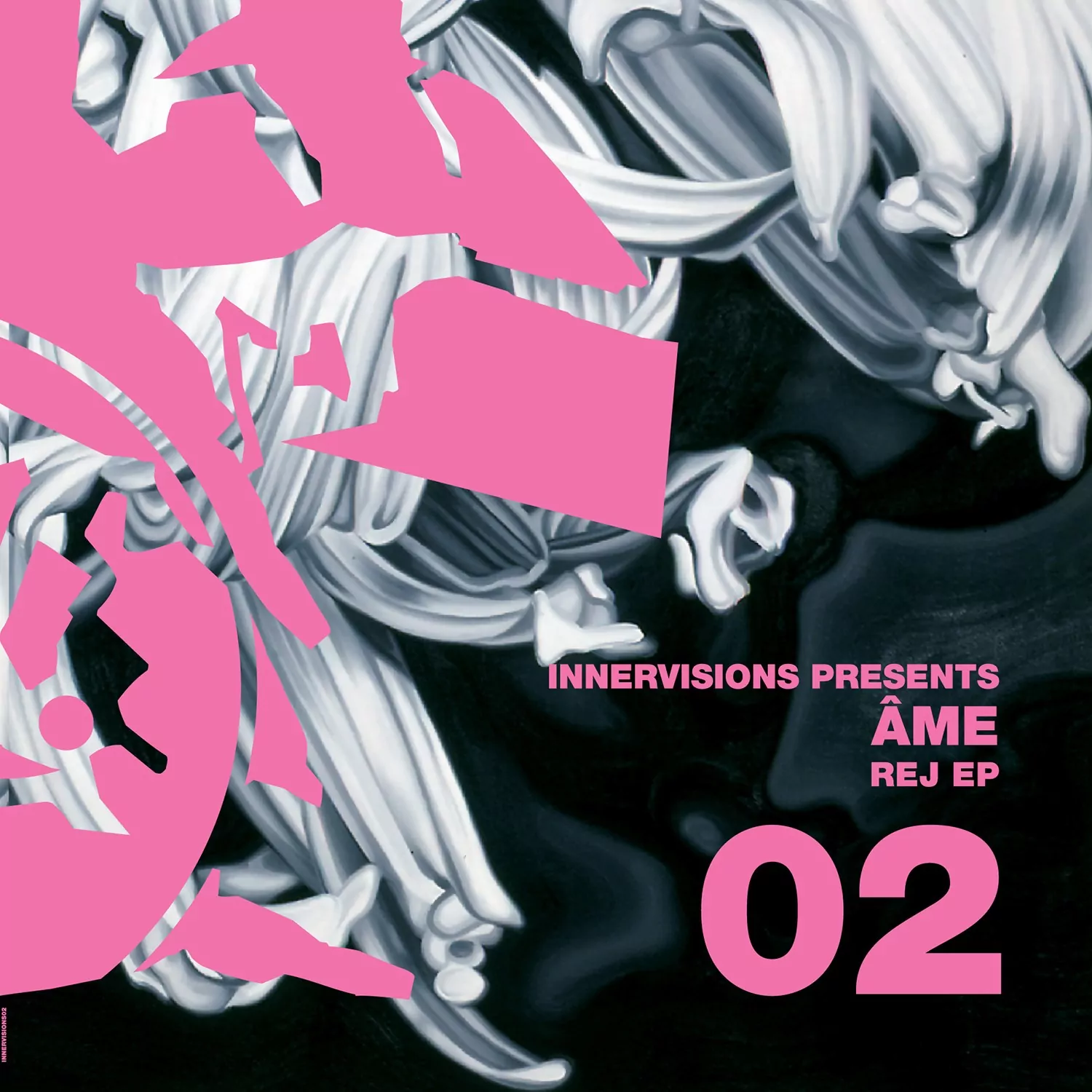
“Rej” landed on the *Rej EP* through Innervisions and Sonar Kollektiv, with release dates listed as 25.09.2005 in the Innervisions archive and 26 September 2005 on Discogs and Rate Your Music. The EP appears as IV02 in the Innervisions archive, with a simple two-track listing: A1 “Rej” and A2 “Basic Track.” Discogs also lists it as a Germany pressing on vinyl, 12-inch, 45 RPM, which fits the record’s physical, DJ-first purpose.
That metadata matters because “Rej” did not arrive as a standalone anthem floating outside its scene. Rate Your Music tags the EP as Minimal Techno and Tech House, and that overlap is the key to its reach. It sat in the space where minimal’s discipline met tech-house’s accessibility, giving DJs a record that could work in a patient warm-up, a peak-hour bridge, or a set that needed one melodic turn without losing pressure.
How the arrangement turns reduction into emotion
Attack Magazine’s deconstruction of “Rej” works because it treats the track as a system of parts, not just a vibe. The kick drum functions like a frame, the bassline supplies forward motion, and the recurring melodic motif becomes the emotional anchor that keeps the record from feeling clinical. In a style where every element has to do extra work, that kind of design is everything.
The track’s strength is how little it asks from each layer while still getting a lot out of them. When the arrangement leaves space around the groove, a delayed chord stab, a filtered sweep, or a small percussion shift can register like a much bigger event. That is the practical lesson buried inside the track’s reputation: minimal techno does not need density to feel complete, it needs precision.
- The kick does not just pulse, it defines the room.
- The bassline does not just support the track, it keeps it moving.
- The motif does not just decorate the loop, it gives the listener something to remember.
- The open space is not empty, it is where the tension lives.
That balance is why “Rej” reads as emotional rather than merely austere. The record never piles on detail, but it knows exactly when to let a phrase return, when to stretch a section, and when to let the groove speak on its own. For producers, that is the template: fewer parts, clearer roles, stronger contrast.
Why DJs kept reaching for it
DJ Mag’s 2021 feature captures the scale of the track’s reach by calling “Rej” “crossing over to practically every genre, DJ and dancefloor in 2005” and describing it as an “evergreen classic.” The same feature says it helped “kickstart” Innervisions and brought about “a sea change in house and techno.” That is the difference between a record that is admired and a record that gets reused: it solves a practical problem for DJs while still sounding like a statement.
Resident Advisor’s 2006 Âme interview page makes the same point from another angle, saying “Rej” introduced the sound of two relative unknowns to the world and was caned in house, techno, minimal, and related scenes. The record did not need a massive arrangement to travel. It had a strong enough groove and a clear enough melodic identity that it could move between rooms and still feel like itself.
That crossover is what made it so durable. A minimal track that only works in one subscene can age into a footnote; a record that can land in multiple contexts becomes a reusable tool. “Rej” did that by staying disciplined enough for minimal sets while offering the melodic payoff that broader club rooms wanted by the mid-2000s.
What the label context adds
The release also makes more sense when you place it inside Innervisions’ early identity. Beatportal later noted that Âme’s *The Witness* EP was Innervisions’ 100th release and quoted the duo calling the milestone “a landmark we had never imagined.” That line says a lot about how central the duo’s early records were to the imprint’s story.
“Rej” helped define that story before the label became a reference point. It gave Innervisions an early signature, one that linked Berlin-rooted minimal craft to a broader melodic sensibility without flattening either side. In that sense, the record was not just a hit on a label, it was part of the label’s language from the start.
The lasting lesson of “Rej” is still the same one hidden in its arrangement: a track can be sparse and still feel generous if the kick, bassline, and motif each do a separate job. That is why the record keeps working, not just as a classic, but as a blueprint for how minimal techno can stay emotional and still move a floor.
This article was produced by Prism’s automated news system from verified source data, official records, and press releases, then run through automated quality and moderation checks before publishing. The system is built and supervised by the people who set the standards it runs under. Read our full AI policy.
Did this article answer your question?