How Nicolas Bougaïeff’s thesis explains minimal techno’s radical reduction
Bougaïeff’s thesis turns minimal techno into a compositional test: make fewer parts carry more structure, tension, and dancefloor function.
An Approach to Composition Based on a Minimal Techno Case Study is Nicolas Bougaïeff’s 2013 doctoral thesis. Its core question is simple but brutal: how little material can still hold a floor?
What Bougaïeff is actually studying
The dissertation examines minimal techno’s aesthetics, composition, performance, technology, and the economics of EDM production, then asks about the musical and social significance of production and performance in a genre that emerged in the early 1990s.
That framing also links Bougaïeff back to techno’s older Detroit logic. Ekkehard Windrich’s 2013 thesis on Detroit techno treats early techno as a mutual socio-musical process between producers, DJs, and dancers, and as a self-tuning system based mainly on non-symbolic, intrinsic musical functionality. In plain producer terms, the music does not need a big melodic statement to communicate. It needs parts that keep adjusting to the room until the room starts doing the work for you.
Make limitation your arrangement tool
The first practical lesson is that limitation is not a constraint to work around, it is the arrangement itself. Minimal techno earns its name through compositional discipline, not just fewer tracks in the session. If you are building in that zone, the point is not to strip everything down and hope the groove survives. The point is to make every remaining element carry structural weight.
That means a kick, a closed hat, a bass figure, and one small percussive accent can be enough if each one changes the listener’s sense of the bar. In a minimal setting, a single muted hit can function like a transition, and a tiny timbral shift can feel like a section change. When the arrangement is sparse, the technology has to help you make tiny decisions audible.
Use micro-change to create pressure
Minimal techno lives or dies on micro-change. Bougaïeff’s dissertation treats repetition as an aesthetic and performance issue, not a static loop problem. The practical takeaway is that tension comes from controlled variation inside a stable frame, especially through percussion tweaks, filter movement, and phrase length.
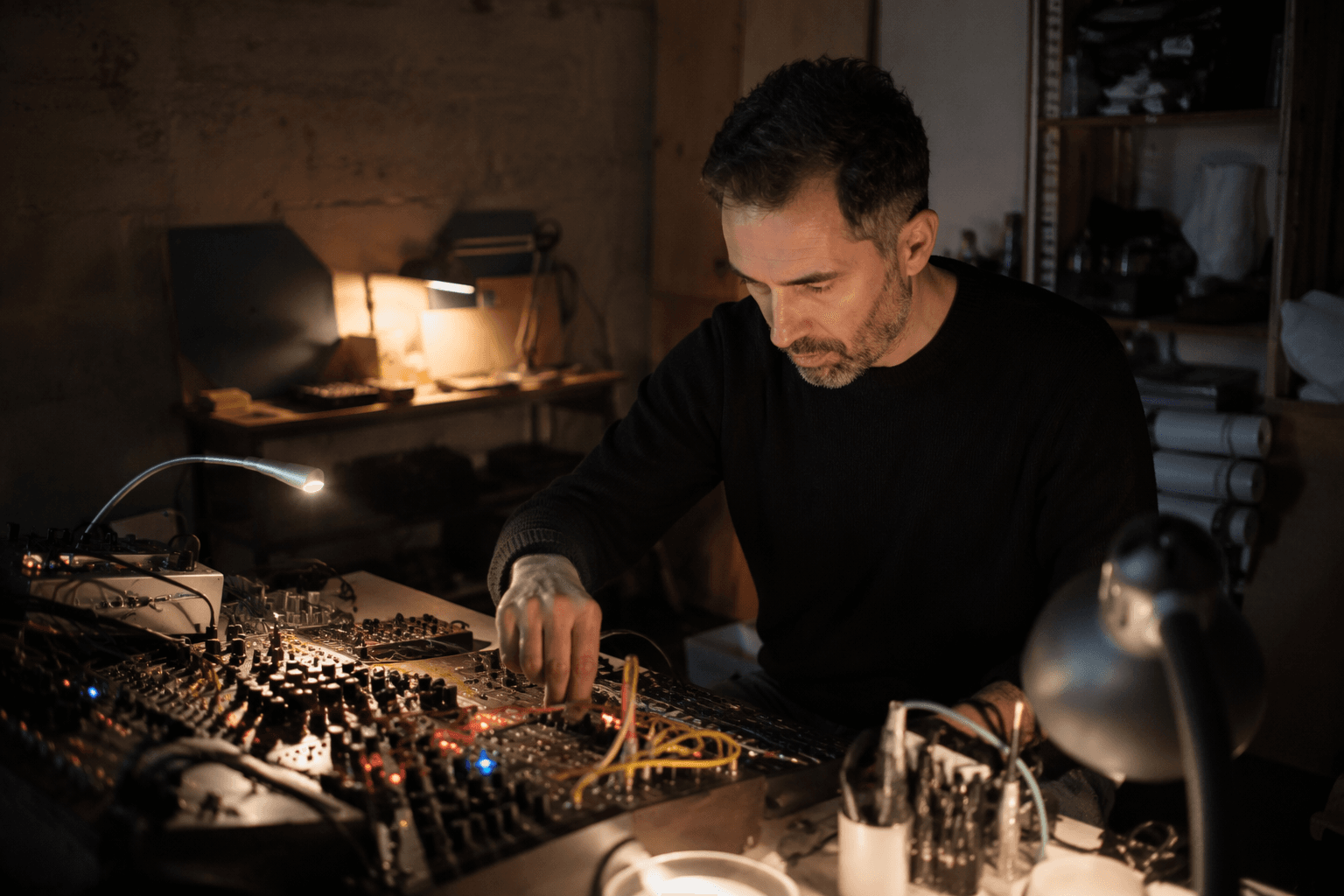
That is why so much of the best minimal techno feels like it is barely moving while still pulling you forward. You hear the same loop, but one hat opens a fraction wider, one clap lands with a different edge, or one filter sweep creates just enough lift to make the next phrase feel earned. A 2023 write-up on Bougaïeff’s thesis makes the same point: the real drama is often in how the loop mutates, not in how many new parts arrive.
Think like a performer while you compose
Bougaïeff is not writing from the outside. He is a classically trained musician who studied electroacoustic composition at the Conservatoire de Montréal, earned a PhD in minimal techno from the University of Huddersfield, and launched his debut EP Movements in 2013. That background explains why the thesis keeps returning to the overlap between studio composition and performance.
For your own work, the lesson is straightforward: if a parameter cannot be played live, automated cleanly, or pushed in a set without collapsing the groove, it probably is not doing enough structural work. Minimal techno rewards systems that can breathe under your hands. A good loop is not just something you can repeat, it is something you can steer.
By 2020, Bougaïeff was Berlin-based and challenging techno orthodoxy. Minimal does not mean passive. It means the track has to stay functional while it is being re-formed in real time.
Keep the social function in the loop
The biggest mistake in hobby minimal is treating the track like a private sketch instead of a piece of dancefloor communication. Windrich’s account of Detroit techno centers the process between producers, DJs, and dancers. Early techno had no single center of attention or origin in the way a pop record does, and that absence of a fixed stage is part of why the music still works as a communal system.
Andrei Sfetcu’s 2018 master’s thesis on forms and structures in electronic dance music shows that structure in EDM is a recurring concern, not a niche academic hobby, and that form is what lets a sparse track travel from a DAW to a booth to a crowded room.
This article was produced by Prism’s automated news system from verified source data, official records, and press releases, then run through automated quality and moderation checks before publishing. The system is built and supervised by the people who set the standards it runs under. Read our full AI policy.
Did this article answer your question?