Montreal label hautec helped shape early minimal techno scene
Montreal’s hautec shows minimal techno was never only a Berlin-Frankfurt story. Its cassette roots, label family tree, and local network helped build a distinct Montreal identity.
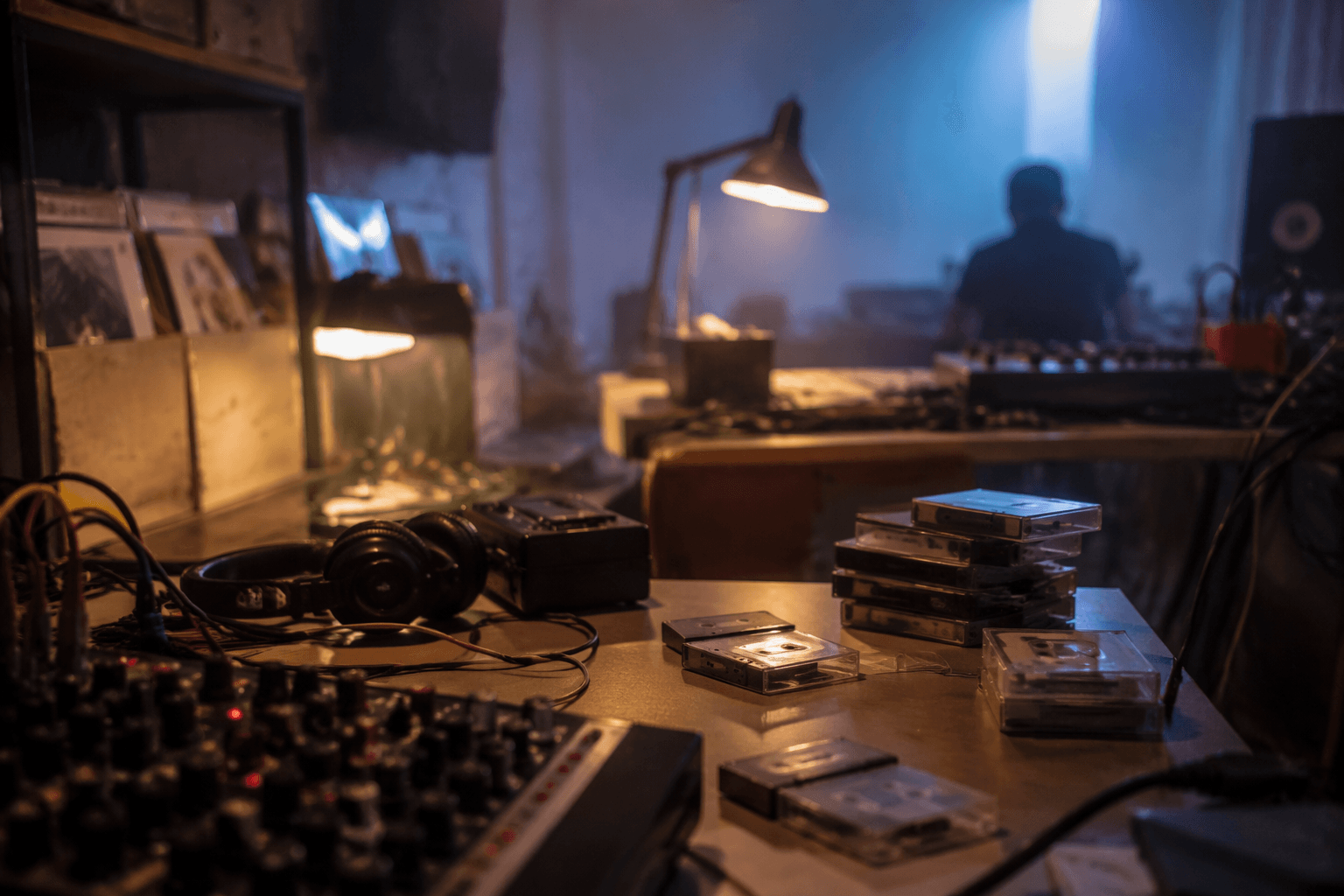
hautec, a Montreal label dated to 1999, grew out of mid-1980s underground cassette culture. It points to a city where cassette culture, house-adjacent experimentation, and small-label infrastructure helped a local scene take shape on its own terms.
Montreal before the algorithm
hautec dates to 1999 and is a Montreal label based in Canada, with roots in mid-1980s underground cassette culture. Cassette scenes were built on scarcity, hand-to-hand circulation, and taste-making through physical exchange, not mass distribution. The scene did not arrive fully formed in the digital age. It grew out of a pre-streaming underground where what you could hear often depended on who would dub you a tape.
That older culture gave Montreal a different set of habits. Instead of waiting for a genre to be canonized elsewhere, artists and listeners were already trained to move through small networks, follow niche signals, and treat format as part of the aesthetic. When minimal techno later tightened its focus on repetition, space, and restraint, those values met a city already organized around small networks, niche signals, and format as part of the aesthetic.
The label family tree mattered
hautec was the diminutive minimal sister label to the more house-oriented haute couture, and that relationship is the key to reading the scene correctly. This was not a sealed-off minimal bunker. It was part of a local ecosystem where house and techno overlapped, borrowed from each other, and shared listeners, DJs, and distribution channels.
That kind of label family tree is how scenes actually harden into identity. A house label can create the room for a more stripped-down offshoot, and a minimal offshoot can sharpen the parent scene’s ear for groove, detail, and negative space. hautec issued records in a lane inside Montreal’s broader dance music culture that could sit next to house without being absorbed by it.
Five years, two EPs, and a scene around it
hautec ran for five years and later rebooted with two EPs. A short lifespan does not mean a small impact; in minimal techno, a compact run of releases can be enough to mark out an aesthetic, connect the right DJs, and give a local sound a name.
Its output and timing lined up with a moment when the genre was still being assembled through small, scene-specific decisions. The label’s Montreal base gave that process a place to happen outside the familiar centers. If you are used to reading minimal history through Frankfurt, Berlin, or Bucharest, hautec shows how strong regional scenes often grow through a few precise releases, a few trusted shops, and a few people who know what to do with a sound.
How cassette culture fed the minimal mindset
The jump from underground cassette culture to early minimal techno is less strange than it sounds. Tape scenes rewarded edits, repetition, and patient listening, because the format itself made music feel intimate and disposable at the same time. You had to work a little to hear it, share it, and keep it moving. That same economy of attention fits minimal techno perfectly: tracks that do not overload the mix, grooves that reveal themselves over time, and arrangements that depend on subtle shifts instead of big drops.
hautec’s roots in that mid-1980s tape world meant Montreal’s version of minimal was not just imported fashion. It was filtered through an existing underground logic. In practical terms, that meant local producers and listeners were already comfortable with the idea that a scene could be built through small, specialized releases and a clear aesthetic line, rather than through broad commercial reach.
Montreal’s electronic ecosystem was already in place
hautec did not build in isolation. Montreal already had institutions and community structures that gave electronic music room to breathe, and MUTEK is the obvious example. MUTEK Montreal was created in 2000, right as the city’s electronic profile was consolidating, and SOCAN Magazine has framed it as being “at the heart of Montréal’s electronic music scene for 25 years.”
Minimal techno scenes are rarely just about records. They depend on a mesh of promotion, venues, selectors, and local trust. Montreal’s case shows how a label like hautec could sit inside a wider electronic culture and still help define something narrower and more specific. It was a Montreal answer to European minimal techno, shaped by local history and local distribution habits.
This article was produced by Prism’s automated news system from verified source data, official records, and press releases, then run through automated quality and moderation checks before publishing. The system is built and supervised by the people who set the standards it runs under. Read our full AI policy.
Did this article answer your question?