Resident Advisor asks Jeff Mills what techno means in 2026
Resident Advisor turns Jeff Mills into a test case for techno itself, and the lesson for minimal heads is clear: discipline, concept, and groove still define the floor.
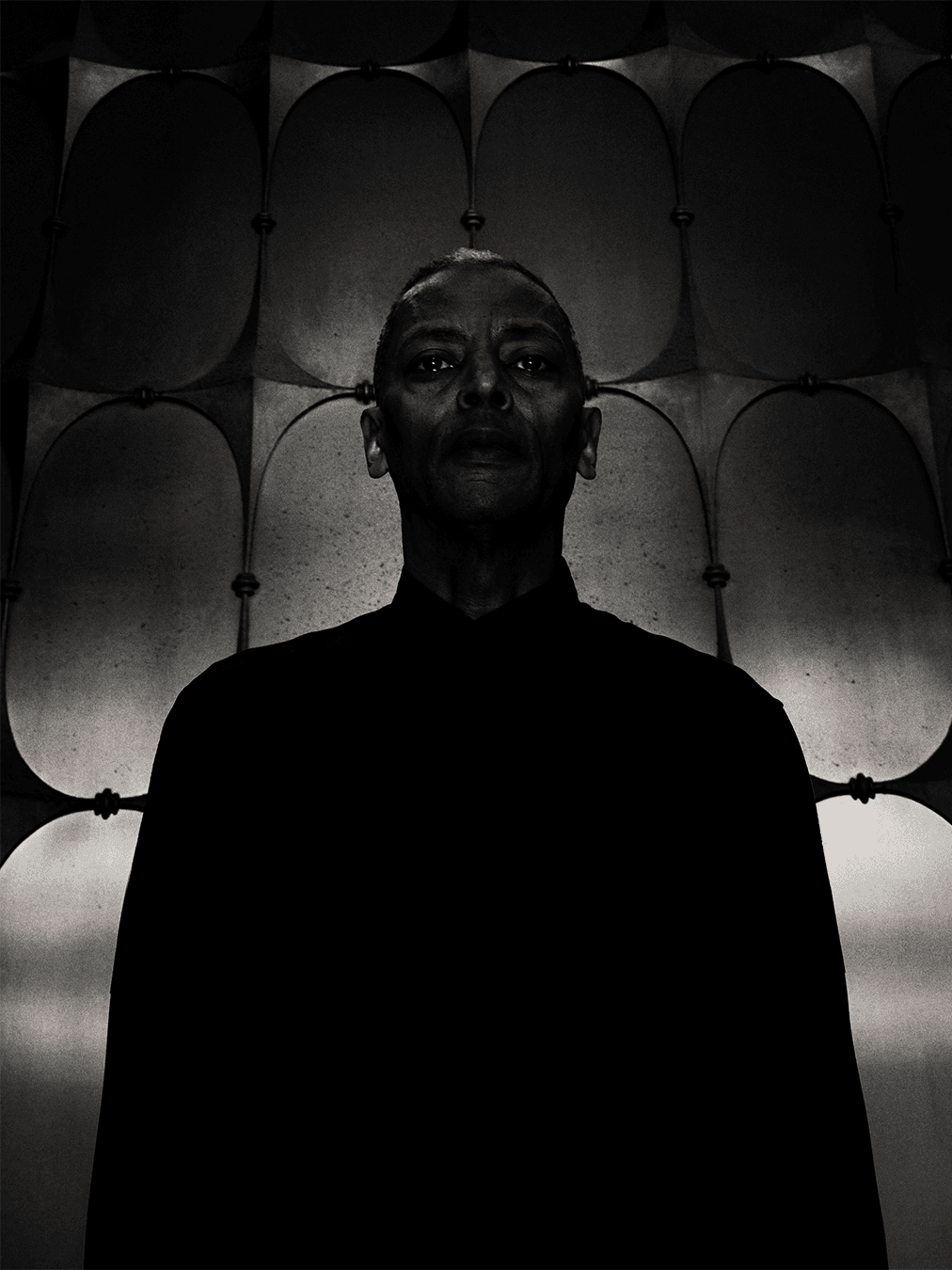
Jeff Mills is being treated like more than a veteran name-check. Resident Advisor’s first summer cover story, “Jeff Mills: Seeing Is Believing,” uses him to reopen the oldest question in techno, the one the scene never really stops asking: what is the music when you strip away everything except pressure, intent, and the room itself? For minimal techno, that framing lands with unusual force, because the subgenre has always measured itself by how much it can say with very little.
Why Mills still matters to minimal techno
RA’s teaser asks, “What is techno? Is it a sound, style, way of life? And is it even in good health?” That is not just a profile setup, it is a working definition problem, and Mills is one of the few artists who can be used to stage it without it feeling artificial. Resident Advisor describes him as one of the biggest American names in techno, with a “relentless pursuit of hardness” and “stripped-down, almost industrial DJ sets,” which makes him a natural figure for anyone interested in the austere end of the genre.
For minimal techno readers, the important point is not hero worship. It is that Mills represents a way of thinking where reduction is not a trend but a discipline. If techno can still be discussed in terms of sound, style, and way of life, then Mills is part of the reason, because his career keeps collapsing those categories into one practical question: does the track, the set, and the room all point in the same direction?
The Detroit logic underneath the aesthetic
The Detroit Historical Society places Mills and “Mad” Mike Banks at the center of Underground Resistance, formed after unsuccessful attempts to court Juan Atkins’ Metroplex label. That origin story matters because UR was conceived as a foil to techno’s increasingly mainstream appeal, not as a brand exercise or a scene accessory. It was a response to the music’s drift, and that instinct still reads as foundational for minimal techno, where refusal, subtraction, and purpose often matter as much as hooks or polish.
UR’s obscured militancy and anti-establishment stance also give a clue to why Mills remains relevant in 2026. The culture around minimal techno has long prized restraint, but the Detroit lesson is sharper than that: restraint has to be backed by conviction. Empty space only works when it is controlled, and repetition only becomes hypnosis when the artist believes in the architecture behind it.
That is where concept and groove meet. Mills’s early world was not a single-channel path from studio to club. It was built out of a broader DJ education, and that education still shows up in the way techno can hold both futurism and function without losing either one.
Performance as design, not decoration
Resident Advisor’s earlier profile, “The art of DJing: Jeff Mills,” says he had already mastered DJing in his 20s on WJLB and at Detroit parties, moving through pop, hip-hop, new wave, post-disco, industrial, and electro. That breadth matters because it explains why his work never reads as narrow minimalism for its own sake. The point was never only less sound, but better sequencing, cleaner pressure, and a sharper sense of how records speak to one another in real time.

That is still one of the most useful lessons for producers and DJs working in minimal techno now. The track is not the whole performance. The arrangement of silence, the length of a transition, the decision to withhold a lead line, and the pacing of a set all become part of the composition when the room is listening as closely as the dancers are moving.
Mills’s reputation for stripped-down DJ sets also connects to a bigger truth about techno performance. The best sets do not just play tracks, they frame an argument about time. In that sense, “Seeing Is Believing” feels apt: minimal techno often lives or dies by whether the listener can see, in the music’s structure, the logic that keeps it moving.
What the 2026 frame says about the scene
RA’s choice to make this its first summer cover story says a lot about what still gets treated as urgent in techno culture. The platform is not presenting Mills as a nostalgia act. It is putting him forward as a way to think about the music’s present condition, which suggests that questions of rigor, futurism, and live authority are still central to the scene’s self-understanding.
The timing also matters because Mills is not only a legacy figure on paper. His July 2026 dates include CODE SUMMER FESTIVAL in Madrid on July 11, Junction 2 x fabric in London on July 25, and Dekmantel Festival in Amsterdam on July 29. That run keeps him active inside the contemporary circuit where minimal techno still depends on physical presence, not just catalog reverence.
The broader lineage helps place that presence. Minimal techno is widely traced to early-1990s Detroit producers Robert Hood and Daniel Bell, while Richie Hawtin helped carry the style through Europe via Kompakt, Perlon, and his M_nus imprint. Mills is not usually treated as the lone inventor of minimal techno, but he belongs to the same Detroit ecosystem that made the genre’s severe elegance legible in the first place. He sits close enough to the source to make the philosophy feel lived-in, not theoretical.
What to take from Mills now
The most useful part of Mills’s worldview is that it refuses to separate technical discipline from cultural meaning. A hard kick, a locked groove, and a stripped arrangement are not ends in themselves. They are the conditions that let techno behave like a language, one that can communicate futurism without decoration and intensity without noise.
That is why the current RA frame lands beyond nostalgia. It asks whether techno is healthy, but it also reminds the scene that the answer has always depended on artists who treat the form as something to be engineered, performed, and defended. Mills still matters because he makes that standard audible, and minimal techno still benefits from it every time the floor rewards restraint with force.
This article was produced by Prism’s automated news system from verified source data, official records, and press releases, then run through automated quality and moderation checks before publishing. The system is built and supervised by the people who set the standards it runs under. Read our full AI policy.
Did this article answer your question?