Shed maps the afterglow of the rave on Rave Echoes
Shed turns Rave Echoes into a post-rave document, where dub weight, breakbeat pressure and club memory linger after the lights come on.
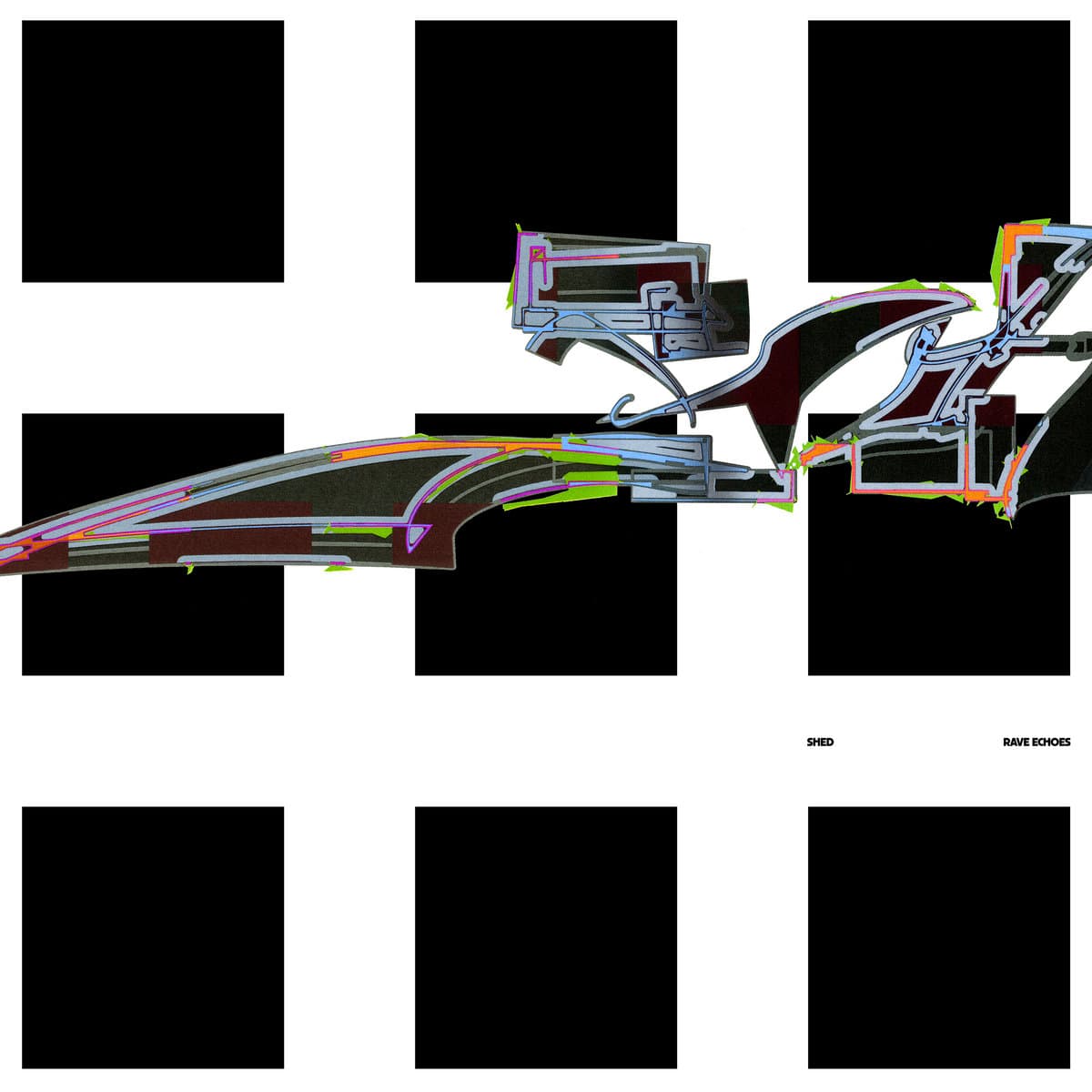
Why this Dekmantel release matters
Shed on Dekmantel is not just another techno name on a respected label. It is the kind of pairing that tells you the record is aiming past peak-time utility and into the part of the night that hits after the room empties, when the body is still moving but the mind starts replaying everything it just heard. Rave Echoes is framed as a first full-length for the label, and that alone gives it more weight than a routine club release. For anyone following minimal techno’s darker, post-rave edge, this is the kind of album that feels scene-relevant the moment you read the premise.
Beatportal positions the record around what happens after the dancefloor lights come on, not what happens when the crowd is at maximum density. That matters because the album is being sold less as a straightforward DJ weapon and more as a document of rave aftermath, where intensity, physical strain and memory all sit in the same frame. The ache in the legs, the fog in the head and the looping flashes of sound are not side effects here. They are the subject.
What Rave Echoes is built from
The eight-track set is described as drawing from techno, breaks, dub weight and club memory, and that combination is exactly what gives it traction beyond a narrow minimal audience. The techno side supplies the discipline, the breaks add restless movement, and the dub pressure gives the whole thing a sense of space and echo rather than clean resolution. It is the kind of construction that rewards selectors who like records to carry tension without rushing to detonate.
Beatportal also makes clear that this is not meant to read as a genre exercise. The album is presented as textured and haunted, with Berlin techno discipline, UK soundsystem pressure and deep dub atmosphere folded into a sound that still lands unmistakably as Shed. That blend is useful to understand if you are thinking about where it fits in a set or a listening session: it is not built for obvious lift-offs, but for that uneasy zone where propulsion and aftermath blur together.
The mood cues that matter to selectors
For DJs and selectors, the selling points are not flashy hooks. They are the details that suggest depth and repeat value:
- eight tracks, which gives the album a focused shape rather than a bloated sprawl
- techno and breaks working together, which points to movement without simple 4/4 certainty
- dub weight, which usually means low-end pressure, space and a longer emotional tail
- a haunted texture, which signals atmosphere over polished club sheen
- club memory as a theme, which tells you the record is built around residue, not release
That is why Rave Echoes reads as more than a headphone album and more than a peak-time tool. It sits in the awkward but rewarding middle ground where a tune can work in the booth while still leaving a mark once the set is over. That is a very specific lane, and it is the lane that often keeps minimal techno interesting when the obvious formulas start to feel tired.
Where it sits in Shed’s recent run
The album also lands inside a busy stretch for René Pawlowitz, who has been working under Shed and a stack of aliases for more than two decades. Beatportal notes that Rave Echoes follows the Applications II EP on Ilian Tape earlier in 2026, along with a heavy remix run in 2025 for Weval, FJAAK, Regent and Emmanuel. That sequence matters because it shows the project is not arriving from nowhere. It is the latest move from an artist who keeps circulating through different formats and scenes instead of settling into a single lane.
That restlessness has always been part of the appeal. Pawlowitz has built a reputation on alias-hopping and reinvention, and Rave Echoes extends that pattern without making it feel random. If anything, the album seems to sharpen the logic of his career: keep the rhythm pressure intact, keep the emotional temperature high, and keep the sound loose enough to absorb whatever part of techno culture it is touching at the moment.
The long arc behind the name
Beatportal points out that Shed’s fingerprints run through Head High, WK7, STP, EQD, Wax and Storm on Earth, in addition to work under his own name. That catalog range matters because it explains why his records still feel connected to multiple corners of dance music at once. House, rave, soundsystem pressure and techno all show up in the lineage, and Rave Echoes feels like another record built from that wide-angle history rather than from a single scene template.
For listeners who stay close to minimal techno’s dub-soaked and after-hours edges, that breadth is exactly what keeps Shed useful. He does not flatten the music into functional sameness, and he does not over-explain the mood. He lets the low-end weight, the break-driven motion and the haunted atmosphere do the talking, which is usually a better test of endurance than any tidy club formula.
Rave Echoes lands as a reminder that the best post-rave records do not try to recreate the peak. They catch the strange silence after it, when the floor has cleared but the pressure is still in your ears, and they turn that afterglow into something you want to hear again.
This article was produced by Prism’s automated news system from verified source data, official records, and press releases, then run through automated quality and moderation checks before publishing. The system is built and supervised by the people who set the standards it runs under. Read our full AI policy.
Did this article answer your question?