Terrence Dixon sounds newly energized on Tresor EP When Stars Remember
Terrence Dixon’s new Tresor EP hits harder and feels more urgent, with unreleased-heavy club tools that show Detroit minimal still moving forward.
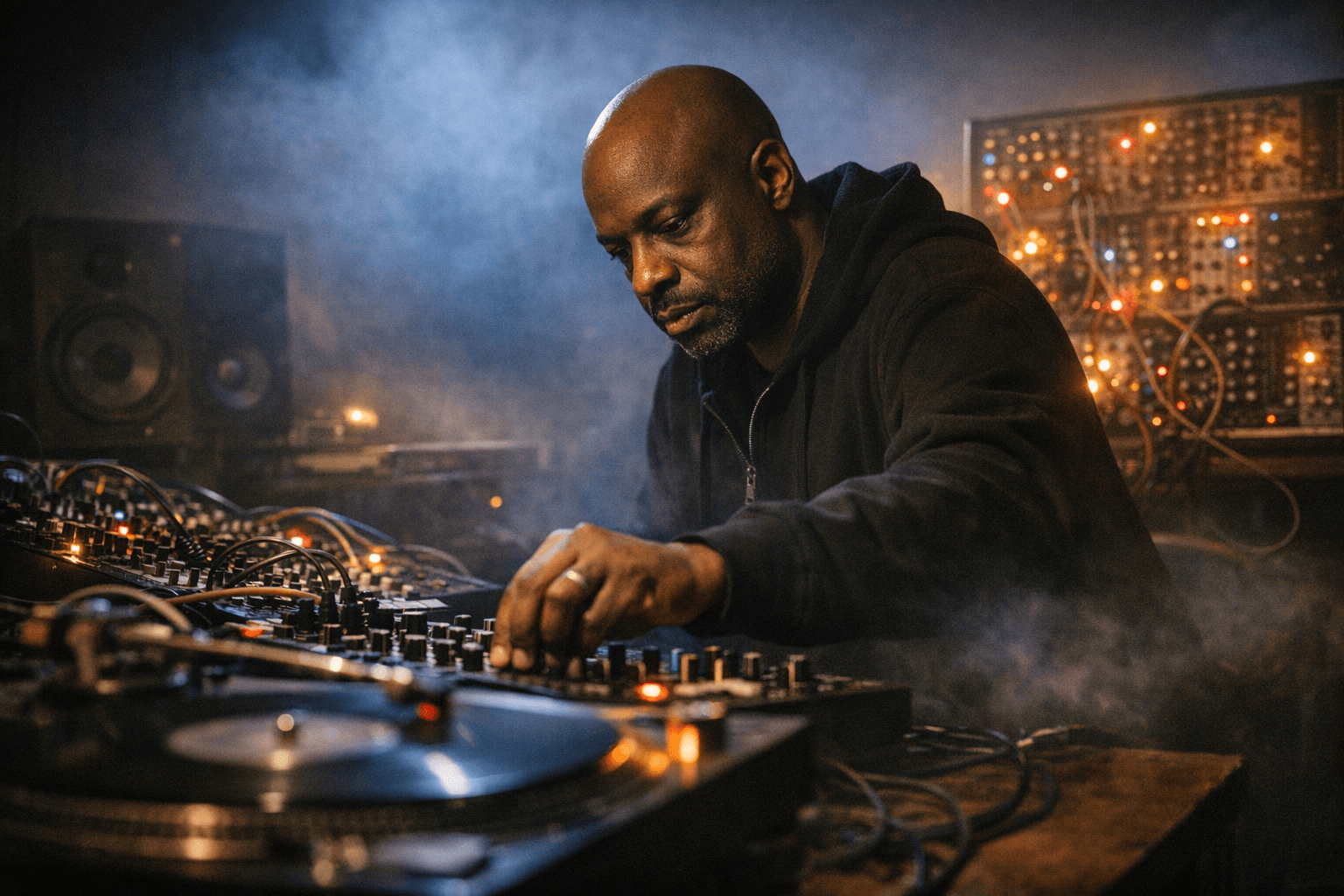
A veteran who sounds fully switched on
Terrence Dixon’s current run feels less like a victory lap and more like a recalibration. On *When Stars Remember*, his first release on Tresor Records in five years, the Detroit veteran sounds sharpened, not softened, and the record lands with the kind of purpose that only comes from knowing exactly what a dancefloor needs. The four-track EP, released on March 13, 2026, is built for pressure and motion, but it still carries Dixon’s signature sense of restraint.
That balance is the story here. His latest profile frames him not as a legacy figure embalmed by respect, but as an artist actively tightening his ideas and pushing them into a more direct club setting. For younger minimal-techno producers, that matters because Dixon is showing that reduction is not a style filter or a branding exercise. It is a working method, and in his hands it still produces tension, groove, and mystery.
**What changes on *When Stars Remember***
The EP’s four tracks, “Mono Collapse,” “When Stars Remember,” “The Art Of Possible,” and “Code Of The Forgotten,” are not built like polite album cuts. They are designed with impact in mind, and Dixon has said he wants DJs reaching for this record around three in the morning, which tells you everything about its function. This is peak-time music, but it is peak-time music stripped of excess, where every drum detail and every repetition has to earn its place.
The title track and its companions also work because they never over-explain themselves. Dixon keeps the machinery tight, the ideas abstract, and the mood slightly off-center, which is exactly why the record feels so useful in a room. Tresor describes the release as a tribute to the Berlin club and label founded in 1991, but the music never turns sentimental. It sounds like a working tool from an artist who still trusts the floor more than the pose.
The personal discipline behind the minimalism
What makes Dixon’s sound feel newly energized is that the profile ties it directly to the way he actually lives and works. Parenthood, minimal equipment, and the rhythms of ordinary life are all part of the picture, and they help explain why his records have always sounded so uncluttered without ever feeling empty. The minimalism here is not an aesthetic vow. It is the result of a discipline forged by necessity, patience, and a refusal to over-decorate the track.
That approach also gives the new EP its social edge. Dixon frames the record’s darker ideas around the erosion of basic values, including common sense, trust, loyalty, honesty, and respect. In other words, the abstraction is not detached from real life at all. It is his way of turning social unease into movement, which is one reason his records can feel both cold and deeply human at the same time.
Detroit is still the center of the equation
Dixon’s relationship with Detroit is not a nostalgic talking point, it is the engine of the whole thing. In the DJ Mag profile, he speaks about how the city shaped him, how it still gives him discipline and identity, and how he wants to give something back in return. That makes the new EP feel like part of a live career update, not a museum piece.
That sense of obligation shows up again in Minimal Detroit, the community project he has described as something meant to help children and young people in the city. He has also said he wanted to open a techno club in Detroit because the city lacked techno clubs, which tells you how practical his thinking has always been. Dixon is not just making records about Detroit’s legacy. He is still trying to build infrastructure around it.
From 1994 to now, the arc stays stubbornly forward
The new release lands harder when you remember how long Dixon has been pushing against convention. His first outing, *Live in Detroit* on Utensil Records in 1994, arrived in the same year he issued *Unknown Black Shapes* as Population One on Metroplex, after being discovered by Claude Young Jr. That early start matters because it shows how deep his refusal of conventional techno structure goes.
Tresor has long treated him as a major voice in Detroit minimal. The label calls him a visionary of the Detroit sound and points to the *From The Far Future* series as prized parts of its catalog, starting with the 2000 original and continuing through *From The Far Future Pt. 2* in 2012 and *From The Far Future Pt. 3* in 2020. Added to later releases like *Badge Of Honor*, *12,000 Miles Of Twilight LP*, and *Other Dimensions LP*, the new EP reads as another step in a discography that has stayed unusually coherent without getting repetitive.
Why younger minimal-techno producers should pay attention
If you are making minimal techno in 2026, Dixon is useful because he demonstrates how to make less feel like more without leaning on gimmicks. Resident Advisor has described him as widely recognized for his incongruous minimal sound design, authenticity, and dedication, and those three traits are exactly what newer producers should study. The point is not to copy his drums or his palette. It is to understand how he uses limitation to create identity.
There is also a practical lesson in how *When Stars Remember* functions. It is not overloaded, it does not chase trends, and it does not waste a second pretending to be something else. It is a club record shaped by daily life, Detroit discipline, and a long memory of what techno can still do when the arrangement stays lean and the intent stays clear.
The larger takeaway
Taken together, the new EP and the surrounding profile show an artist who is still moving forward with conviction. Dixon sounds more direct now, more physical, and more willing to aim squarely at the room without losing the strange internal logic that has always set his work apart. That is the real news angle here: he is not just active, he sounds re-energized.
For a scene that often confuses reduction with retreat, Dixon’s latest statement is a useful correction. Minimal techno at its best is not about removing personality. It is about concentrating it until the track hits with more force than anything busier could manage. *When Stars Remember* does exactly that, and it makes one thing clear: Terrence Dixon is still writing from the center of the floor.
This article was produced by Prism’s automated news system from verified source data, official records, and press releases, then run through automated quality and moderation checks before publishing. The system is built and supervised by the people who set the standards it runs under. Read our full AI policy.
Did this article answer your question?