Violent Doll’s Cuba Libre blends minimal techno with Cuban memory
Violent Doll turns minimal techno into memory work, with 12 tracks that move like a late-night set and a concept that actually holds up in the groove.
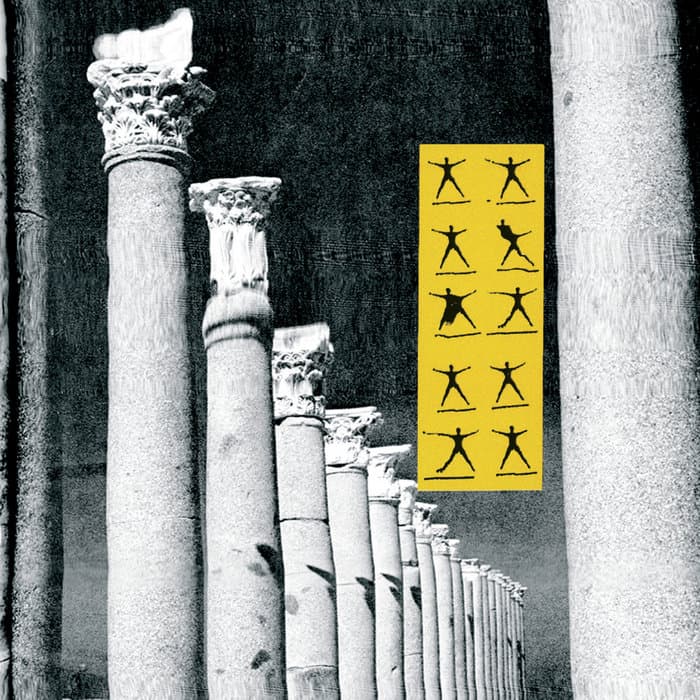
Violent Doll’s Cuba Libre treats minimal techno like a memory machine. Deep sub bass, dry percussion, and repetitive club loops push the record forward, while the album’s Cuban framing gives that motion a sharper emotional edge. It is the kind of full-length that rewards a front-to-back listen, but it still offers clear entry points for the selector who wants to hear the point fast.
A concept record that moves like a set
The album landed on June 14, 2026 as a 12-track digital full-length, and the concept is not just decorative packaging. The Bandcamp framing describes Cuba Libre as a fusion of underground electronic rhythm and Cuban cultural memory, with minimal techno grooves meeting the heat of the Caribbean night. That matters because the record never sounds like it is chasing a slogan for its own sake. The idea is built into the way the tracks pulse, repeat, and tighten around the listener.
The titles reinforce that feeling. Quédate cerca, No puedo ser contigo, Que una nomás, Quédate aqui, Llévame lejos, Te quiero mal, Quiero quedar, Y tú te enamoras, Esto no soy yo, Esta noche, Ritmo de la noche, and Baila baila read like fragments from a night out, a flirtation, or a half-remembered conversation. That is a smart minimal-techno move: instead of explaining the concept in paragraphs, the release lets the sequence do the talking.
What the sound tells you right away
Violent Doll’s profile gives the album a clear production identity. Online, the artist is presented as Bucharest-based, working as a music producer and sound designer with a signature TB-303 flavor. The same profile says some tracks can take up to eight hours to fine-tune, with imperfections treated as intentional artistic choices. That is exactly the kind of detail you hear in Cuba Libre: the music sounds shaped, not rushed, and the rough edges feel placed rather than left behind.
The TB-303 reference is especially important here. Roland released the TB-303 Bass Line in 1981 to simulate bass guitar, it was discontinued in 1984, and it later became foundational to acid house and techno. That history gives Violent Doll’s 303-centered branding real weight. In this album, the reference is not a retro badge, it is part of the low-end architecture, the kind of squelch and pressure that can make a minimal track feel alive without crowding it.
How it fits the minimal-techno lineage
Cuba Libre makes more sense when you place it in the lineage of minimal techno itself. The style is closely associated with early-1990s Detroit producers like Robert Hood and Daniel Bell, then later refined through labels such as Kompakt, Perlon, and Richie Hawtin’s M-nus. That lineage values restraint, repetition, and a precise relationship between groove and space, which is exactly the territory Violent Doll is working in here.
What keeps this album from feeling like a museum piece is the sense of atmosphere. The record is not just functional club material, even if the loops are built for motion. It carries enough concept and texture to work as a headphone listen, but it never abandons the floor. That balance is rare in minimal techno, where records often lean too far toward utility or too far toward mood. Cuba Libre manages both.

Where to start on the album
If you want the quickest read on the record, start with Ritmo de la noche. Its title alone signals the album’s core idea, and it was one of the tracks routed through DistroKid with a release date of April 21, 2026, alongside Quédate cerca. That staggered rollout matters, because it suggests Violent Doll was building the album as a slow reveal rather than dropping it all at once. You can hear that strategy in the way the track identity feels clear before the full-length lands.
Quédate cerca is the other obvious entry point. It gives you the album’s emotional grammar in miniature: close, clipped, intimate, and built around repetition that feels more suggestive than declarative. Baila baila is the third track worth jumping to if you want the dancefloor side of the project, because it promises the album’s rhythmic directness without needing a long introduction. Together, those three tracks show the range of the release, from pull and proximity to movement and release.
Why the title carries extra charge
Cuba Libre is a loaded title in more ways than one. Literally, it means Free Cuba, and it is also the name of the rum, cola, and often lime cocktail that became associated with early-20th-century symbolic toasts to Cuban independence. That gives the album a built-in tension between celebration and history, between a drink you order and a phrase that carries political weight.
The Cuban reference is even more meaningful because scholarship on Cuban music has long emphasized its role in sovereignty, cultural memory, and community formation. That makes the album’s stated link to Cuban cultural memory feel grounded rather than vague. Violent Doll is not using Cuba as a surface-level aesthetic. The album seems to treat it as a living archive, something carried through rhythm, repetition, and late-night momentum.
A release built for repeat listening
Violent Doll’s wider online presence reinforces the same identity across platforms. The artist describes the project as music production and sound design centered on imperfection and experimental tracks, and that TB-303-centered branding repeats across the profile. The YouTube side of the catalog also shows an active release cadence around the Cuba Libre period, which helps explain why the album feels like part of a deliberate run rather than a one-off upload.
That consistency is part of why Cuba Libre lands as more than another minimal-techno digital release. It is a compact, club-ready statement with enough conceptual discipline to hold up outside the booth. The grooves are taut, the loops are hypnotic, and the Cuban memory framing gives the whole thing a distinct emotional identity. When the album works best, it does what the strongest minimal techno always does: it turns restraint into pressure, and pressure into movement.
This article was produced by Prism’s automated news system from verified source data, official records, and press releases, then run through automated quality and moderation checks before publishing. The system is built and supervised by the people who set the standards it runs under. Read our full AI policy.
Did this article answer your question?