Turkey Will Cover Half of Mobile Game Dev Costs Under New 2026 Incentive Program
Turkey's new 2026 incentive program reimburses mobile game studios up to 50% on UA spend, App Store fees, and cloud costs under Presidential Decree No. 10962.

Presidential Decree No. 10962 is reshaping the economics of mobile game development in a way few government programs anywhere have attempted. Under the framework, studios operating from Turkey can now receive up to 50% reimbursement on user acquisition campaigns, Apple App Store and Google Play commissions, cloud infrastructure expenses, analytics platforms, and international growth team salaries, positioning the country as what multiple industry sources are calling one of the most aggressive mobile game incentive regimes in Europe and the MENA region.
The decree consolidates previously fragmented IT and export support programs into a unified architecture, explicitly targeting digital products including mobile games, apps, and SaaS platforms that generate international revenue. The practical caps, detailed by Games.gg, show how substantial the support can get: studios receive 50% funding for general marketing up to 25 million TL (approximately $570,000) per company per year, while digital product marketing support scales to 50 million TL (around $1.135 million) per company annually and 15 million TL (approximately $340,000) per product across up to 10 products. Platform commission relief carries a separate annual cap of 20 million TL (roughly $455,000), covering half of what Apple and Google charge. Brand development programs Turquality and E Turquality add further funding of up to 500 million TL per year for studios building international recognition.
Batuhan Avucan, founder of Turkish gaming conference Mobidictum, put the ad-spend implication plainly: "Let's say you spend a million dollars on Facebook ads, the Turkish government can reimburse around 50 to 60 percent of that spend, depending on eligibility and program limits." He drew a pointed contrast with Finland, where new gaming startups can receive up to €60,000 in initial Tempo funding from Business Finland for early-stage development, making Turkey's scale of support look categorically different.
The policy rationale is explicitly economic. According to the Game Developers Association of Turkey, around 95% of Turkish gaming revenue comes from abroad, meaning every dollar earned represents foreign currency entering an economy contending with 65% inflation and ongoing currency devaluation. By subsidizing the highest operating cost lines in mobile game publishing, the government is effectively converting studio opex into state-financed expansion capital and capturing hard currency in the process.
Turkey's mobile ecosystem already had the track record to justify this kind of institutional bet. Zynga acquired 100% of Peak Games for USD 1.8 billion in June 2020, making it Turkey's first unicorn, then followed two months later by acquiring 80% of Istanbul-based Rollic Games for USD 180 million. Dream Games secured a USD 50 million Series A led by Index Ventures, the largest Series A raised by a Turkish company at the time. More recently, Grand Games raised $30 million in Series A funding and Circle Games pulled in $7.25 million from Bitkraft Ventures. Turkish gaming startups have attracted approximately $2.4 billion in investment since 2015.
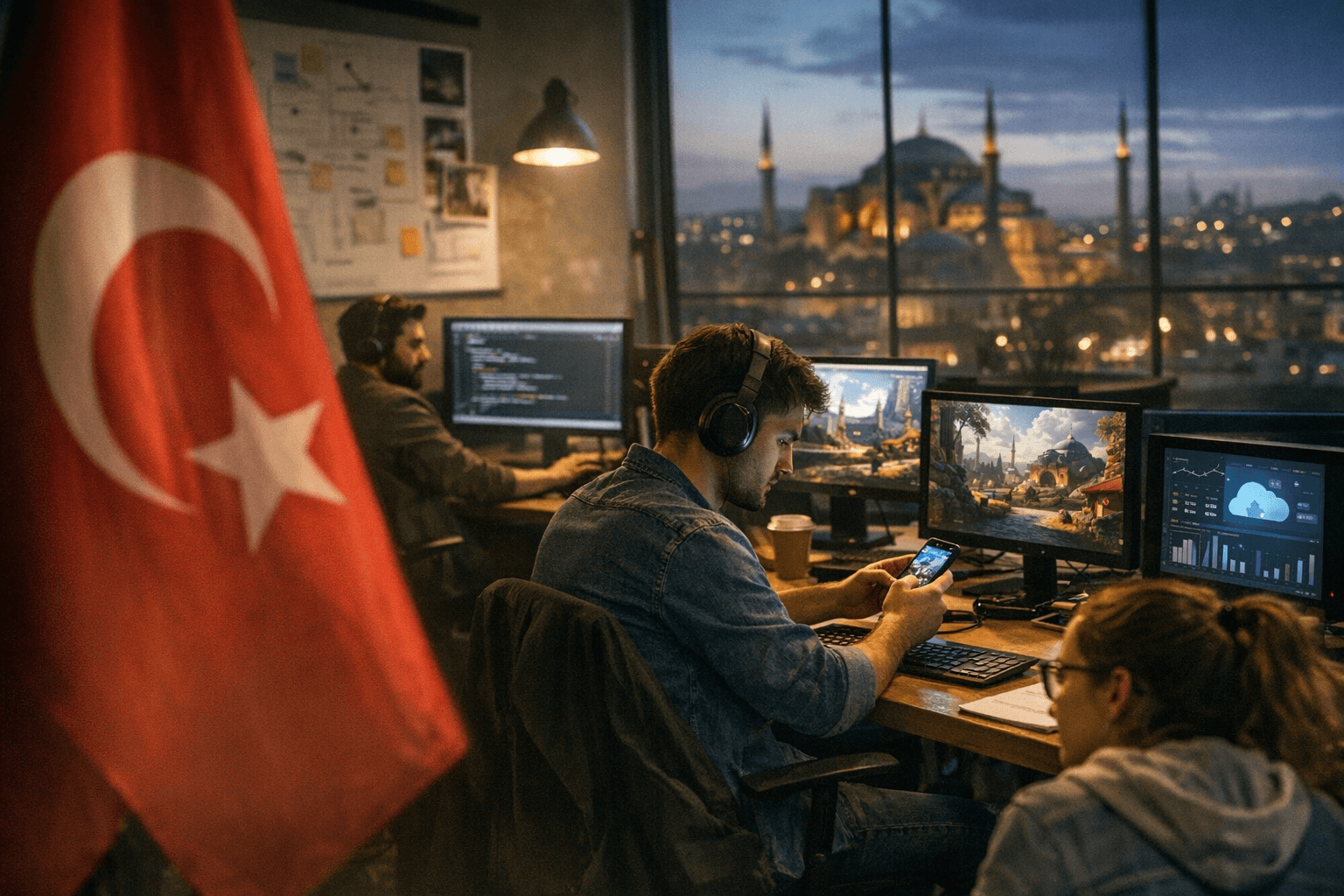
The talent foundation behind those exits has its own logic. "Turkey is different," said Babayigit. "You have a young, digitally native population that can't afford $500 consoles but has smartphones. This creates both a massive test market and a generation of developers who understand mobile-first gaming intuitively." Codorniou extended the point beyond gaming: "The specificity of Turkey is mobile in general. There are tons of companies in Turkey being created around AI, around consumer AI applications."
Studios located inside designated Technoparks layer additional advantages on top of the reimbursement program, including 0% corporate tax and income tax exemptions for R&D and development teams, according to industry commentary. Some sources cite ad-spend refund rates reaching 60 to 70% when additional program lines are stacked, though formal policy summaries consistently state "up to 50%" as the baseline, and the discrepancy between those figures and the caps cited in social posts versus Games.gg's TL-denominated figures warrants confirmation against the full text of the decree and its implementing regulations.
What the numbers already make clear is that the 2026 incentive regime fundamentally changes the unit economics of running a mobile studio out of Istanbul. Pixel Flow, a small Turkish team analyzed using Sensor Tower data, reached approximately $500,000 per day in revenue just four months after launch, illustrating what disciplined execution inside this ecosystem can produce. The decree doesn't just reduce costs; it reconfigures which markets are viable to enter and at what scale, a structural shift that studios outside Turkey are only beginning to price into their competitive models.
This article was produced by Prism’s automated news system from verified source data, official records, and press releases, then run through automated quality and moderation checks before publishing. The system is built and supervised by the people who set the standards it runs under. Read our full AI policy.
Did this article answer your question?


