Athearn announces 13K acid tank cars for two scales, late-era service needs
Athearn’s new UTC 13K acid tanks cover HO and N, with late-1970s-to-1990s prototypes that fit bridge traffic, refineries and fertilizer moves.
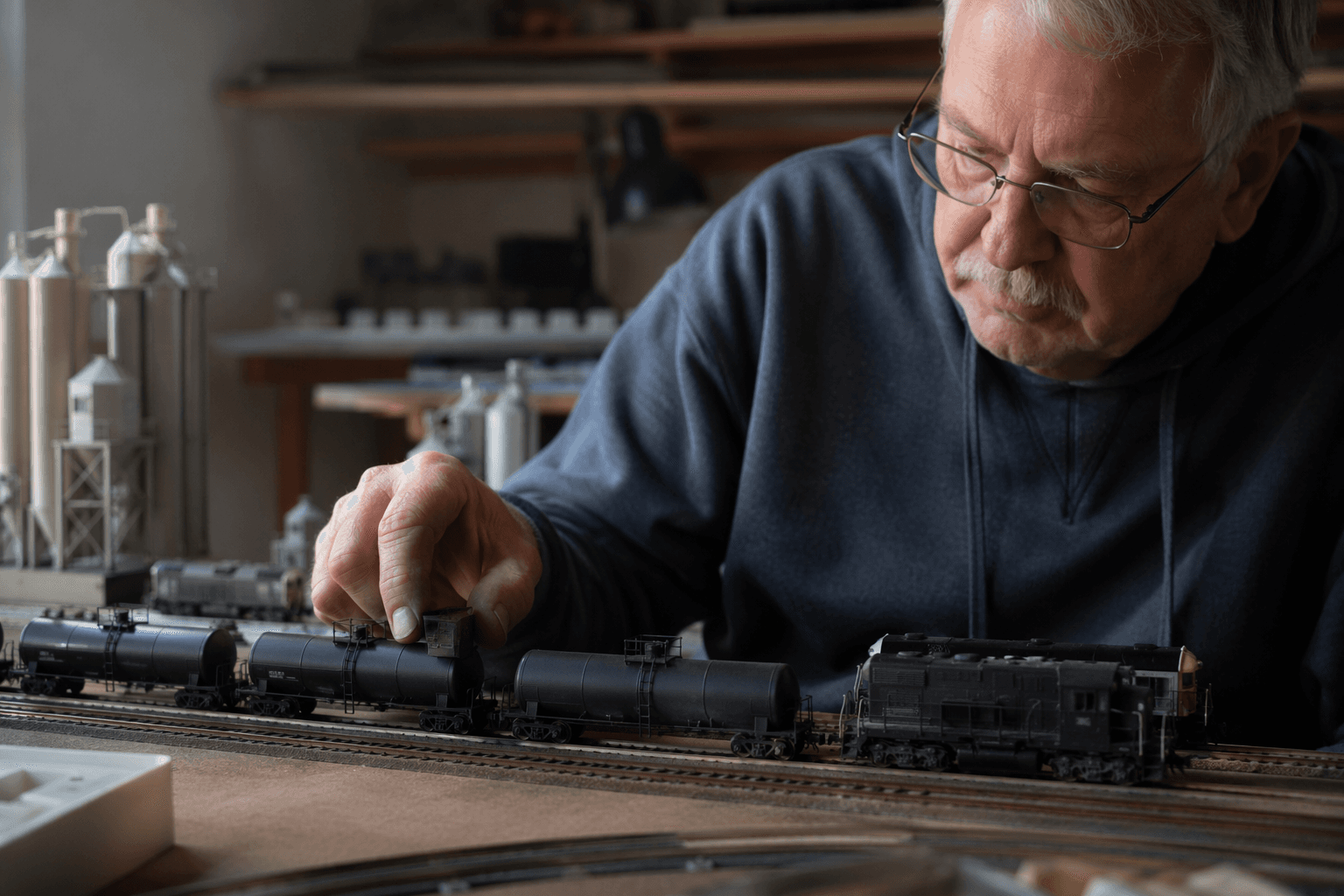
Athearn’s UTC 13K acid tank car release landed on July 13, 2026 with a rare kind of practicality: one prototype family in two scales, built for the exact kind of late-era chemical traffic that makes a freight roster look believable. The cars are based on Union Tank Car Company and Procor 13,000-gallon acid-service tanks, including the 13,600-gallon specialized variants, and they fit layouts running from the late 1970s through the late 1990s without feeling forced.
The prototype span is the selling point. Athearn’s own history splits the body styles into an early four-section version built from mid-1979 to late-1988 and a later three-section version built from early-1988 to late-1999. These were designed primarily for sulfuric acid and other chemicals, not general-purpose filler traffic, and Athearn notes that they often move in groups and show up as bridge traffic between railroads. That gives them a place in more than a refinery scene. They work in blocks on a manifest, in cuts for a local, or in a plant job that needs a few properly nasty-looking tanks tucked behind the power.

That flexibility tracks with the way the real traffic moves. The Association of American Railroads says most rail chemical shipments fall under STCC 28 and calls rail the safest way to move hazmat across the country. The Sulphur Institute describes sulfuric acid handling as a coordination problem across road, rail, and water, with safety, regulatory compliance, and efficient transportation all in play. Industry use is broad too, especially in fertilizer production through phosphoric acid, along with oil refining, metal processing, ore refining, wastewater treatment, chemical synthesis, paper production, and battery and metal products manufacturing. A white tank with a black center band and high-pressure fittings is not just decorative here. It is the look of a car that belongs in North American industrial traffic.
Athearn’s HO version is aimed at operators who need the car to run well as much as they need it to photograph well. The model includes etched metal walkways, different top platforms, brake systems, end sills, wire grabs, handrails, rubber trainline hoses, and an 18-inch minimum radius. That makes it a solid fit for modern HO layouts that can handle a small block of acid cars without demanding monster curves. Athearn first announced an HO 13,600-gallon acid tank car in September 2008, so this is a familiar prototype brought forward with newer tooling and road-specific versions.
The N-scale car goes even further for small-scale detail. It uses body-mounted Type F double-shelf McHenry couplers, body-mounted hoses, etched stainless steel crossover and top platforms, different brake systems, and NMRA RP-20.1 weight compliance. Athearn brought the 13k acid tank car family to N scale in 2022, and Railroad Model Craftsman called that N-scale release Athearn’s first Genesis-level freight-car entry in N scale. That is the kind of car that earns its keep in a through freight, a refinery drag, or a chemical block heading nowhere glamorous but looking exactly right while it gets there.
This article was produced by Prism’s automated news system from verified source data, official records, and press releases, then run through automated quality and moderation checks before publishing. The system is built and supervised by the people who set the standards it runs under. Read our full AI policy.
Did this article answer your question?