Hornby June 2026 preview features RailRoad Class 90s and British stock
Hornby’s June preview splits neatly into modern Class 90s, steam-era stars, and the stock that turns locos into complete trains.

Three audiences, one preview
Hornby’s June 2026 preview works best when you sort it by layout, not by catalogue order. If you run modern image, the RailRoad Class 90s give you a useful electric that already carries real-world identity. If you prefer steam, the BR Royal Scot and Castle Class releases bring the sort of named power that anchors a scene. If you spend your money making trains look complete, the Mk1 coaches and matching freight and yard locomotives are the pieces that quietly do the most work.
That mix is the real story here. This is not a line-up built around one era or one kind of buyer. It is Hornby doing what it has long done well: spreading its bets across prestige locomotives, practical road vehicles, and the coaching stock that lets a single purchase become a proper consist.
Modern image operators get the clearest value in the Class 90s
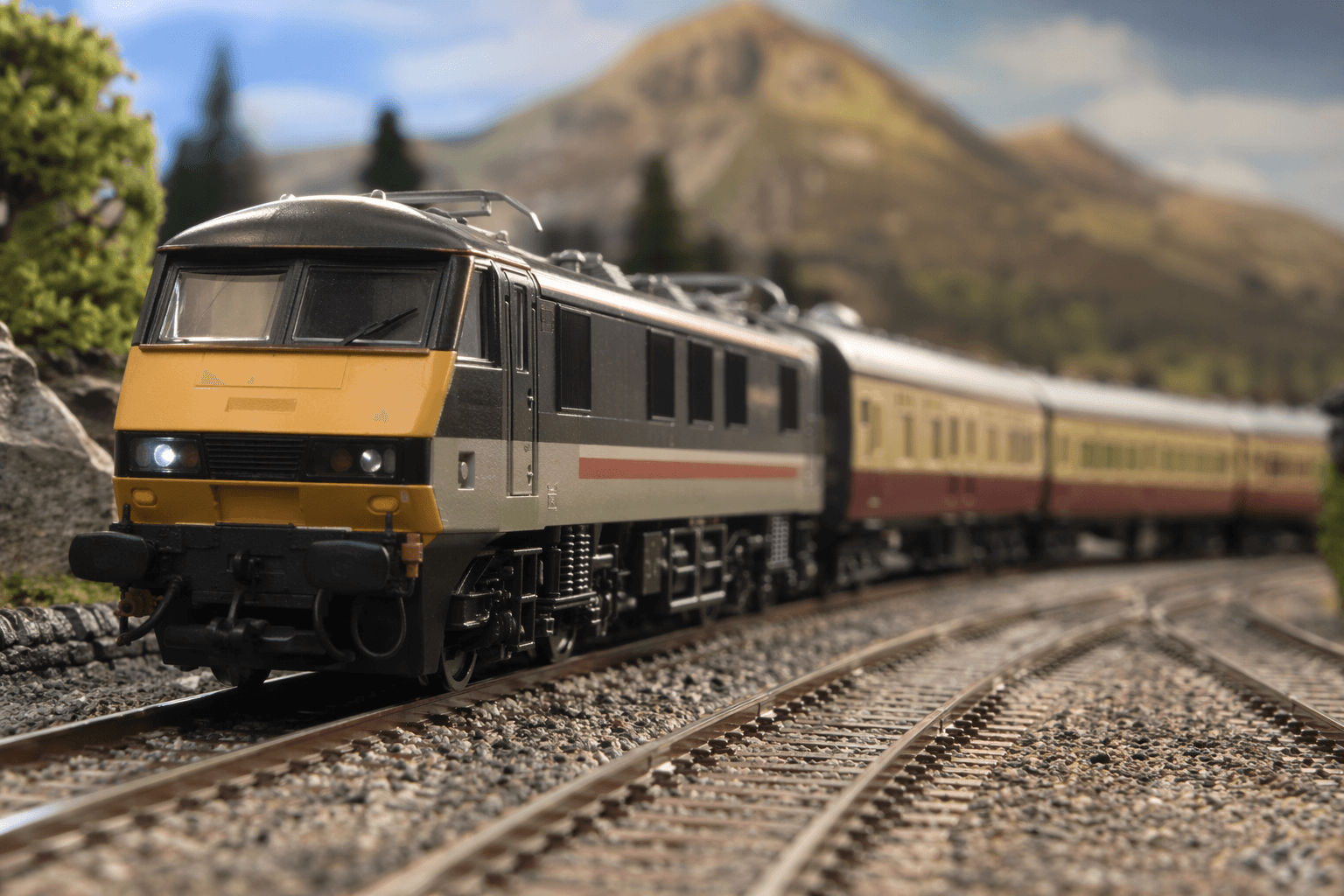
The standouts for contemporary layouts are the RailRoad Class 90s, especially the Royal Scot and Collingwood versions. Hornby has given the same locomotive family two different personalities, with DCC Sound and electric locomotive variants in the mix, so the choice is not simply about getting a Class 90 on the rails. It is about which real-world story you want the model to tell.
90001 is the one that will catch attention first. Hornby says it was repainted in its original InterCity ‘Swallow’ livery and renamed ‘Royal Scot’ by Locomotive Services Limited in April 2020, and that it is one of three Class 90s currently owned by LSL, alongside 90002 and 90026. That makes it especially attractive if you like named locomotives with a documented modern-life backstory rather than a generic numbered release.
90020, modelled as Collingwood in EWS red-and-yellow, pulls in a different crowd. Retailer copy says the real locomotive is in short-term storage for potential further use by DB Cargo, which gives the model a different kind of relevance: not a museum piece, but a machine still close enough to the present day to matter. The Class 90 itself adds to that appeal, because it was designed for mixed-traffic work on the 25kV AC overhead network and intended to replace the older Classes 81, 82, 83, 84 and 85. In other words, it is exactly the sort of locomotive that explains why modern British electric traction still has such a strong following. It is versatile, familiar, and just distinct enough to be more than a placeholder.
For model railway buyers, that translates into practical demand. A Class 90 can slot into a real operating scheme, but it also has enough nameplate character to sell on appeal alone. That is a useful combination, and it usually means the stronger pre-order interest lands with the numbered, prototypically grounded versions rather than a plain fleet engine.
Steam-era express fans have a true centerpiece in Royal Scot
If the Class 90s are the functional winners, Hornby’s One:One Collection BR Royal Scot Class 46100 is the prestige piece. This is the model that feels built to be displayed before it is even run, the sort of locomotive that can dominate a cabinet or become the centre of a layout’s express passenger story. It is also one of the more interesting historical packages in the preview, because Hornby ties the model to a very specific and highly recognizable prototype biography.
Hornby says the locomotive as 6100 Royal Scot swapped identities with 6152 King’s Dragoon Guardsman in 1933 so it could attend the Century of Progress Exhibition in Chicago. It was rebuilt with a taper boiler into BR 46100 in 1950, withdrawn in 1962, and returned to the main line in 2016 before being stored at the One:One Collection in Margate. The One:One Collection adds the broader heritage context, describing Royal Scot as built in 1927, the flagship locomotive of the LMS, and a working engine on the company’s fastest passenger services between London and Birmingham, Manchester and Glasgow.
That combination of celebrity, rebuild history, and preserved status is exactly why the model matters. It is not just another LMS Pacific in a popular market. It is a locomotive with enough narrative weight to justify a premium place in a collection, especially for buyers who want a named express engine with a story that crosses exhibition history, main line preservation, and LMS prestige.
The supporting steam releases fill out real formations
Hornby has also made sure the June wave is not only about headline locomotives. The GWR Castle Class 5081 Lockheed Hudson brings another striking steam-era option into the mix, while the J52 tank locomotives arrive in BR Early and Late Black liveries for freight, shunting, and yard scenes. Those are not the models that dominate a preview graphic, but they are exactly the kinds of releases that make a range feel useful rather than ornamental.
The Hornby Dublo Princess Coronation Class 46230 Duchess of Buccleuch extends the express-steam theme in a way that will appeal to collectors who like the classic blue riband Pacific look. It sits naturally beside the Royal Scot story as part of the broader appetite for named express engines with strong visual presence. Together, these steam releases give the June preview real period breadth, from main line glamour to workaday depot muscle.
The stock pieces are where layouts start to look finished
The BR Mk1 maroon coaches may not have the instant headline power of a named locomotive, but they are one of the most important items in the whole announcement. A good coach rake is what turns an isolated purchase into a believable train, and maroon Mk1s remain one of the easiest ways to give a British steam-era layout weight and continuity. If you already own a suitable express locomotive, this is the kind of release that can justify a full passenger consist instead of another lone engine.
The special 2026 Hornby Wagon plays a similar role for collectors. It is the sort of exclusive rolling-stock item that encourages repeat buying, especially among people who track annual specials and limited additions as part of the hobby rhythm. It may not be the most dramatic model in the wave, but special wagons often become the pieces that fans keep an eye on because they are easier to add than a major locomotive and often harder to replace later.
What the June preview says about Hornby’s 2026 rhythm
Taken together, the preview suggests Hornby is leaning into three dependable strengths at once: named steam locomotives, recognisable BR coaching stock, and modern electric traction that still feels operationally relevant. Retailer listings already show pre-order delivery windows in summer 2026, which fits the broader expectation that Hornby announcements are being spaced out across a roughly 12-month arrival cycle. That staggered schedule matters because it gives modellers time to plan around actual formation needs instead of treating each announcement as a standalone impulse buy.
The practical read is simple. If your layout is modern image, the Class 90s are the must-watch releases. If you build around express steam, Royal Scot is the prestige centrepiece and the Castle and Princess Coronation entries deepen the roster. If you are trying to make a train feel complete, the Mk1 maroon coaches and the wagon special are where the value starts to compound. Hornby has not just filled a preview sheet. It has set out a range that can serve a branchline, a main line, and a collector’s shelf in the same season.
This article was produced by Prism’s automated news system from verified source data, official records, and press releases, then run through automated quality and moderation checks before publishing. The system is built and supervised by the people who set the standards it runs under. Read our full AI policy.
Did this article answer your question?