Lizworth Bay captures a busy Southern Region branch in N gauge
Lizworth Bay packs a full Southern Region branch-line story into a small N gauge footprint. Its 1950s coast setting, varied traffic, and layered scenery make it a layout worth studying closely.

A coast branch with real weight behind it
Lizworth Bay stands out because it does not just show trains, it shows a line with a life story. The layout is set in the 1950s on the coast, where the London and South Western Railway’s westward expansion created a branch line terminus originally built to serve local coastal traffic. That gives the scene a very specific Southern Region identity, the sort that immediately explains the station, the traffic mix, and the slightly weathered mood that hangs over a busy branch that still feels vulnerable.
The backstory matters because it changes how the layout reads at first glance. This is not a generic seaside terminus dropped into scenery for atmosphere alone. It is a working branch with a purpose, then a wartime ordnance-depot extension, then a post-war survivor pushed hard by rationalisation, and finally a line pared back in the Beeching era until only part of the original down line remained as a storage siding. Closure came in the early autumn of 1966, which gives the model a firm historical edge and a clear sense that everything you see sits at the tail end of a line under pressure.
Why the traffic feels so convincing
The strongest thing about Lizworth Bay is the way that history turns directly into traffic. On the model, the branch carries portions of express passenger services split en route, local passenger workings, freight, parcels, newspaper and milk traffic. That is exactly the kind of mix that makes a small terminus feel busy without making it look overworked, and it suits a coastal branch where every movement has a job to do.
That traffic pattern also tells its own story. Express portions hint at the wider network beyond the branch end, while the local passenger service keeps the station grounded in everyday use. Freight, parcels, newspapers and milk add the practical rhythm that model railway layouts often need but do not always show with enough confidence. Here, each service reinforces the sense of a line that is still active, still relevant, and still trying to justify itself even as the years move against it.

What to study in the station scene
The layout’s appeal is not only operational. It is also a careful piece of scene-setting, and the compact station area is where the modelling does much of its storytelling. Historic photographs guide the whole thing, and that matters because it keeps the arrangement rooted in a recognisable place rather than a loose coastal impression. The terminus feels observed, not invented, which is why the scene holds together so well when you start looking closely.
Scratchbuilt elements and varied scenic techniques do a lot of the heavy lifting. The headland, the embankments and the changing landscape around the terminus are all part of the composition, and they create the impression of a line squeezed between coast and practical railway necessity. That is the kind of detail that rewards a slow viewing at an exhibition, because the eye keeps moving from the station throat to the landforms and back again, picking up how each feature helps explain the branch’s shape and purpose.
- Historic photographs anchor the scene in real geography and railway practice.
- Scratchbuilt details keep the terminus from feeling generic.
- Headland and embankment treatment give the coastal setting its height and edge.
- The changing landscape around the station helps the branch feel lived-in rather than scenic for its own sake.
Why it works so well in N gauge
Lizworth Bay shows exactly why N gauge can be such a strong exhibition scale when it is handled with discipline. The compact footprint is not a limitation here, because the layout uses its scale to concentrate the story. A branch line that once handled local coastal traffic, wartime extension work and later rationalised infrastructure becomes easier to grasp when the scene is distilled into a tight, believable terminus with just enough surrounding railway to suggest the wider world.
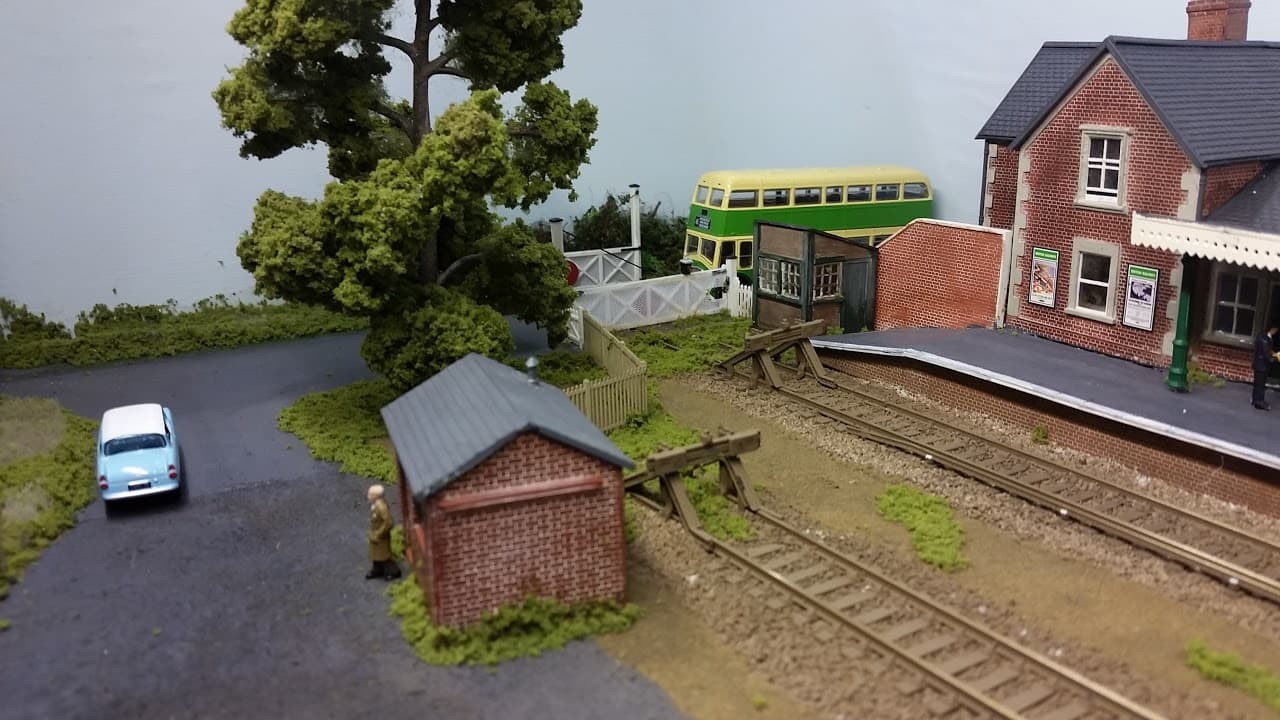
That is especially useful for anyone building or planning a late steam-era or early BR branch terminus. The layout sits squarely in the Southern Region tradition, and its variety of traffic proves that a small-scale railway does not need a huge footprint to feel operationally rich. Instead, it needs the right combination of setting, service patterns and physical layout. Lizworth Bay has all three, and that is why it reads as a proper branch line rather than a token seaside stop.
A Southern Region layout with exhibition presence
Part of what makes the layout memorable is where it appears. As part of the 2026 Great Electric Train Show, Lizworth Bay adds to the event’s reputation for showing high-quality, carefully researched exhibition modelling. It fits that context neatly because it is not trying to impress through size alone. It impresses by making a small space do a great deal of work, which is exactly the sort of craftsmanship exhibition visitors tend to return to for a second look.
The modern context also adds a quiet extra layer. The trackbed is now a cycle route, which gives the line’s history a visible endpoint outside the model itself. That detail helps frame the branch as a piece of landscape that has moved on, while the layout preserves the moment when it was still alive with passengers, parcels, milk and freight. The result is a scene that feels specific, grounded and a little wistful, which is often where the best railway modelling lives.
Lizworth Bay captures the end of a coast branch not as an empty goodbye, but as a working line still carrying everything it can. That mix of Southern Region character, compact N gauge execution and carefully chosen traffic is what makes the layout worth slowing down for when it appears on the exhibition circuit.
This article was produced by Prism’s automated news system from verified source data, official records, and press releases, then run through automated quality and moderation checks before publishing. The system is built and supervised by the people who set the standards it runs under. Read our full AI policy.
Did this article answer your question?