PECO revives N scale grain hoppers with upgraded wheels and livery
Whisky-branded grain hoppers are back, now with metal wheels and cleaner print, giving N scale Scottish freight rakes far more character.
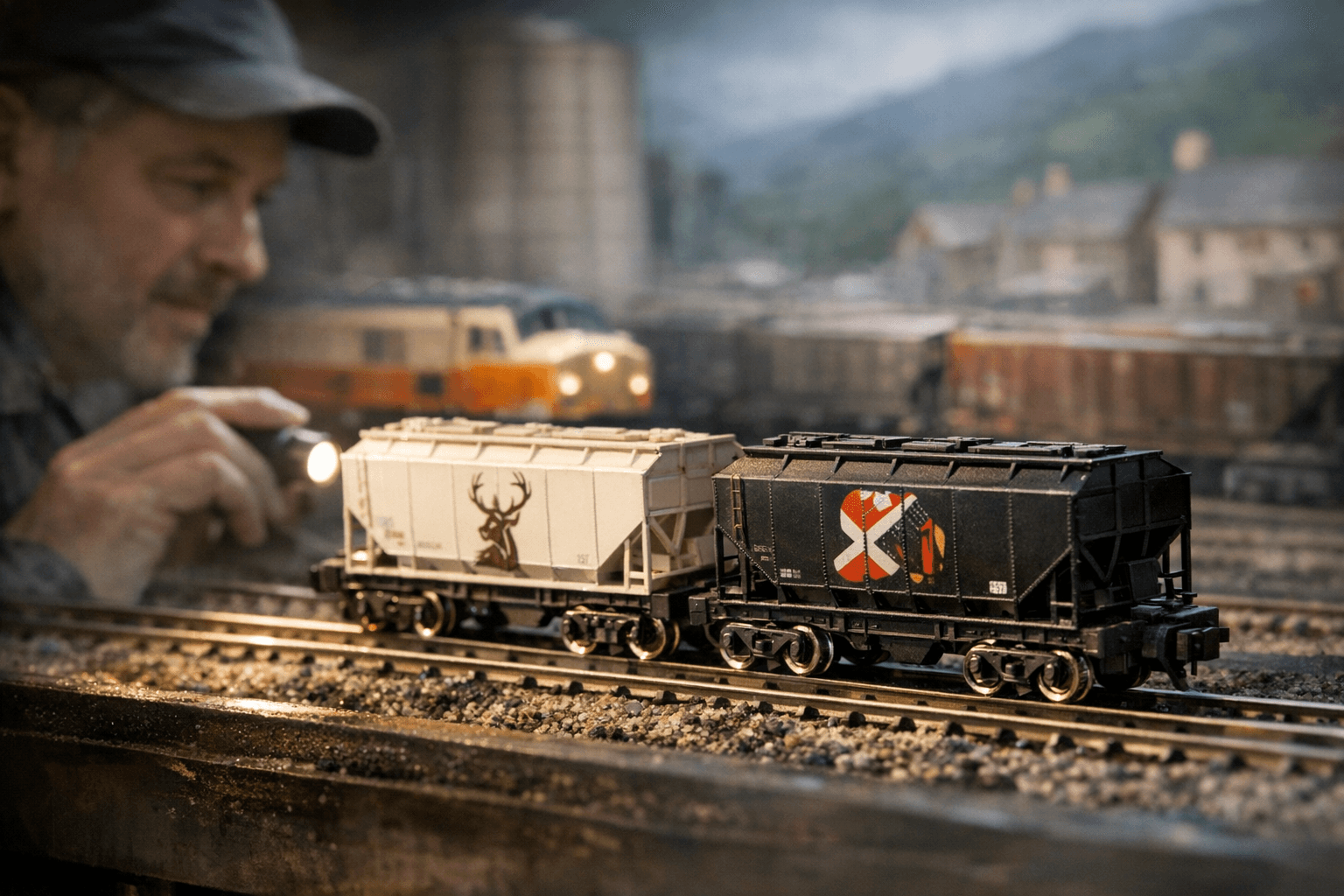
PECO has brought back one of its most characterful N scale freight wagons, and the selling point is not just that it returns, but that it now arrives with metal wheels and a sharper livery finish. These are the kind of small wagons that can change the feel of a rake fast: a plain train becomes a whisky traffic story, and a short consist suddenly looks like it belongs on a Scottish main line rather than just sitting on the shelf.
The reissue stays close to the original 4-wheel grain hopper concept, but PECO has clearly tried to make the stock more convincing in operation and better looking at normal viewing distance. The company says its wagons feature free-running wheels in pin-point axles, and that matters in N gauge, where even a tiny improvement in rolling quality or print sharpness stands out once a wagon is tucked behind a locomotive. PECO also pitches its wagon range around specialised-load block trains, which suits these wagons perfectly. They are not generic covered hoppers. They are purpose-built traffic pieces with a very specific job and a much stronger story.
That story starts in 1966, when the COVHOP grain wagons were introduced for Associated British Maltsters Ltd and Scottish Malt Distillers. Historical sources say they carried grain from East Anglia and the South East to distilleries in Scotland, which gives the model far more bite than an ordinary commodity wagon. A specialist photo archive notes that the fleet came in four batches, with the first three built with 8-plate UIC suspension and altered in 1968 to 11-plate suspension. It also records that only the 35 wagons for Associated British Maltsters stayed on UIC suspension, while the others were changed to BSC pedestals.
The liveries are what make this reissue stand out. Some wagons later carried whisky brand advertising, turning them into moving billboards on the British rail network before most of those schemes had faded away by the early 1970s. PECO’s three versions lean into that visual history with Johnnie Walker, Dewar’s and Haig Scotch Whiskey, names that will ring bells far beyond the model railway scene. That gives the range an instant identity on a layout, whether the wagons are heading for a distillery spur, running in a mixed merchandise train, or forming a short block on a modernised Scottish freight scene.
The wider PECO backdrop helps explain why this sort of reissue lands well. The company says it has been trading since 1946, and its Parkside standard-gauge kit range was sold to PECO in 2017. That blend of old tooling, practical improvements and strong prototype character is exactly what keeps a model like this from feeling like just another wagon release. Here, the livery does as much of the work as the mechanism, and in N scale that is usually the right balance.
This article was produced by Prism’s automated news system from verified source data, official records, and press releases, then run through automated quality and moderation checks before publishing. The system is built and supervised by the people who set the standards it runs under. Read our full AI policy.
Did this article answer your question?