How to find morels: habitat, timing, and key foraging tips
Morel hunting is less about luck than reading the woods: warm spring soil, the right trees, recent disturbance, and strict ID discipline.
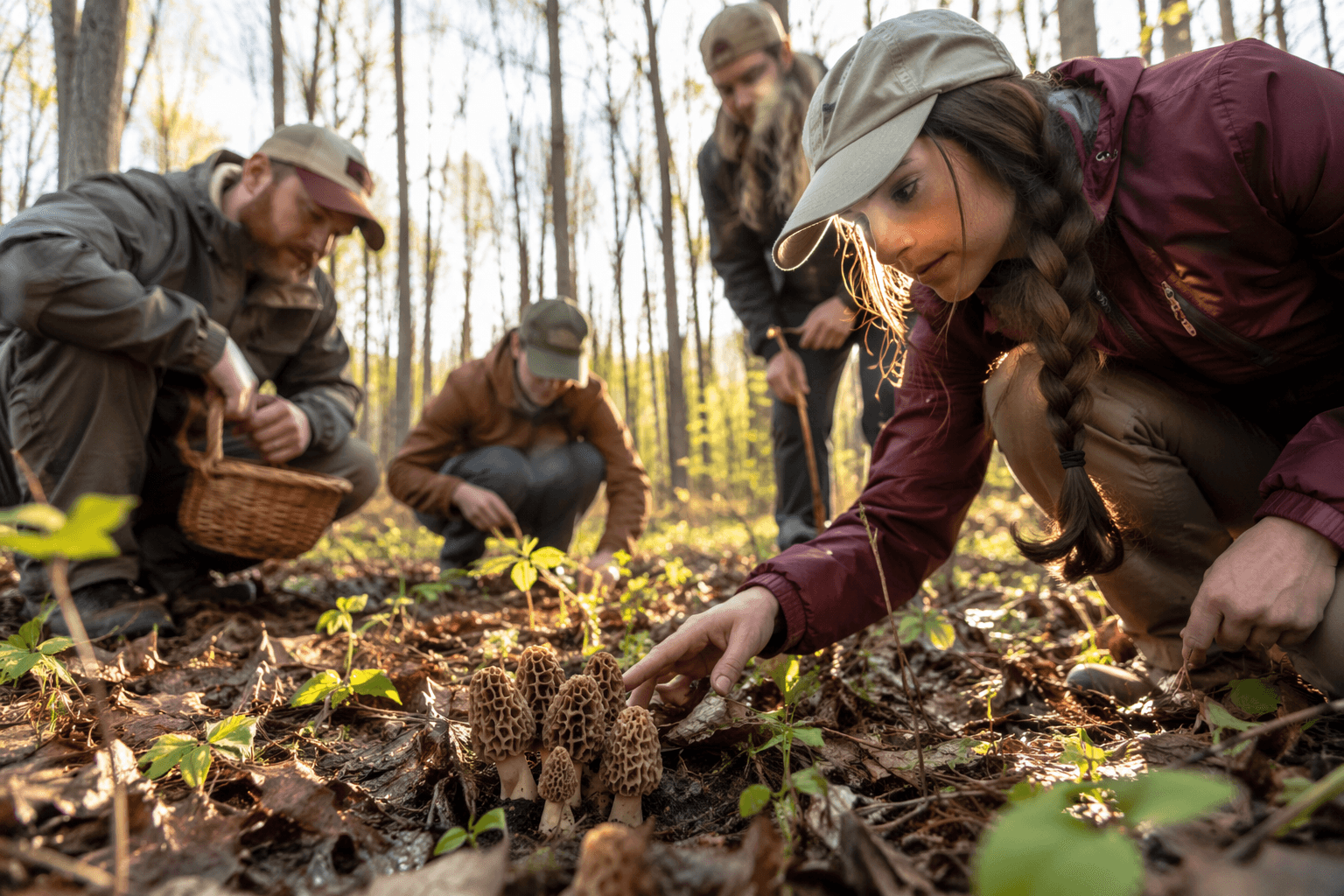
Morels reward the forager who can read a patch of woods instead of chasing rumors. The real edge comes from matching season, moisture, and habitat: spring rain, soil in the 50s to 60s Fahrenheit, and the kind of disturbance morels like. Get those pieces right, and the hunt stops feeling like folklore and starts looking like a repeatable field skill.
Where morels actually show up
If you want a realistic shot, start with the places morels already favor. Recent forest fires are a classic trigger, and morels can fruit prolifically after wildfire, especially in the years just after an area burns. They also show up after insect infestations, tree mortality, and other soil disturbance, which is why logging ground and even construction sites can be worth checking when conditions line up.
Tree clues matter too. Look hard around elm, ash, apple, and poplar stands, especially where the ground is damp and the woods have that slightly battered, transitional look. Areas near streams and rivers can also produce, because morels like moisture, but water alone is not enough. The best habitat combines the right trees, recent disturbance, and the kind of spring weather that keeps the soil alive without soaking it into a swamp.
When to start hunting
Morel season generally runs from April through June, but that calendar only works if you treat it like a broad window, not a deadline. Region and weather control the show. A cool spring in one state can push the hunt back, while a warm wet stretch somewhere else can make it pop fast and disappear just as quickly.
Soil temperature is one of the most useful numbers in the field. The sweet spot is roughly 50 to 60 degrees Fahrenheit, and that is where you want your attention when the rain has been good. University of Minnesota Extension also notes that morels usually emerge in spring after adequate rainfall, which is why a dry week can shut down a promising patch and a soaking rain can bring it back to life.
A simple way to build your search
The people who find morels consistently are usually doing the same few things over and over:
1. They scout likely habitat before they ever pick up a knife.
2. They return after spring rain, especially when soil temperatures are in range.
3. They move slowly through disturbed ground, hardwood edges, and moist low spots.
4. They keep notes on where elm, ash, apple, and poplar are growing, then revisit those spots the next season.
That routine sounds plain, but it beats wandering around on hope alone. Morel hunting pays off when you treat it like pattern recognition, not a treasure hunt.
How to harvest without wrecking the patch
Once you find one, don’t dig it up out of habit. University of Minnesota Extension recommends pinching or cutting the stem just above the soil so the base stays in the ground. That small move matters more than people think, because it leaves the soil in place and avoids unnecessary damage around the mushroom.
The broader rule is simple: take the mushroom, not the site. Foragers are advised not to disturb the surrounding soil any more than necessary, and that means no root-ripping, no casual trenching, and no tearing up the litter layer because you think another one might be hiding underneath. A good morel patch is something you want to revisit, not bulldoze.
True morels versus false morels
This is the point where beginners need to slow down. Morels are prized for their honeycomb appearance and rich, earthy flavor, but the woods also hold dangerous look-alikes. Correct identification is essential because many wild mushrooms are poisonous, and that warning is not a formality.
The safest habit is to make the ID decision before anything goes into your basket. If the mushroom does not fit the true morel look and you are not completely confident, leave it alone. When in doubt, do not eat it. That is not overcautious, it is standard field discipline.
Rules, access, and the money side
Morels are not just a tasty spring find, they are also a real forest product. USDA Forest Service researchers estimated annual commerce in morels at roughly $5 million to $10 million, which is one reason the species draws so much attention from recreational pickers and commercial hunters alike.
But access rules are not one-size-fits-all. On Okanogan-Wenatchee National Forest lands, personal-use harvest is allowed up to five gallons of morels per person per day, free. On Malheur National Forest, commercial mushroom picking is prohibited in Wilderness areas, and commercial permits cost $2 per day with a 10-day minimum purchase or $100 for an annual permit. If you are hunting on public land, the exact rulebook matters as much as the weather, because mushroom regulations can change from one forest to the next.
Safety comes first
If you or anyone else may have eaten an unknown wild mushroom, treat it as urgent. Poison Control says suspected mushroom poisonings should be handled immediately, and the Poison Help number is 1-800-222-1222. That is the number to keep in your phone before you ever head into the woods.
Morel hunting gets talked about like a lucky break, but the woods give you enough clues if you know how to read them. Follow the rain, trust the soil temperature, pay attention to disturbed ground and the right hardwoods, and stay ruthless about identification. That is how the hunt stops being hype and starts becoming a skill you can actually use.
This article was produced by Prism’s automated news system from verified source data, official records, and press releases, then run through automated quality and moderation checks before publishing. The system is built and supervised by the people who set the standards it runs under. Read our full AI policy.
Did this article answer your question?