Rhode Island mushroom society maps fungi through summer surveys and walks
Rhode Island’s mushroom clubs are teaching safer foraging through surveys, guided walks, and forays that build habitat sense, ID discipline, and stewardship.

Rhode Island’s summer mushroom calendar shows the safest way into foraging: go where people are already counting, photographing, and comparing notes. The Rhode Island Mycological Society’s June survey work with The Nature Conservancy and the Audubon Society of Rhode Island, plus its open walks and regional foray listings, turns mushroom hunting into a disciplined practice instead of a solo gamble.
Start with the survey mindset
The Rhode Island Mycological Society was founded in autumn 2021 by Deana Tempest Thomas, who the group now identifies as its founder and current president. That matters because the society is not built as a trophy-hunting club. Its own materials describe a mission to document fungal diversity in backyards, parks, and forests, which is a very different habit from chasing edible names on a phone screen.
That survey-first approach also fits the wider fungal conservation conversation. A 2024 review in Conservation Letters argued that citizen science can help advance fungal conservation, and the North American Mycological Association has long pushed the same basic ethic from another angle, supporting scientific and educational work on fungi while advocating sustainable use that does not harm mushrooms or their habitats. NAMA now counts more than 90 affiliated mycological societies across the United States, Canada, and Mexico, so the Rhode Island group is plugged into a large culture that treats collecting as something you do with care, not speed.
What the June surveys actually teach
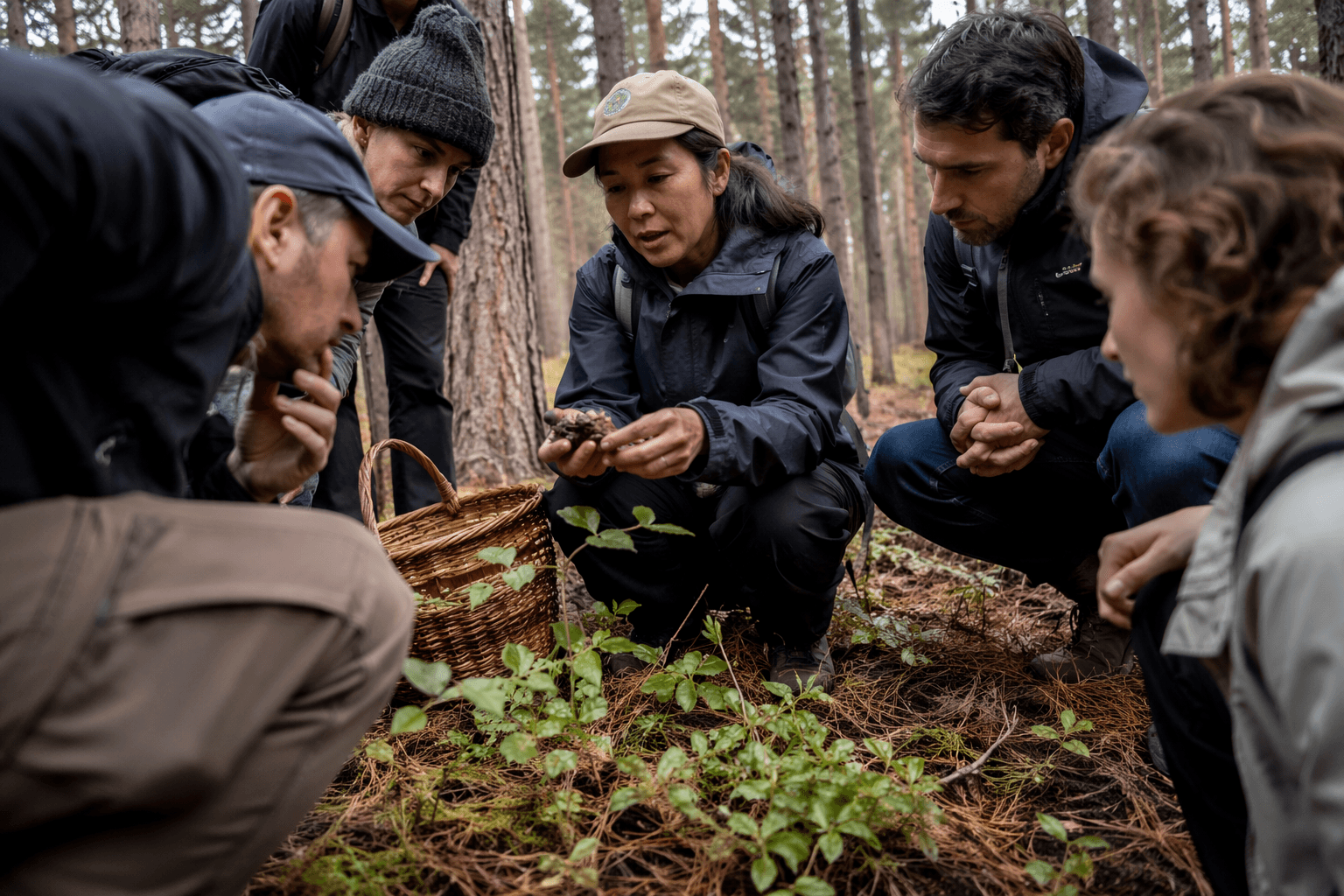
The June 27 survey-team event on Rhode Island conservation lands, run with The Nature Conservancy and the Audubon Society of Rhode Island, is the kind of outing that teaches what apps cannot. Members work in small groups, document fungal biodiversity, and track what appears as the seasons change. A June 29 survey session followed the same pattern, keeping the focus on records, habitat, and field observation rather than on filling a basket.
The society says these conservation surveys help assess risk, monitor change, and improve land-management decisions. That is the real value for a newcomer: you learn to read a site, not just a specimen. You start paying attention to substrate, weather, tree cover, and the difference between a casual find and a documented record. The group also notes that contributing can be as simple as taking a cell-phone photo, which is a useful reminder that you do not need a collector’s eye on day one to add something useful.

Why beginner walks matter more than social media IDs
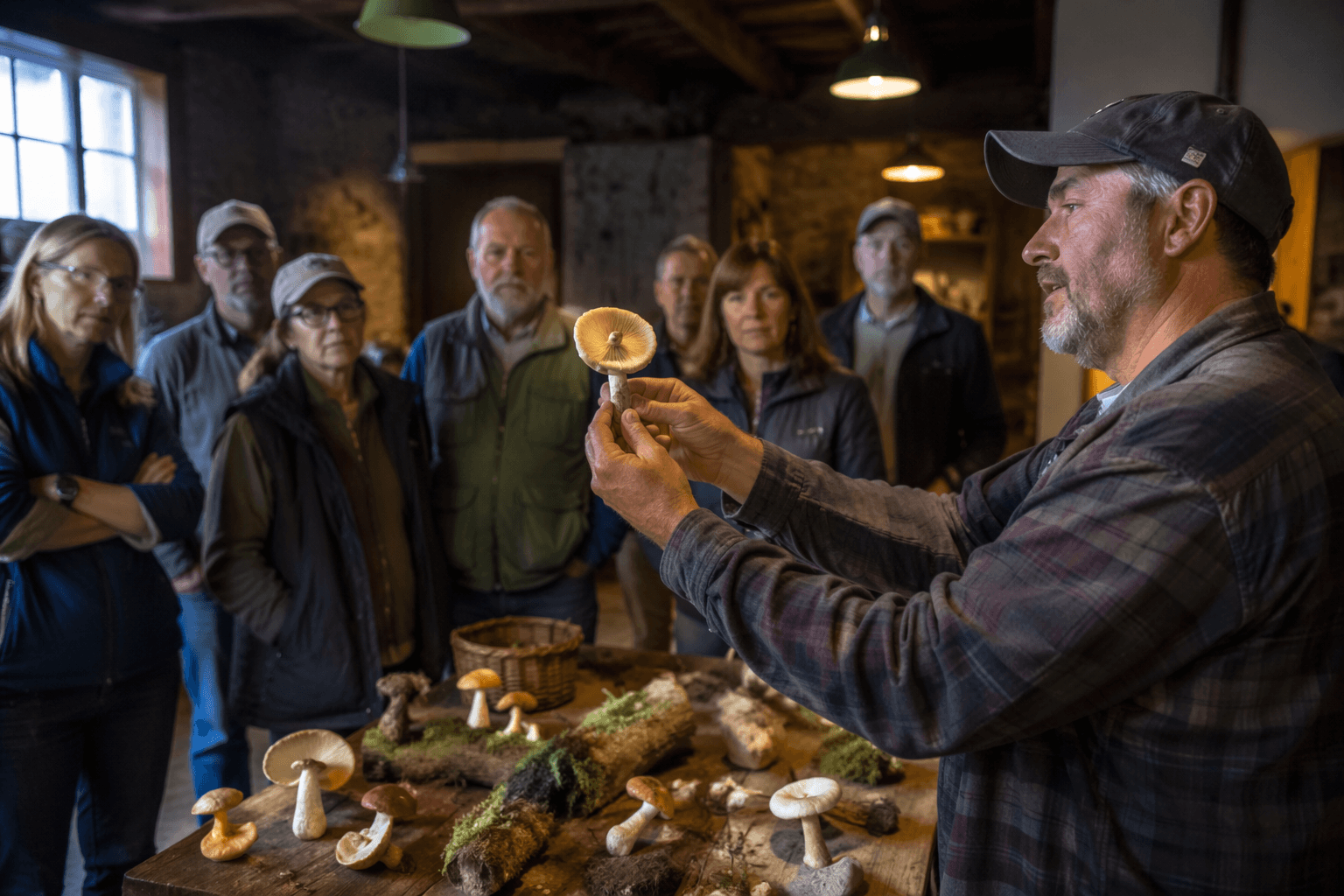
The society’s public-facing events are where the education becomes practical. On July 11, it lists a wild mushroom walk with the Mushroom Hunting Foundation, led by Emily Bouchard and Ryan Bouchard. The foundation describes its programming as teaching safe enjoyment of wild mushrooms and edible plants through guided mushroom and wild plant walks, cooking demonstrations, and private classes. That mix is important because it ties identification to use, and use to restraint.
A walk like that gives you the parts of foraging that social posts usually skip. You get to see how a teacher handles key identification features in the field, how they separate likely edibles from lookalikes, and how much information they want before anyone talks about a mushroom as food. You also see the pace that good foraging requires: slow enough to inspect, fast enough to compare several specimens, and cautious enough to leave a question mark on anything uncertain.
The July 16 Block Island Mushrooms & More outing pushes the same lesson into a different setting. The event emphasizes coastal habitats, beginner-friendly learning, and community science, which makes it a strong example of how local clubs use place as part of the curriculum. On an island setting, habitat reads differently, and that is the point. You are not just learning species names, you are learning where and why fungi show up.
The regional foray is where the bench gets deeper
The late-summer NEMF Samuel Ristich Foray at Pennsylvania State University in Mont Alto, Pennsylvania, runs Thursday, July 30 through Sunday, August 2, 2026. Rhode Island Mycological Society says the foray will feature faculty and workshop presenters including Dr. Cathe Aime, Colin Domnauer, Noah Siegel, and Hannah Huber, with Sam Bucciarelli listed as foray chair.
This is the step that shows newcomers what a mature mushroom community looks like. A regional foray is not just a bigger walk. It is where field collecting, microscopy, talks, and workshops start to overlap, and where a local forager can move from “I found this” to “I know how experienced people verify it.” If the guided walk is where you learn not to trust your first impression, the foray is where you learn how far that caution can go when taxonomists and field veterans are in the room.
Ethics are part of the ID lesson
Rhode Island Mycological Society’s public materials also acknowledge that Rhode Island sits on the ancestral, traditional, and contemporary lands of the Nipmuc, Wompanoag, Narragansett, and other Indigenous peoples. That context matters because mushroom foraging is never just about extraction. It is about land, access, and the long memory of the places where fungi fruit.
The broader network reinforces that ethic. Audubon Society of Rhode Island says it provides public nature programs and works to protect lands, waters, and wildlife habitat, which helps explain why conservation properties are such good classrooms for mushroom work. NAMA’s emphasis on protecting natural areas and collecting responsibly adds the final piece: good foraging should leave habitats intact and fungi undisturbed unless there is a real educational or culinary reason to collect.
- Join surveys if you want to learn habitat, seasonality, and record-keeping first.
- Take a guided walk if you want hands-on ID practice with someone who can slow the process down.
- Use regional forays when you are ready for deeper taxonomy, workshops, and broader community contact.
The through-line in Rhode Island’s summer slate is simple. The safest path into mushroom foraging is not a lone app and a guess, it is a roomful of people who know how to read the woods, document what they see, and leave the habitat better understood than they found it.
This article was produced by Prism’s automated news system from verified source data, official records, and press releases, then run through automated quality and moderation checks before publishing. The system is built and supervised by the people who set the standards it runs under. Read our full AI policy.
Did this article answer your question?