NBA 2K26 Court Template Helps Modders Build Realistic Floors Faster
Court makers can carry NBA 2K25 floors into NBA 2K26 fast, with less rebuild work and cleaner broadcast-style detail.
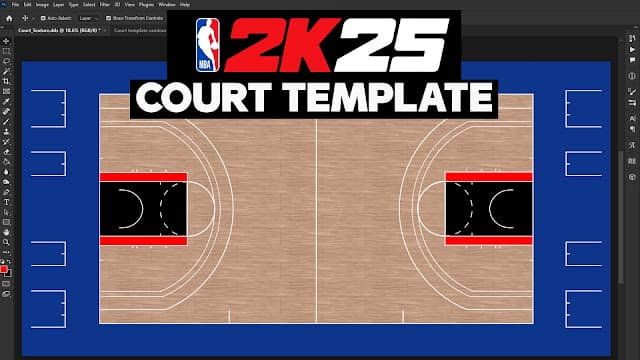
The fastest way to get a believable NBA 2K26 floor is not to rebuild one from scratch. The new court template gives modders a conversion-ready base, so a strong NBA 2K25 design can move into the newer game with far less trial and error, which is exactly the kind of time saver the community has been asking for.
Why the court template matters
Court work is one of those jobs that looks simple until you actually try to do it right. The logo, the paint, the baseline art, the center-court mark, and the texture balance all have to land together or the whole arena feels off. That is why a template matters so much: it cuts down the technical friction and gives creators a structure they can trust instead of forcing every project to start as a blank canvas.
That matters even more in NBA 2K26, where 2K and Visual Concepts are leaning harder into presentation. The game’s official messaging highlights improved courtside visuals, new floor shaders, and better lighting, all of which raise the standard for anything a creator drops into the game. If the engine is pushing for more broadcast realism, a sloppy custom floor sticks out immediately. A good template helps modders keep pace with the upgrade.
What changed from NBA 2K25 to NBA 2K26
NBA 2K26 launched worldwide on September 5, 2025, with early access for the Superstar and Leave No Doubt editions beginning a week earlier on PS5, Xbox Series X|S, and PC via Steam. That launch window matters because it set off the usual yearly rush: roster updates, MyNBA rebuilds, custom league setups, and court mods all started moving at once.
The modding side of the community reacted quickly. NLSC opened a dedicated NBA 2K26 modding section on August 29, 2025, which gave creators a central place to trade files, troubleshoot problems, and keep projects organized. That kind of infrastructure is a bigger deal than it sounds. Court modding has always been one of the more fragile parts of the ecosystem, and forum threads have repeatedly shown the same pain point: one wrong file change and you can end up staring at a black court.
How the 2K25 template became the bridge
The NBA 2K26 court-template conversation really started before 2K26 even arrived. A public NBA 2K25 court template appeared on July 9, 2025, and it quickly became a reference point for anyone trying to move floors between yearly releases. The creator behind that template said the older RedLite2K version was missing pieces, including a FIBA pre-2008 key, which is the kind of detail that matters if you care about era accuracy or international presentation.
An updated NBA 2K25 template by Godmode_ON pushed that idea even further. It claimed 22K court resolution compared with 6K in the original template, which is a massive jump when you are trying to preserve line sharpness, logo clarity, and painted detail. It also added automatic playoff logo loading from the Kobe era onward, support for different courts across the regular season and playoff rounds, and more accurate lines and logo options. That is not just polish, it is the difference between a floor that looks generic and a floor that sells the whole broadcast feel.
For creators, the practical takeaway is simple: if you already built a clean NBA 2K25 floor, the new template lets you keep that work alive instead of redoing it every cycle. A 2KSpecialist post about NBA 2K26 court templates says some NBA 2K25 courts are fully compatible with NBA 2K26 with only a DDS rename in some cases. That is the kind of shortcut that turns a weekend project into a same-day update.
The workflow that saves the most time
The best use case is not starting over, it is porting and refining. If your 2K25 court already has the right proportions, accurate paint, and the right baseline art, the template gives you a cleaner path to getting it into 2K26. From there, the job becomes about verification: making sure the lines read correctly, the center logo sits right, and the floor textures do not break when the game loads them in a new environment.
A practical creator workflow looks like this:
- Start with a court you already trust from NBA 2K25.
- Convert it into the new template structure instead of rebuilding the geometry and art from scratch.
- Check the line work, logo placement, and paint texture at game speed, not just in a file preview.
- Test playoff variants separately if your project uses different floor art for postseason rounds.
- If a court is known to be compatible, use the simple DDS rename route where it applies.
That process is valuable because it lowers the barrier for newer modders while still giving veterans a faster path to full-season update projects. The less time you spend wrestling with file structure, the more time you can spend on the stuff that actually sells realism.
Who benefits most right now
Right now, the biggest winners are MyNBA creators, roster makers, and custom league builders. MyNBA users want eras and team identities to feel distinct, and court accuracy is one of the quickest ways to make that happen. Roster makers need the floor to match the roster logic, especially if they are recreating classic teams, alternate timelines, or fantasy setups.
Custom league builders benefit too, because a good court template lets them scale out more teams without every arena becoming a separate technical headache. It also helps offline players, classic-team fans, and presentation purists who care about the small stuff that makes a game feel authentic. Accurate logos, baseline detail, and center-court art do more than decorate the screen. They define the identity of a team, an era, or a whole project.
That is why the broader ecosystem matters. Shuajota’s NBA 2K26 page already lists multiple court and arena mods, including realistic 30-team court packs and playoff court packs, which shows how quickly creators are building on top of the template mindset. The easier the floor pipeline gets, the faster the community can deliver believable arenas for more teams, more eras, and more ideas.
Why this tool is bigger than it looks
The court template is not a flashy headline feature, but it is the kind of utility that keeps the NBA 2K mod scene moving. A stronger template means fewer dead-end rebuilds, fewer compatibility headaches, and more authentic-looking floors across yearly releases. In a game that is pushing presentation harder than ever, that kind of behind-the-scenes tool does real work.
For anyone building serious MyNBA saves or running custom leagues, the message is clear: the best floor from NBA 2K25 does not have to die when 2K26 loads. With the right template, it carries forward, looks sharper, and gets to the court faster.
This article was produced by Prism’s automated news system from verified source data, official records, and press releases, then run through automated quality and moderation checks before publishing. The system is built and supervised by the people who set the standards it runs under. Read our full AI policy.
Did this article answer your question?