Argonne Simulations Flag Higher Cyclone Flood Risk for Nuclear Plants
Argonne’s cyclone modeling found India’s eastern coast could face a 78% jump in rare storm-tide risk, sharpening scrutiny of Kovvada and other coastal reactor sites.
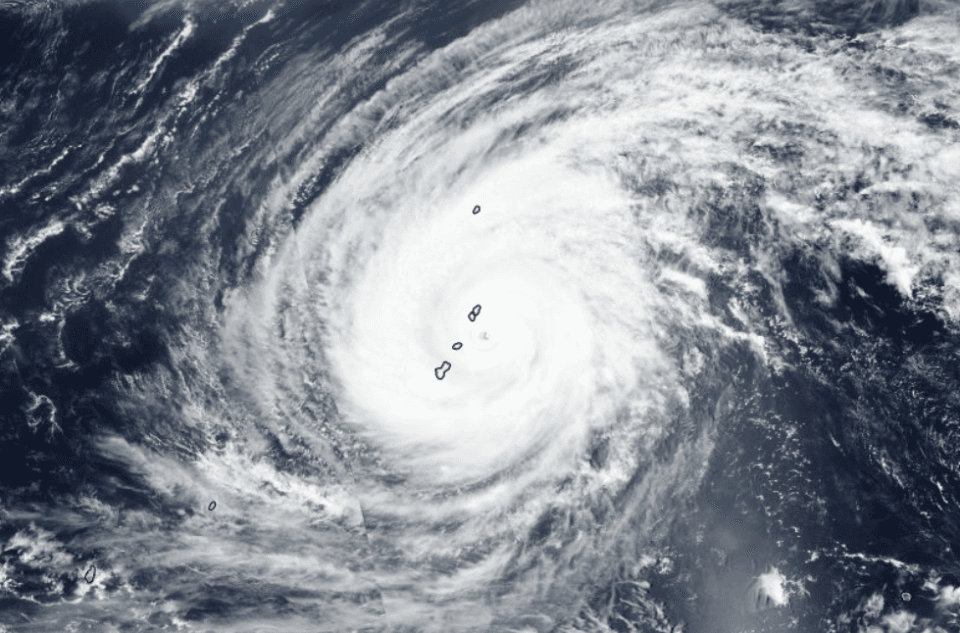
A new Argonne National Laboratory study put a hard number on a risk nuclear planners have long had to treat as a moving target: rare cyclone-driven flooding along India’s eastern coast could climb by as much as 78 percent at the proposed Kovvada Atomic Power Project under mid-century conditions.
The work, published in npj Natural Hazards and discussed by the American Nuclear Society on April 16, used advanced computer simulations to test thousands of tropical cyclone scenarios rather than one storm track. Argonne researchers ran the models through the Laboratory Computing Resource Center and checked the results against recent cyclone data, a setup designed to capture the low-frequency but high-consequence floods that matter most for reactor siting, design-basis reviews and insurance assumptions.
The Bay of Bengal was the focus because it combines several hazards in one place: storm surge, tidal stage, river discharge and sea-level rise. The India Meteorological Department has long identified the northern Bay as a region prone to dangerous high storm tides, and NASA has described it as a powerful test case for exactly the kind of interaction this study examined. The Argonne team found that those interactions are not simply additive. The preprint says linear superposition methods can miss the mark by about 25 percent to 35 percent, meaning a simplified flood estimate could either understate or exaggerate the return level that matters for critical infrastructure.

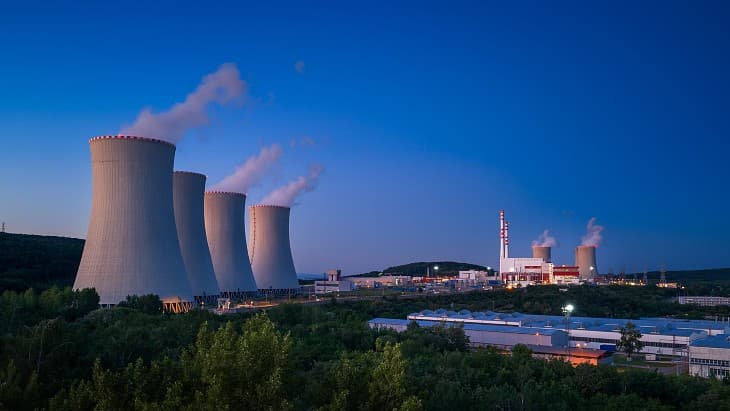
The sharpest warning landed along India’s eastern coast, where the proposed Kovvada Atomic Power Project sits in Srikakulam district, Andhra Pradesh. The researchers estimated that the area could see up to a 78 percent increase in 5,000-year storm-tide levels under mid-century conditions, driven by nonlinear wave action and tide-surge interaction. By contrast, the Ganges-Brahmaputra-Meghna delta in Bangladesh showed relatively lower risk in some modeled scenarios, though the study still warned that severe flooding remains possible there.
That distinction matters because Kovvada is not a paper site. The Government of India accorded in-principle approval in 2017 for six light-water reactors there, and Nuclear Power Corporation of India Limited says the project is planned as six 1,000-MWe units. A 2024 Lok Sabha reply said 2,079.66 acres for the main plant area had been acquired and mutated in NPCIL’s name. In other words, the siting question has already moved from theory to land, licensing and long-term capital planning, exactly where new flood modeling can force harder choices on protection standards, retrofit costs and regulatory scrutiny. Argonne’s broader message was plain: coastal nuclear projects will need more detailed flood-risk analysis, and not just for reactors. Hospitals and other critical facilities facing the same climate-driven storm shifts will need the same level of attention.
This article was produced by Prism’s automated news system from verified source data, official records, and press releases, then run through automated quality and moderation checks before publishing. The system is built and supervised by the people who set the standards it runs under. Read our full AI policy.
Did this article answer your question?