DOE Awards $49.7 Million to Train Next-Generation Nuclear Workforce
The biggest slice of DOE’s $49.7 million workforce push went to a Great Lakes consortium built to train the people who keep reactors running.
The biggest check in DOE’s new workforce package was never really about classroom theory. It was about a very practical bottleneck: who will operate, regulate, inspect and maintain the next wave of reactors, and who will replace the wave of retirees already moving out of the field.
The Department of Energy’s Office of Nuclear Energy awarded more than $49.7 million on April 7 to 10 university-led projects under its Nuclear Reactor Safety Training and Workforce Development Program, a pool that can reach $100 million and requires a 50% cost share from every recipient. DOE said the money is aimed at strengthening safety training for the people who support the continued safe operation of existing nuclear power plants, while also growing nuclear safety training programs and curricula nationwide. Another round of funding is expected later in 2026.
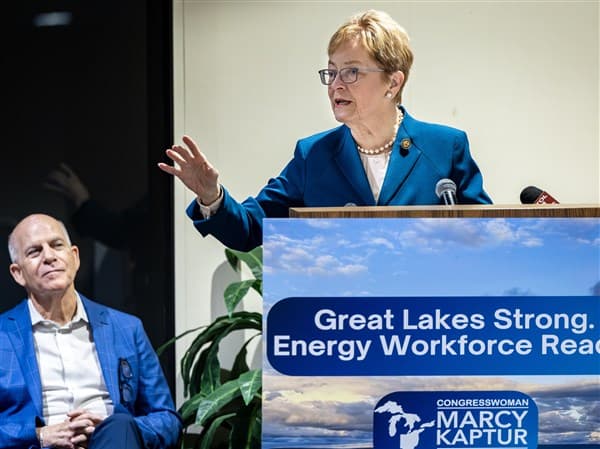
The largest award went to the Great Lakes Partnership to Enhance the Nuclear Workforce, or GLP, a five-year effort led by the University of Toledo. The partnership received $19.2 million, and UToledo said the award is being matched to build a $39 million initiative. Congresswoman Marcy Kaptur announced the funding on April 8 at Davis-Besse Nuclear Power Plant in Oak Harbor, Ohio, and said the award would be administered at the University of Toledo. She tied the grant to the $100 million she helped secure in fiscal 2024 appropriations for nuclear reactor safety training programs.
The GLP is built around 20 partners spanning education, plant operation, fuel, manufacturing, labor unions, national laboratories and industry. Among the higher-education members are Excelsior University, Lakeland Community College, Monroe Community College, North Dakota State University, Owens Community College, the University of Illinois Urbana-Champaign and the University of Michigan. Other partners include the Center for Energy Workforce Development, Centrus Energy, Constellation Energy, DTE Energy, the Electric Power Research Institute, Idaho National Laboratory, the International Brotherhood of Electrical Workers, the Nuclear Energy Institute, Nuclear Talent Scout, Pittsburgh Technical, Vistra, Westinghouse and Xcel Energy.

The coalition’s goals are bluntly operational: strengthen safety training for the light-water-reactor workforce, attract a larger and more diverse pool of entrants into nuclear careers, modernize curricula for advanced reactor concepts and establish nationally recognized reactor safety certifications. University of Toledo said the partnership will modernize nuclear safety training, attract new talent and build industry-recognized certifications. The University of Michigan Department of Nuclear Engineering and Radiological Sciences said it is a primary academic partner, and framed the effort as building workforce pathways, modernizing training and expanding outreach.
That is the real story behind the grant. DOE is not just funding reactor demos and policy paper ambitions. It is trying to staff the industry that has to restart plants, sustain the existing fleet and eventually scale new-build projects without running headlong into a labor shortage.
This article was produced by Prism’s automated news system from verified source data, official records, and press releases, then run through automated quality and moderation checks before publishing. The system is built and supervised by the people who set the standards it runs under. Read our full AI policy.
Did this article answer your question?