China Begins Taipingling Unit 4 Construction as Hualong Fleet Expands
Taipingling Unit 4 has crossed into full civil construction, turning the six-unit Hualong One site from a plan into a fast-moving fleet build.
_10466.jpg&w=1920&q=75)
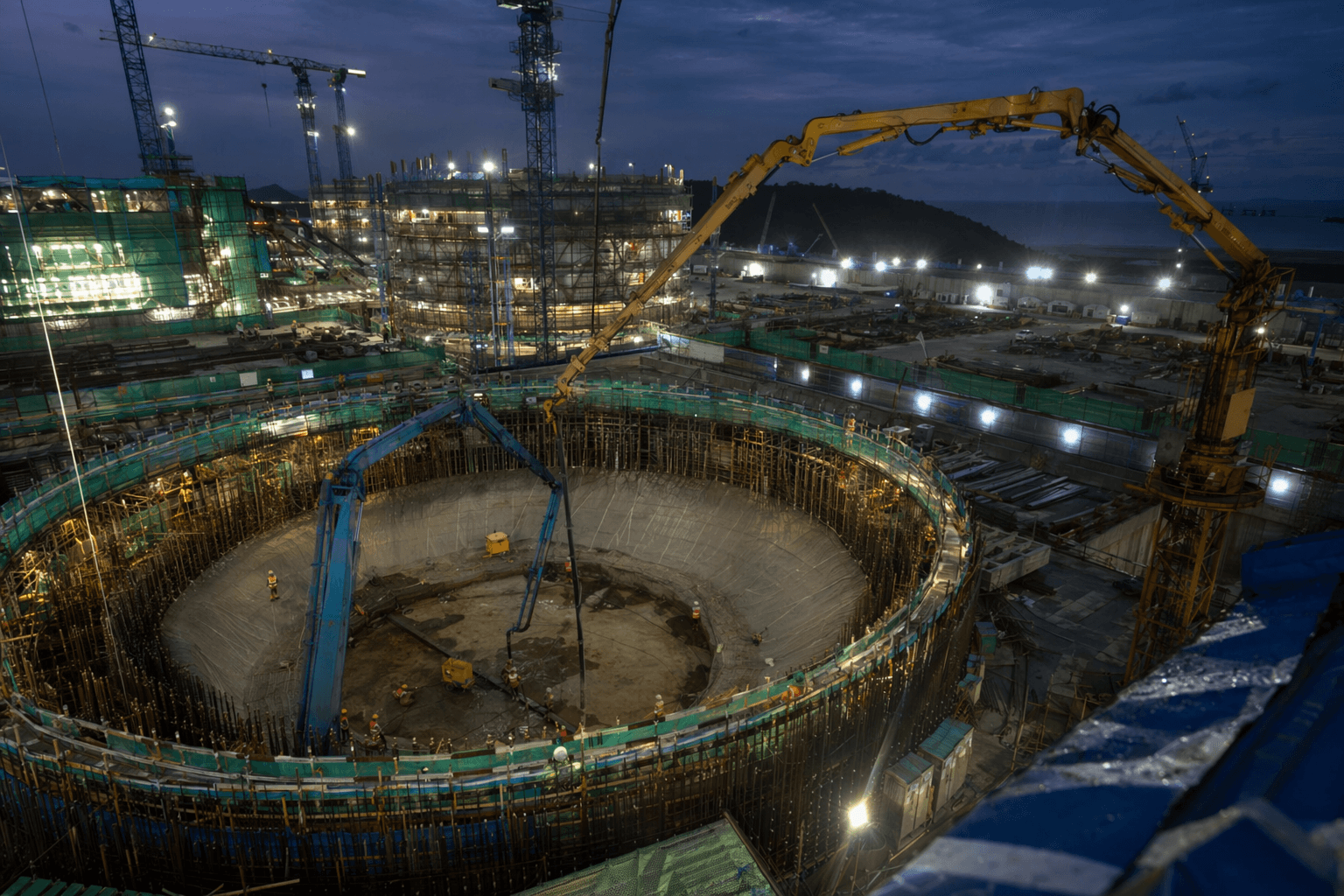
The first safety-related concrete for Taipingling Unit 4 is the point where the project stops being a promise and becomes irreversible construction. With that pour, China General Nuclear pushed the fourth unit at its Huizhou, Guangdong, site into full civil works, extending one of the country’s biggest Hualong One buildouts and locking in the next phase of a six-reactor station planned with more than CNY120 billion in investment.
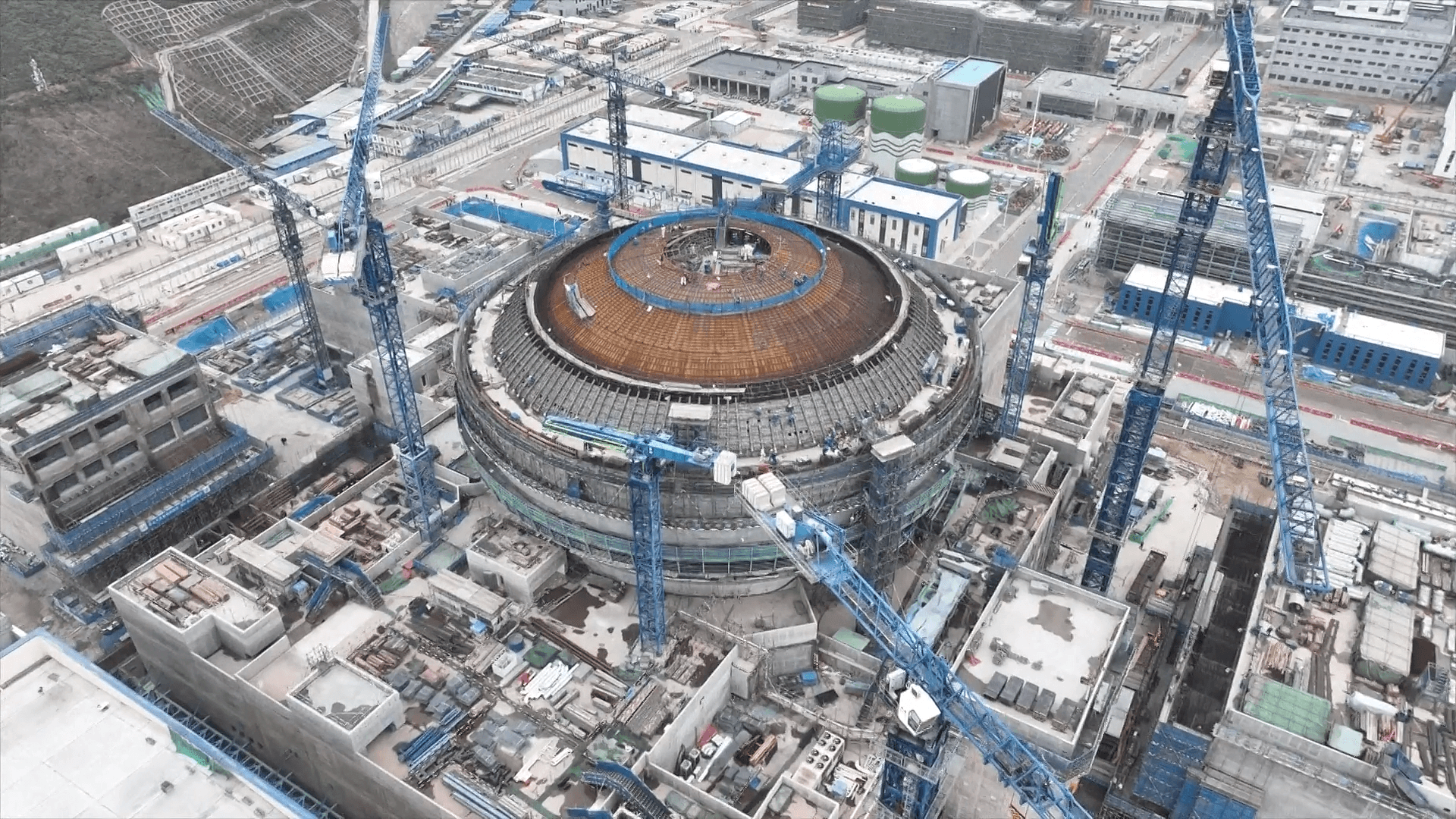
The status board at Taipingling is no longer theoretical. Unit 1 is in commercial operation, Unit 2 has completed initial fuel loading, Unit 3 is already in civil construction, and Unit 4 has now joined the main build. Units 5 and 6 remain in the wider six-unit plan, but the first four units already show how quickly the site is moving from paper to plant. The second phase, which covers Units 3 and 4, was approved by China’s State Council on December 29, 2023, and Unit 3 began construction in June 2025.
The speed is easier to see when you lay out the dates. Unit 1 and Unit 2 began construction in 2019 and 2020. Unit 1 finished hot functional testing on September 15, 2024, reached first criticality on February 3, 2026, connected to the grid on February 13, and entered commercial operation on April 20. Unit 2 completed hot functional testing in July 2025 and finished fuel loading on May 3, 2026. That means Taipingling is now handling startup, commissioning, and new-build work at the same time, which is exactly what a standardized fleet program is supposed to look like when it is working.
CGN’s own numbers show why the company is pushing the site this hard. Once all six Hualong One units are running, Taipingling is expected to generate more than 55 billion kilowatt-hours a year and cut carbon dioxide emissions by about 50.82 million tonnes annually. Chinese state media have said Unit 1 alone should produce more than 9 billion kilowatt-hours each year, enough to cover the annual electricity use of about 1 million residents in the Guangdong-Hong Kong-Macao Greater Bay Area.
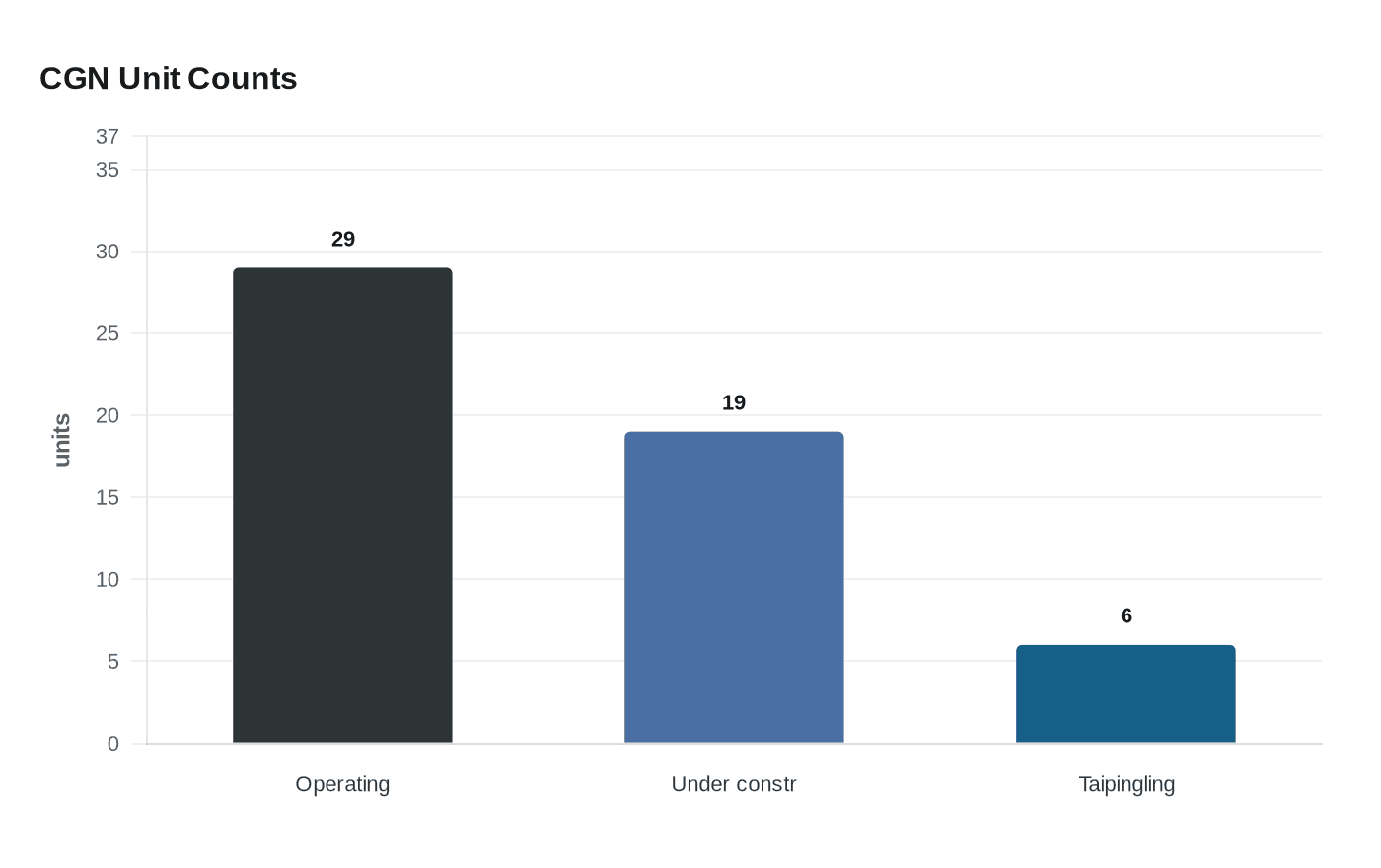
That matters because Taipingling is becoming a template, not a one-off. It is the first Hualong One nuclear unit in the Greater Bay Area, and its steady handoff from one milestone to the next shows how China is scaling reactor delivery: repeat the design, shorten the learning curve, and keep the civil work moving. CGN said it now has 29 nuclear units in operation and 19 under construction, with 33.04 million kW of operating capacity, and Taipingling is a clear example of how the fleet build is being turned into steel, concrete, and grid power.
This article was produced by Prism’s automated news system from verified source data, official records, and press releases, then run through automated quality and moderation checks before publishing. The system is built and supervised by the people who set the standards it runs under. Read our full AI policy.
Did this article answer your question?