China builds first megawatt-level ADS reactor to burn nuclear waste
China’s Institute of Modern Physics is building a megawatt-level accelerator-driven subcritical system in Huizhou, Guangdong, to transmute U-238 into Pu-239 using 0.8c proton beams.
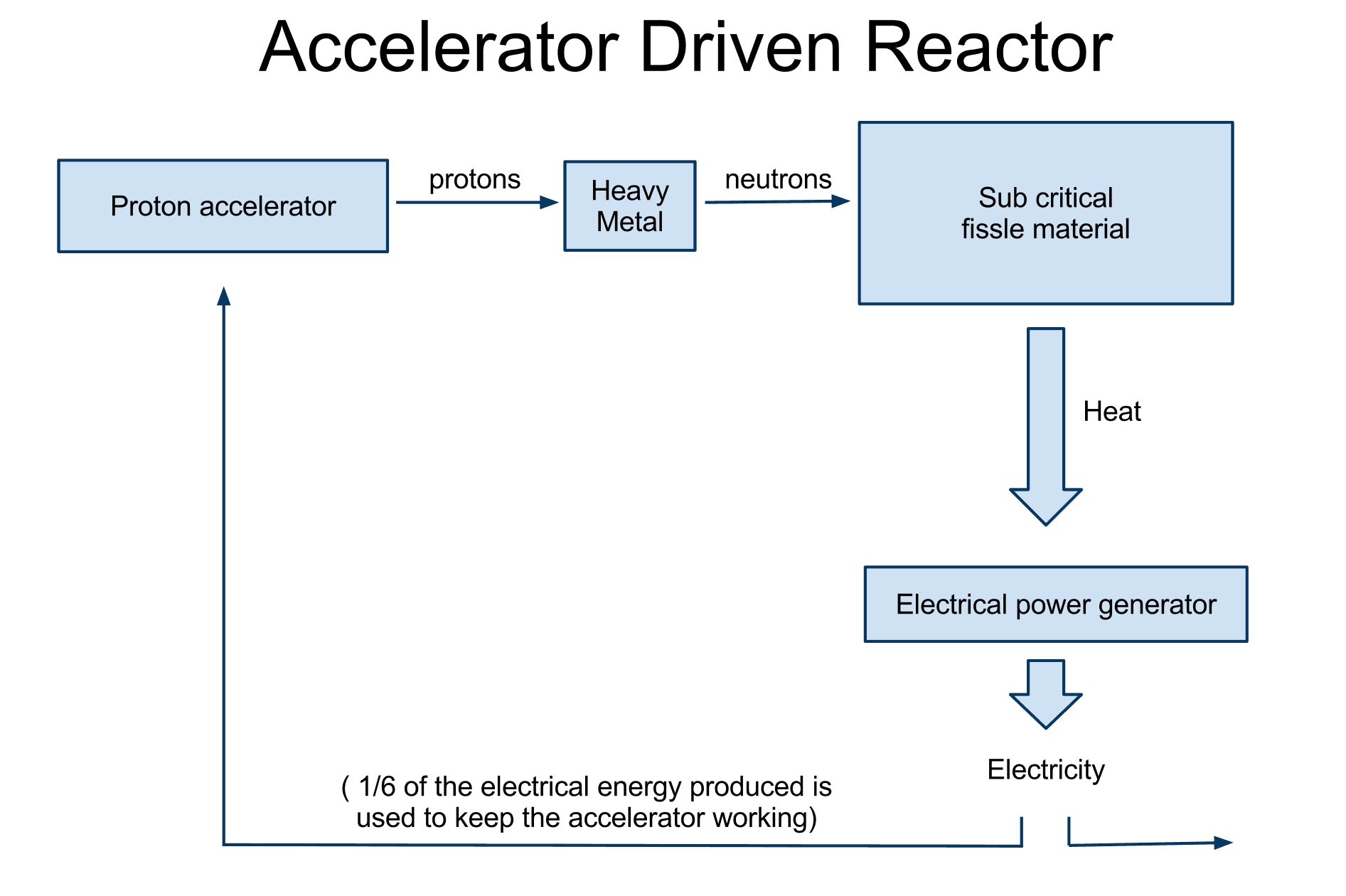
The Chinese Academy of Sciences’ Institute of Modern Physics is erecting the China Initiative Accelerator Driven System, a megawatt-level accelerator-driven subcritical system in Huizhou, Guangdong, intended to burn long-lived nuclear waste and breed new fuel. The design combines superconducting linear accelerators with a spallation unit that uses high-current proton beams to generate neutrons, and institute researchers say the machine cannot sustain a chain reaction without its external accelerator supply, a safety feature built into the subcritical concept.
Technically, the project pairs superconducting particle accelerators with a liquid lead-bismuth spallation target, and institute staff describe proton beams traveling at about 0.8 times the speed of light striking the alloy to produce a “massive amount of neutrons.” Those neutrons are credited with transmuting uranium-238 into plutonium-239: He Yuan, deputy director of the Institute of Modern Physics at the Chinese Academy of Sciences, said the beams “then convert uranium-238 into the new nuclear fuel plutonium-239, turning ‘waste’ into treasure,” and called the approach an “internationally recognised ideal approach for nuclear fuel breeding and nuclear waste treatment.”
CAS’s public claims are bold. The institute frames the Huizhou pilot as “megawatt-level,” saying the facility “burns uranium 100 times more efficiently than conventional reactors” and could “reduce the lifespan of nuclear waste to less than a thousandth of its current duration.” He Yuan has also described the system as capable of turning nuclear power into a “green, safe, stable energy source for 1,000 years.” Those phrases summarize the performance and longevity goals CAS has advanced for the project.
The programme has a clear internal timeline. CAS began ADS research in 2011 and in 2021 developed a prototype the institute says reached an “operational intensity suitable for industrial application,” a milestone it presents as the first such achievement since the modern ADS concept emerged in the 1980s. Institute researchers report they have begun final installation of superconducting accelerators at the Guangdong site, with key superconducting accelerators expected to be in place by the end of 2026 and the system expected to go online in 2027.

The project sits in a niche where no commercial ADS systems currently operate worldwide; CAS positions the Huizhou prototype as the first megawatt-scale test of the concept and as a step toward a closed fuel cycle. The World Nuclear Association’s industry context underlines the motivation: some actinides in used fuel can remain hazardous for tens of thousands to hundreds of thousands of years, and ADS research seeks ways to break down those long-lived radionuclides into shorter-lived isotopes to ease disposal.
Important gaps remain in the public record. CAS and institute statements do not specify an exact megawatt rating for the “megawatt-level” label, they do not name the state nuclear enterprises the project reportedly partners with, and they have not published independent verification of the numerical claims such as “100 times” better burn efficiency or “less than a thousandth” waste-lifespan reduction. CAS and He Yuan have supplied the technical framing and ambitious targets; independent technical review, detailed burn-up numbers, and clarity on materials accounting and safeguards will determine whether Huizhou is a working proof-of-concept or an overhyped pilot.
Know something we missed? Have a correction or additional information?
Submit a Tip

