China tests record superconducting magnet for fusion reactor
China has tested a TF magnet for BEST that is 1.3 times ITER’s and stores three times more energy, clearing a key confinement hurdle.
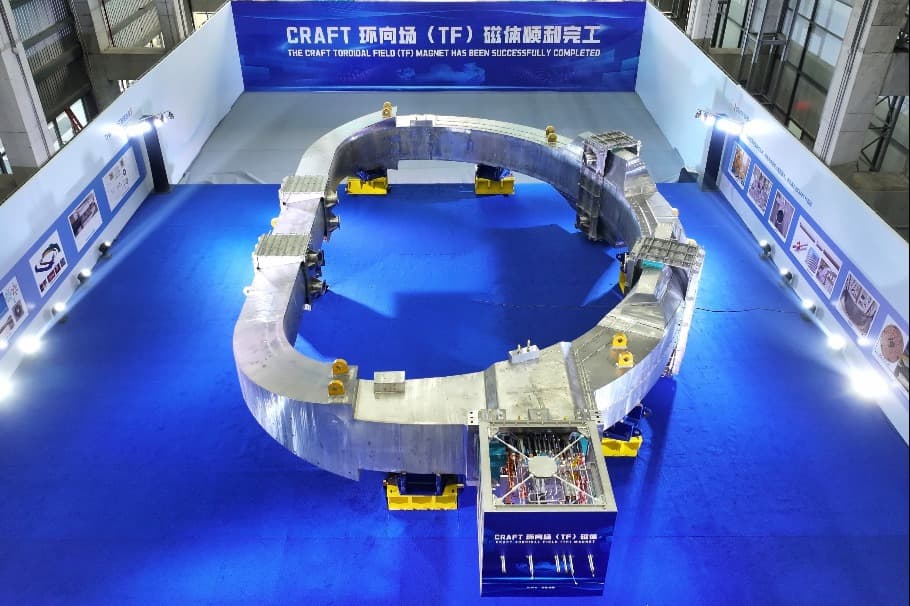
China successfully tested a new toroidal field magnet for its BEST fusion reactor in Hefei, a component built to keep superhot plasma off the vessel wall. The Chinese Academy of Sciences said the magnet is 1.3 times the volume of ITER’s TF magnet and has three times the energy storage capacity.
That matters because the TF magnet is one of the most important parts of any fusion machine: it generates the strong magnetic cage that holds plasma heated to hundreds of millions of degrees Celsius. In plain terms, this is the hardware that solves the early confinement problem, the one that decides whether a reactor can hold together long enough to matter. CAS says BEST is aimed at net fusion power gain and a demonstration of fusion-based electricity generation by 2030.
The test also fits into a run of increasingly hard Chinese fusion milestones. EAST, which CAS describes as the world’s first fusion device with fully superconducting magnets, held a steady-state high-confinement plasma for 1,066 seconds in January 2025. A year later, EAST researchers said they had experimentally reached a theorized density-free regime for fusion plasmas, showing stable operation beyond conventional density limits.
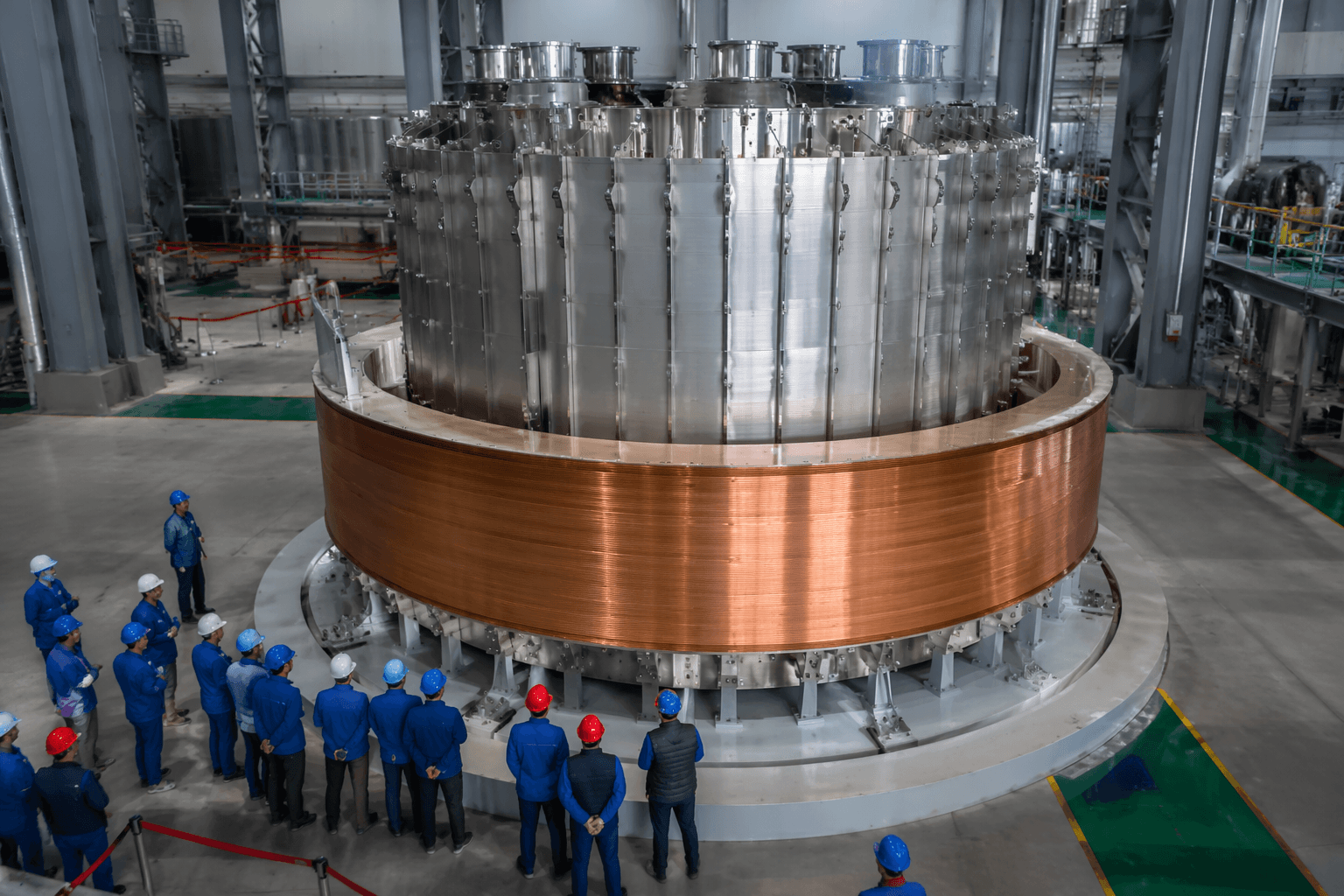
The magnet work has been moving in parallel with a broader push in high-field technology at the High Magnetic Field Laboratory in Hefei, which began development in May 2008 and completed national acceptance in 2017. Chinese scientists also set a separate magnet record in September 2024 with a resistive magnet that produced a steady 42.02-tesla field, following the lab’s 45.22-tesla hybrid magnet breakthrough in 2022.
For fusion builders, this is the kind of checkpoint that actually changes the schedule. A bigger, stronger TF magnet does not make electricity by itself, but it clears one of the hardest early hurdles in the machine: holding plasma in place without letting the reactor wall become the limit.
This article was produced by Prism’s automated news system from verified source data, official records, and press releases, then run through automated quality and moderation checks before publishing. The system is built and supervised by the people who set the standards it runs under. Read our full AI policy.
Did this article answer your question?