China's EAST tokamak sustains fusion plasma for 1,066 seconds
EAST held a hot fusion plasma steady for 1,066 seconds, breaking its own record and pushing reactor control into new territory.
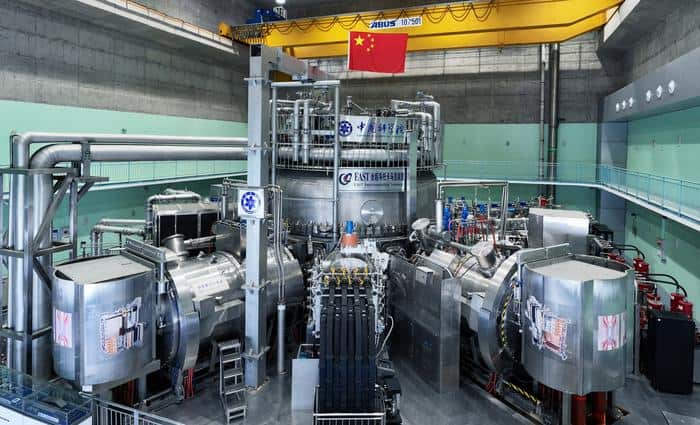
A magnetic bottle in Hefei held on long enough to matter. China’s Experimental Advanced Superconducting Tokamak, known as EAST, sustained steady-state high-confinement plasma for 1,066 seconds on January 20, 2025, a new world record and a clear sign that fusion machines are getting better at staying in the game.
The result was not net power, and it was not a commercial reactor demo. It was something more basic and just as necessary: keeping a plasma stable, confined and hot for more than 17 minutes, at close to 70 million degrees Celsius. In fusion research, that is a major control-and-confinement advance. The 1,000-second mark has become a key threshold because future reactors will need long, continuous pulses rather than brief bursts if they are ever to deliver useful electricity.
EAST’s latest run moved well beyond its previous best of 403 seconds in April 2023, a result that had already more than quadrupled the machine’s 2017 record of 101 seconds. Each jump has pointed in the same direction: longer confinement, steadier operation and tighter control of the conditions inside a tokamak. That is the hard part of fusion, where the challenge is not only making reactions happen, but keeping them happening under control.
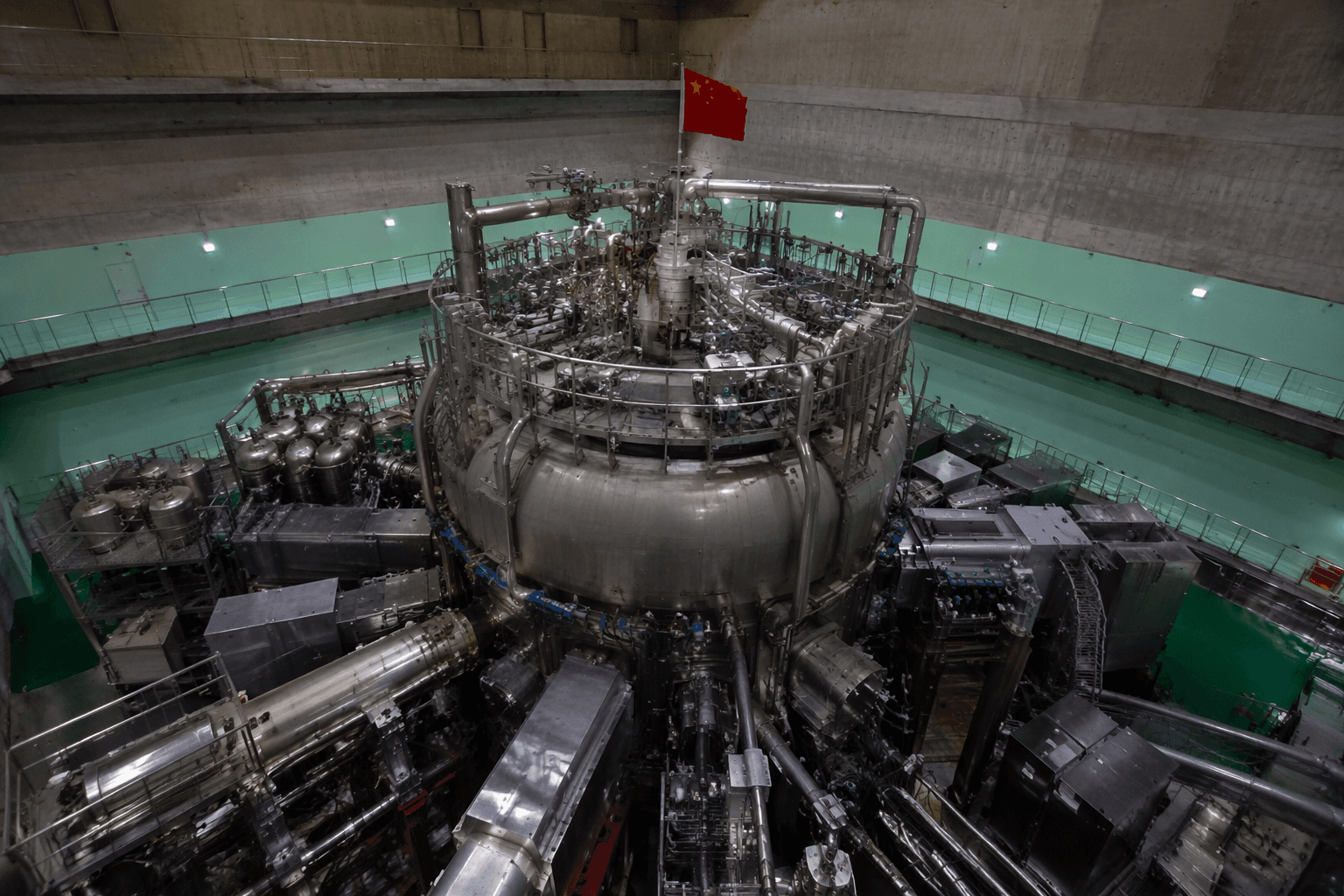
That broader challenge is why the record resonates beyond one machine. ITER, the multinational fusion project in Saint-Paul-lès-Durance, France, says future power plants will need continuous operation, not short-lived shots, and that achieving sustained fusion reactions is only one piece of the puzzle. ITER’s own design aims to show fusion power production at power-plant scale, and the organization says more than 200 tokamak devices have helped build the magnetic confinement science that underpins the field since the 1950s.
The other bottlenecks are still looming: heat exhaust, materials that can survive the load, energy gain, and a credible tritium fuel cycle. China is pressing ahead on those fronts too, with the Burning Plasma Experimental Superconducting Tokamak under construction in Hefei and the Comprehensive Research Facility for Fusion Technology developing and testing key reactor components. EAST’s 1,066-second run did not solve fusion power, but it showed how much longer the flame can now be held before it blows out.
This article was produced by Prism’s automated news system from verified source data, official records, and press releases, then run through automated quality and moderation checks before publishing. The system is built and supervised by the people who set the standards it runs under. Read our full AI policy.
Know something we missed? Have a correction or additional information?
Submit a Tip