Compact Vacuum-Ultraviolet Laser Could Power Nuclear Clocks and Atomic Probes
A desk-sized VUV laser from JILA hits the exact 148.3821 nm wavelength thorium nuclear clocks need, beating existing sources by up to 1,000 times in efficiency.
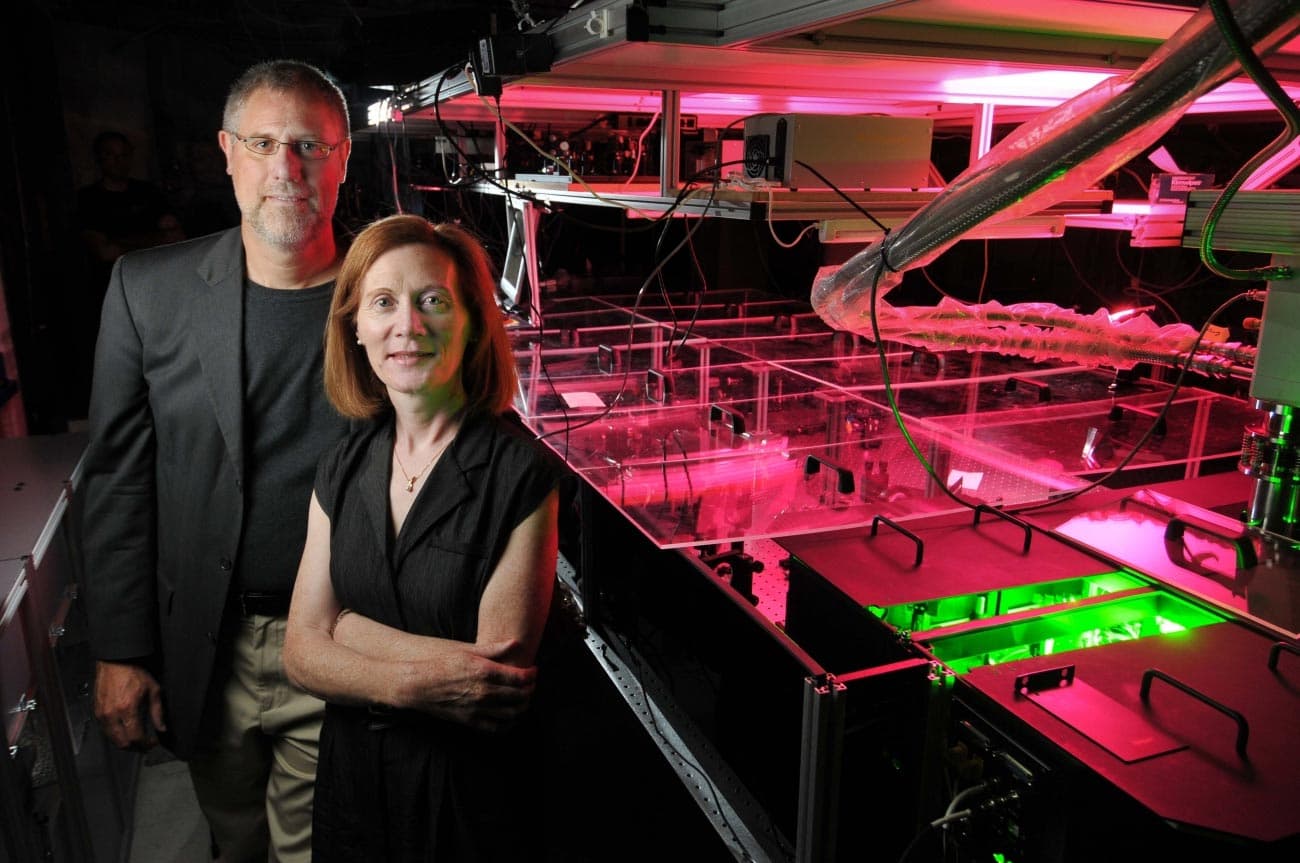
Getting usable light in the vacuum-ultraviolet range has historically meant commandeering an entire room. A team at JILA, the joint institute of the University of Colorado Boulder and the National Institute of Standards and Technology, just shrank that requirement down to a tabletop.
Physicists Henry Kapteyn and Margaret Murnane led the demonstration of a compact VUV laser they say is 100 to 1,000 times more efficient than existing technologies. The device works by combining ordinary red and blue laser beams inside a specialized chamber filled with xenon gas, which converts the visible light into VUV wavelengths spanning roughly 100 to 200 nanometers, well below the 380-to-750-nanometer range of visible light.
"Scientists have been working toward vacuum ultraviolet lasers for decades," Kapteyn said. "We think we might have finally found a great route that can be scaled in power, and that is compact in size."
The application that stands out most to the nuclear community is the thorium nuclear clock. Thorium atoms oscillate in energy when hit with light tuned to exactly 148.3821 nanometers, a wavelength sitting squarely in the VUV band. Driving that transition today requires room-sized laser infrastructure, which makes nuclear-referenced timekeeping essentially a laboratory-only affair. A portable, desk-sized source that can reach 148.3821 nm changes the calculus considerably, opening the door to nuclear clocks capable of enabling GPS-free navigation, improving space mission timing, and supporting exoplanet searches.
Murnane framed the broader imaging case this way: "Shorter wavelengths matter because you can use them to make higher resolution microscopes. If a chemical reaction is happening, you can see what molecules are there, to see, for example, how they ablate the tiles on a space capsule as it reenters the atmosphere."
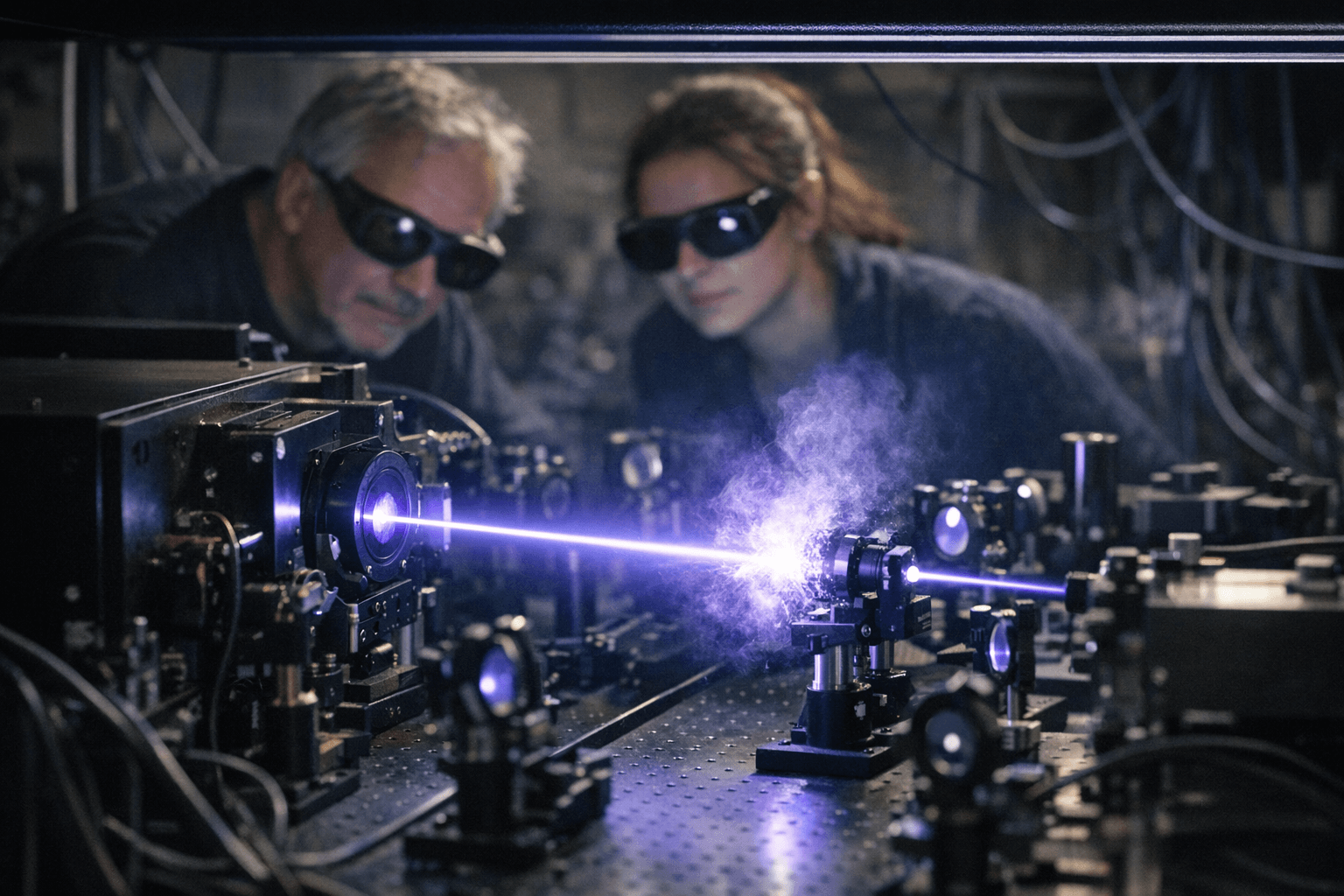
That same resolving power applies to nanoelectronics inspection, where spotting defects at nanometer scales currently demands specialized synchrotron or large-lab sources. Real-time tracking of fuel combustion at the molecular level is another target the team cited explicitly.
The CU Boulder press release, written by Daniel Strain and published March 11, 2026, notes that the team plans to present related work including a Thursday Kavli Invited Talk titled "Building the Quantum Microscopes of the Future: From Star Wars to Quantum Sculpting." The sources available do not include a peer-reviewed journal citation or specific output-power measurements beyond the 100-to-1,000-times efficiency claim, details worth confirming directly with JILA before treating the numbers as final benchmarks.
What is already clear is that a compact, efficient VUV source at the right wavelength is not an incremental improvement. For anyone working on nuclear clock development or high-resolution VUV spectroscopy, the Kapteyn-Murnane result is worth watching closely as more experimental specifics become available.
This article was produced by Prism’s automated news system from verified source data, official records, and press releases, then run through automated quality and moderation checks before publishing. The system is built and supervised by the people who set the standards it runs under. Read our full AI policy.
Did this article answer your question?